In addition to the technically required cookies, our website also uses cookies for statistical evaluation. You can also use the website without these cookies. By clicking on "I agree" you agree that we may set cookies for analysis purposes. You can see and change your cookie settings here.
This collection item does not have a name in the language of origin. If you know the name or have comments, use this form to contact the data-providing institution.
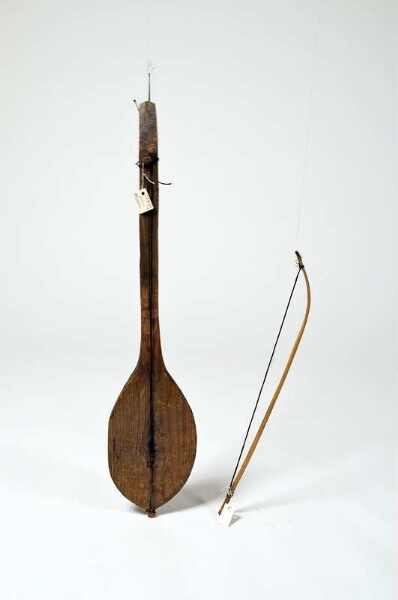
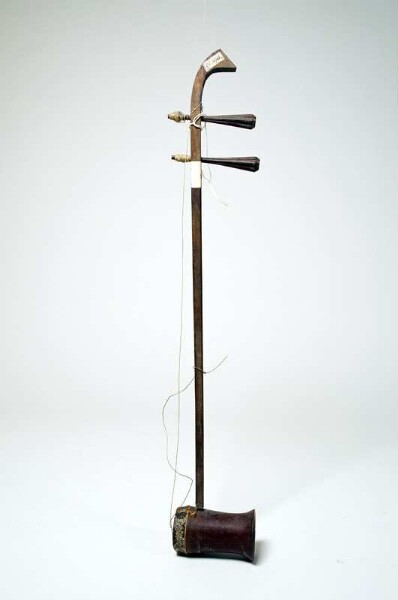
As no. 243 [III A 1010 a,b] The frame, however, has an elongated, rhombic frame. The type of board joint is unclear. The neck is thickened to a square shape and wrapped in leather where a cylindrical wooden peg is inserted at the back. Leather strap windings above the string attachment on the peg. The end knot at the lower end of the string was buttoned through the narrowed spout of a simple loop. A leather pouch and a leather carrying strap are attached. The tip of the neck is not carved. The bow is an evenly bent square piece of wood. from Ulrich Wegner: Afrikanische Saiteninstrumente, Staatliche Museen Berlin - SPK, 1984 (Appendix Object Catalogue)
This collection item does not have a name in the language of origin. If you know the name or have comments, use this form to contact the data-providing institution.
Save
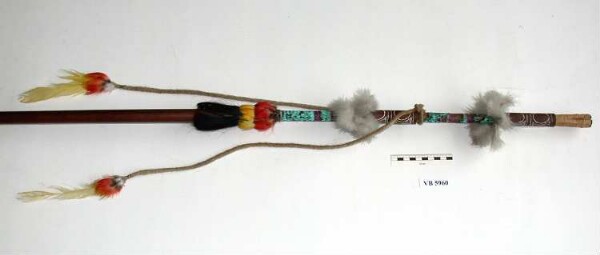
Lance with rattle
This collection item does not have a name in the language of origin. If you know the name or have comments, use this form to contact the data-providing institution.
Save
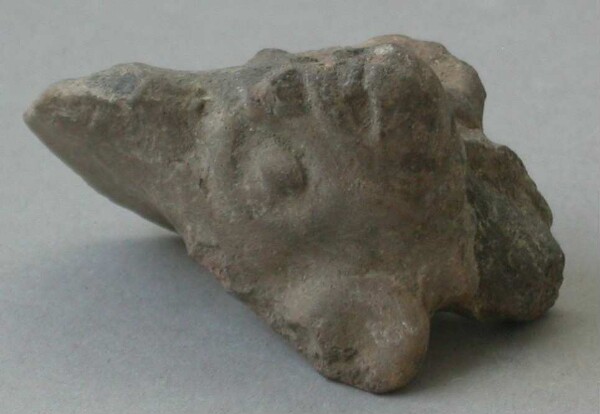
Fragment of a clay rattle (clay head)
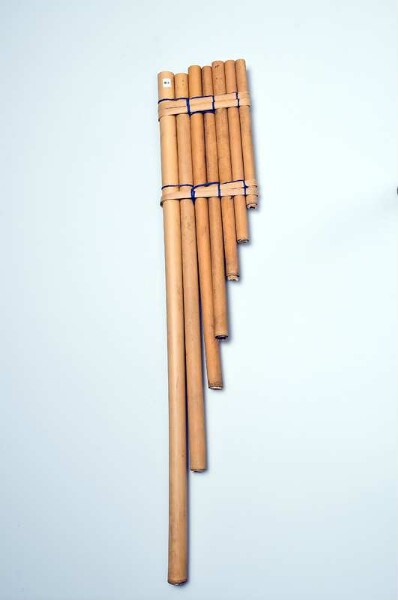
zampoña sanka (arca)
Information about the language not available
Save
zampoña sanka (arca)
This collection item does not have a name in the language of origin. If you know the name or have comments, use this form to contact the data-providing institution.
Save
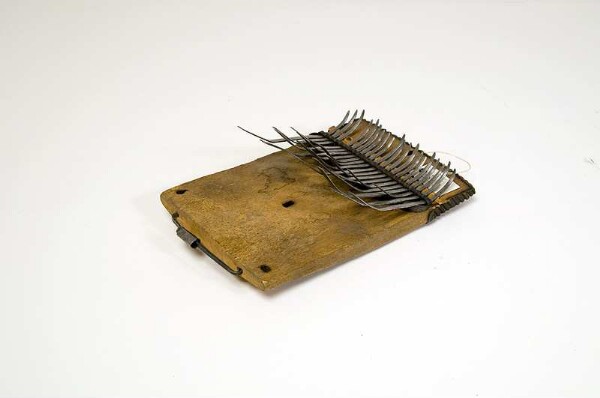
Lamellophone
This collection item does not have a name in the language of origin. If you know the name or have comments, use this form to contact the data-providing institution.
Save
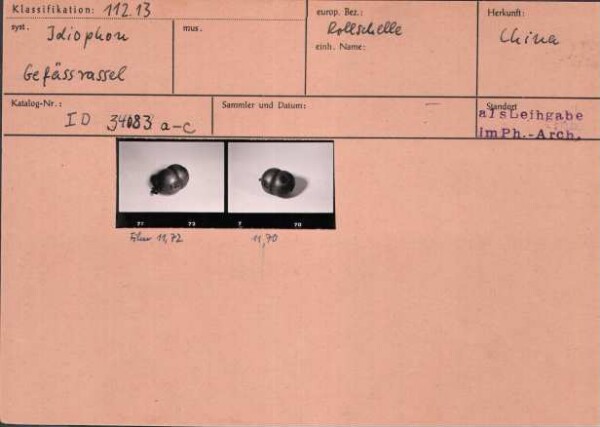
Vessel rattle
iya gan (?) keke (?)
Information about the language not available
Save
iya gan (?); keke (?)
ozi
Information about the language not available
Save
ozi
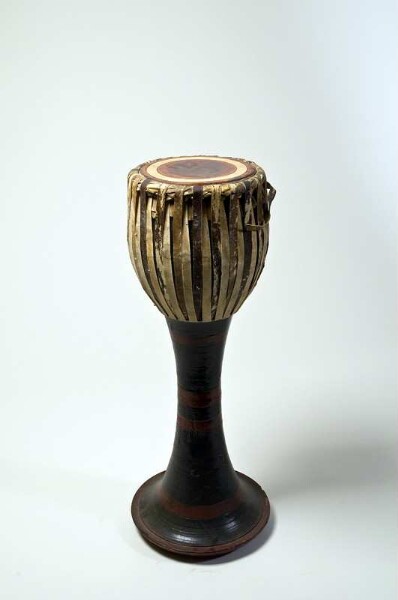
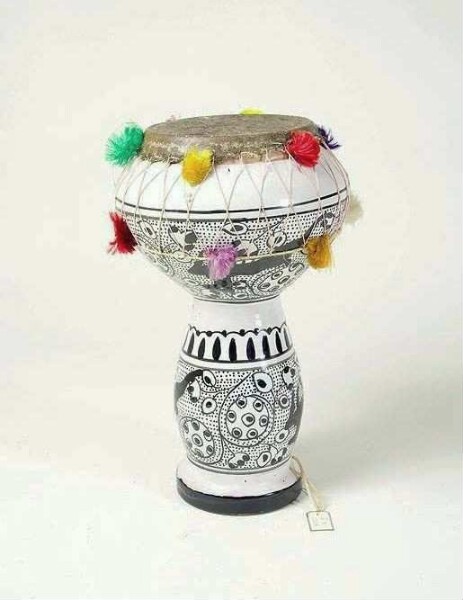
darbouka
Information about the language not available
Save
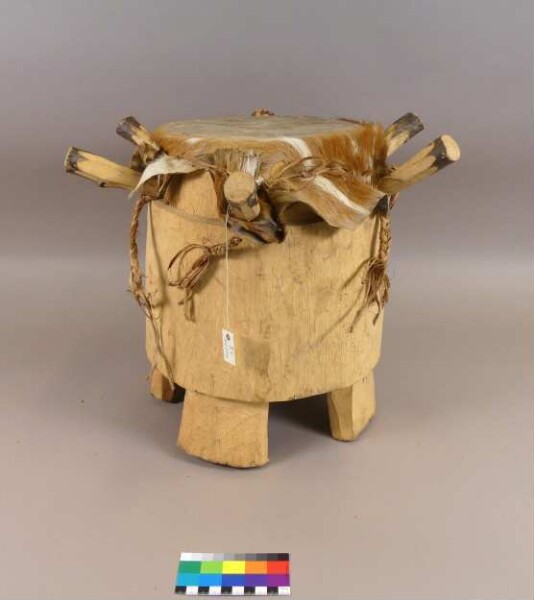
Drum
o òn cò
Information about the language not available
Save
o òn cò
This collection item does not have a name in the language of origin. If you know the name or have comments, use this form to contact the data-providing institution.