In addition to the technically required cookies, our website also uses cookies for statistical evaluation. You can also use the website without these cookies. By clicking on "I agree" you agree that we may set cookies for analysis purposes. You can see and change your cookie settings here.
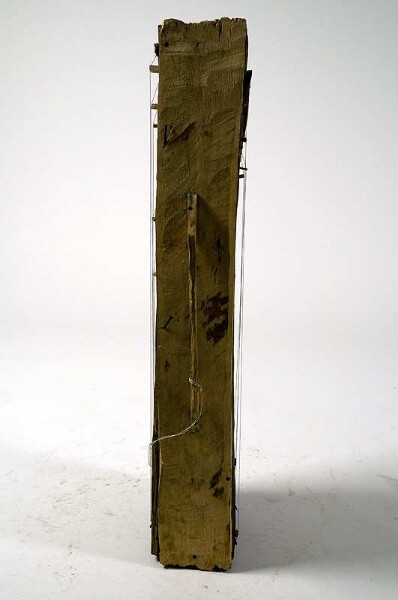
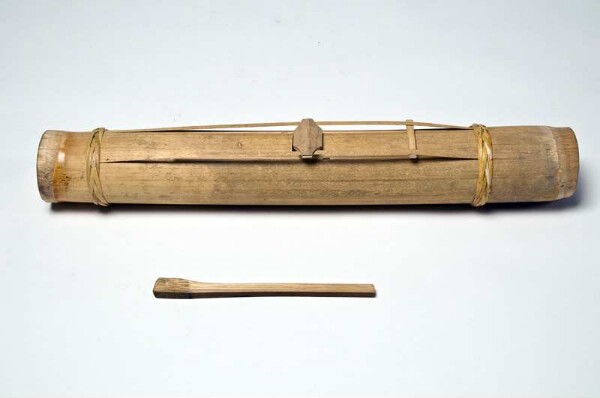
The stick zither [has] a stick end that diverges vertically like scissors. The twisted plant fibre strings (now replaced on the instrument) [are] only preserved in fragments. The quill and the binding material are missing. A stretched calabash resonator. Incised pattern on the string carrier. from Ulrich Wegner: Afrikanische Saiteninstrumente, Staatliche Museen Berlin - SPK, 1984 (Appendix Object Catalogue)
This collection item does not have a name in the language of origin. If you know the name or have comments, use this form to contact the data-providing institution.
Save
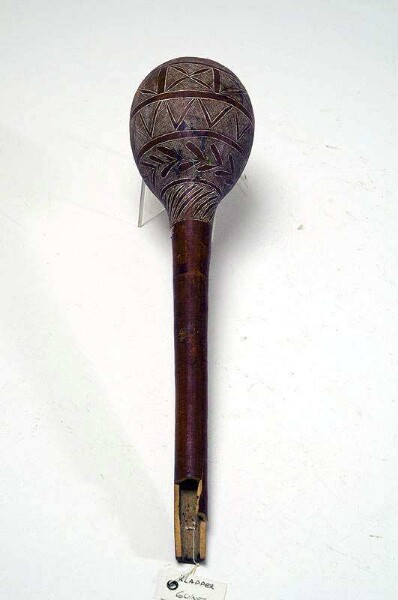
Rattle made from pumpkin skin
maro va ny
Information about the language not available
Save
marovany
(e)mbutu (e)ntonereza
Information about the language not available
Save
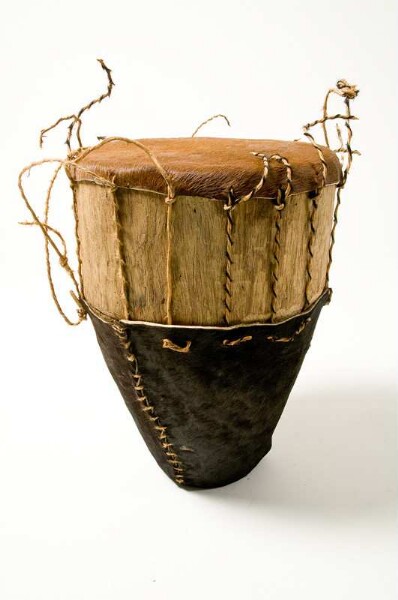
single-sided open cup drum
This collection item does not have a name in the language of origin. If you know the name or have comments, use this form to contact the data-providing institution.
Save
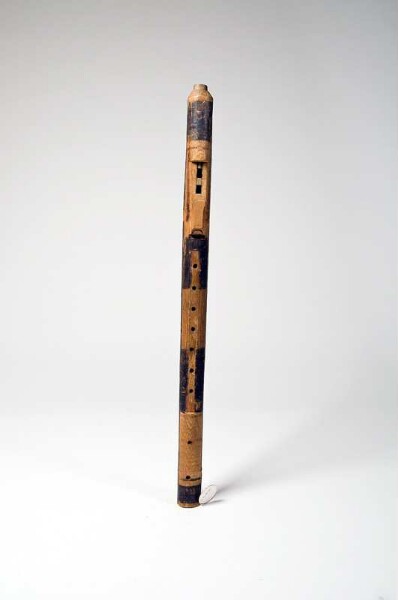
Whistle flute
This collection item does not have a name in the language of origin. If you know the name or have comments, use this form to contact the data-providing institution.
Save
Vessel rattle
mamalala
Information about the language not available
Save
mamalala
This collection item does not have a name in the language of origin. If you know the name or have comments, use this form to contact the data-providing institution.
Save
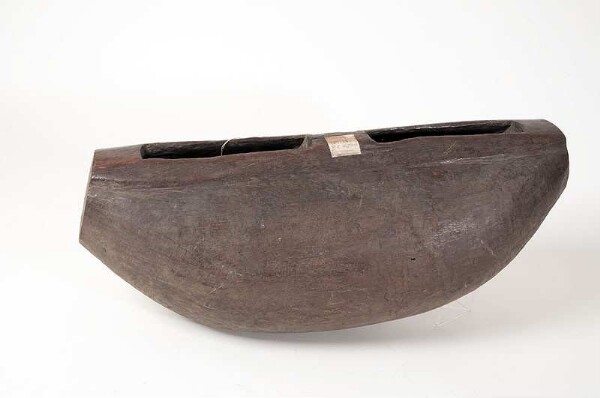
Slotted drum
This collection item does not have a name in the language of origin. If you know the name or have comments, use this form to contact the data-providing institution.
Save
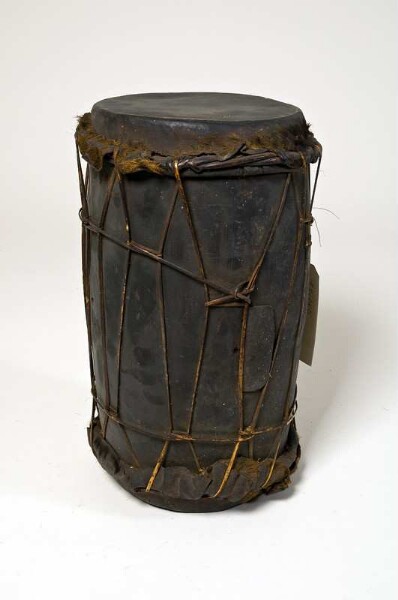
dodgy cylinder drum
tambi (?)
Information about the language not available
Save
tambi (?)
washint
Information about the language not available
Save
washint
This collection item does not have a name in the language of origin. If you know the name or have comments, use this form to contact the data-providing institution.