In addition to the technically required cookies, our website also uses cookies for statistical evaluation. You can also use the website without these cookies. By clicking on "I agree" you agree that we may set cookies for analysis purposes. You can see and change your cookie settings here.
This collection item does not have a name in the language of origin. If you know the name or have comments, use this form to contact the data-providing institution.
The Tibetan cult instruments are built as identical pairs - in contrast to the Tibetan-Buddhist instrument pairs, which differ in details. The silver Ngül-gling pair VII c 1038/1039, each with only four finger holes and one thumb hole, was apparently used less for playing than for splendid display. The body consists of a thin-walled wooden core covered by a heavy silver mantle. The elaborate chiselling with floral ornamentation is striking, not only on the body but also on the protruding funnel, on the lower edge of which there is a surrounding decoration of 28 brass flowers, which is repeated below a raised brass decorative ring at the upper end of the funnel with 13 silver flowers. The pipe support framed by two discs is also elaborately crafted and chiselled. Three downward-facing clasps echo the floral decoration in a simplified form, each finished off with a turquoise. An artistically crafted metal carrying cord is adorned with an amber bead.
This collection item does not have a name in the language of origin. If you know the name or have comments, use this form to contact the data-providing institution.
Save
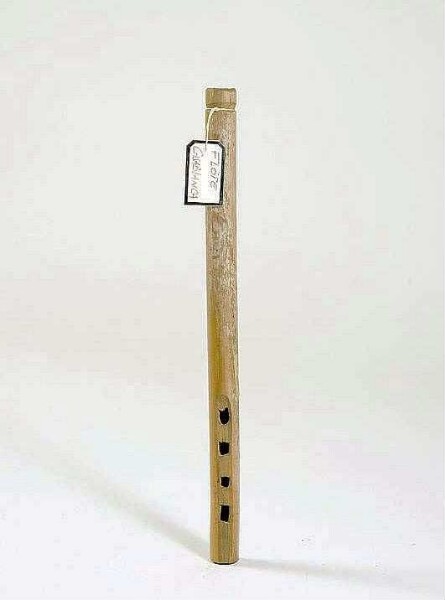
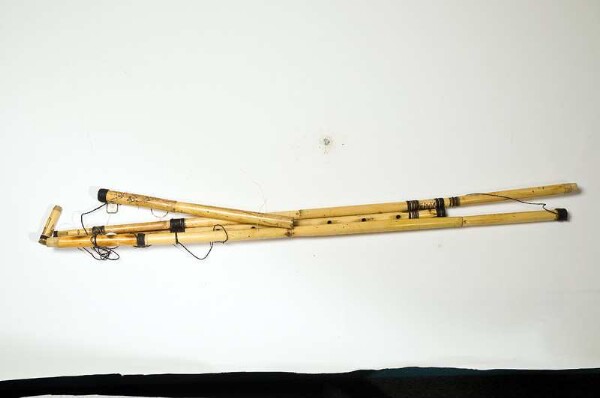
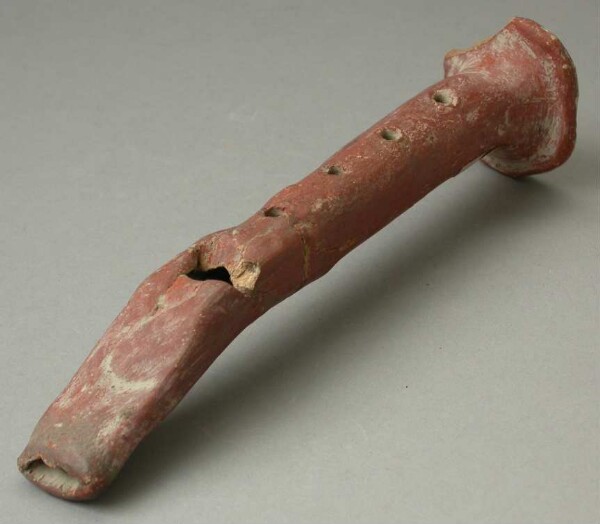
Flute
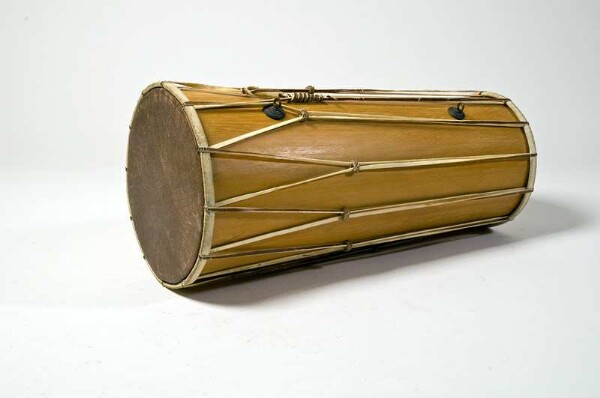
kendang (semar pagulingan)
Information about the language not available
Save
kendang
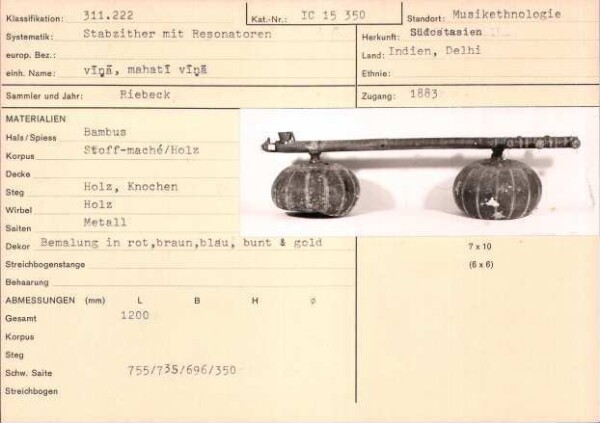
vina*, mahati* vina*
Information about the language not available
Save
vina, mahati vina
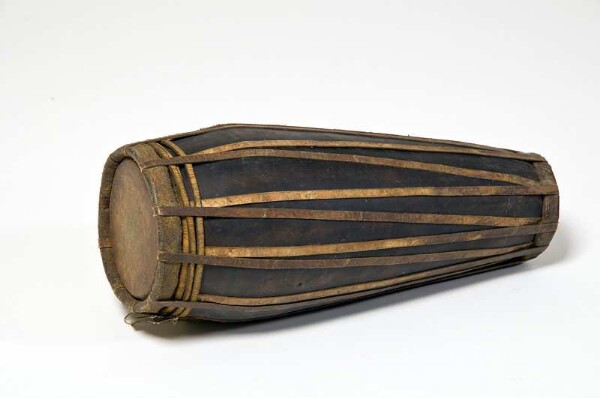
gedang (karo-batak)
Information about the language not available
Save
Barrel drum
argul kebir*
Information about the language not available
Save
argul kebir
This collection item does not have a name in the language of origin. If you know the name or have comments, use this form to contact the data-providing institution.
Save
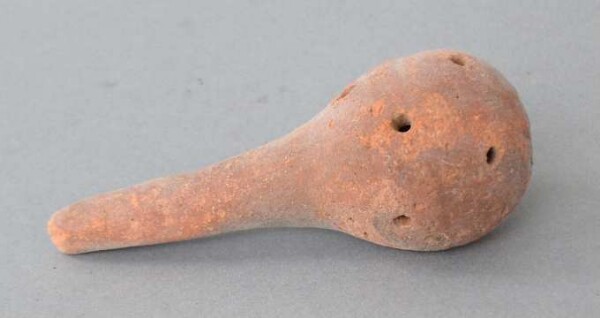
Clay rattle
This collection item does not have a name in the language of origin. If you know the name or have comments, use this form to contact the data-providing institution.