In addition to the technically required cookies, our website also uses cookies for statistical evaluation. You can also use the website without these cookies. By clicking on "I agree" you agree that we may set cookies for analysis purposes. You can see and change your cookie settings here.
This collection item does not have a name in the language of origin. If you know the name or have comments, use this form to contact the data-providing institution.
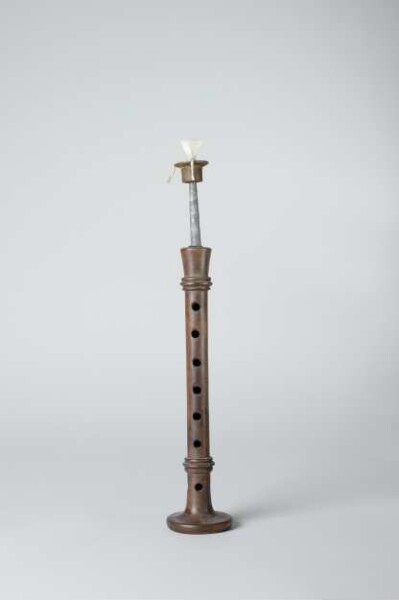
This zūrnā, a double-reed instrument with a funnel-shaped bell, was built in the Ottoman tradition. The instrument has a brown lacquered, slender body with seven frontal tone holes and three decorative grooves on the lower edge of the bell above the sound holes. The fork insert with a reed support and small holder for the missing lip disc is made of boxwood. The reed of this instrument is missing.
This collection item does not have a name in the language of origin. If you know the name or have comments, use this form to contact the data-providing institution.
Save
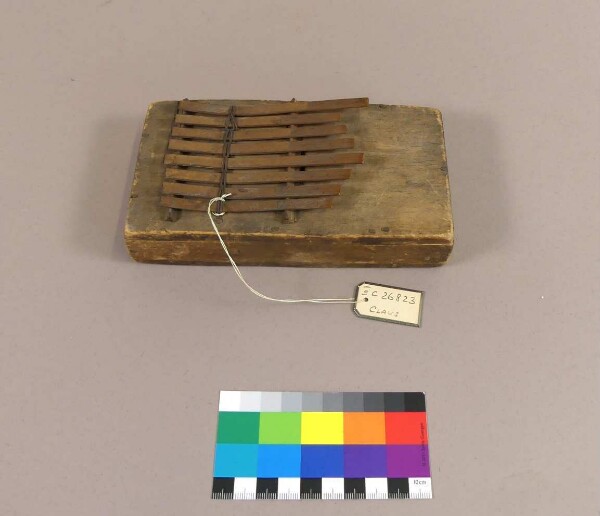
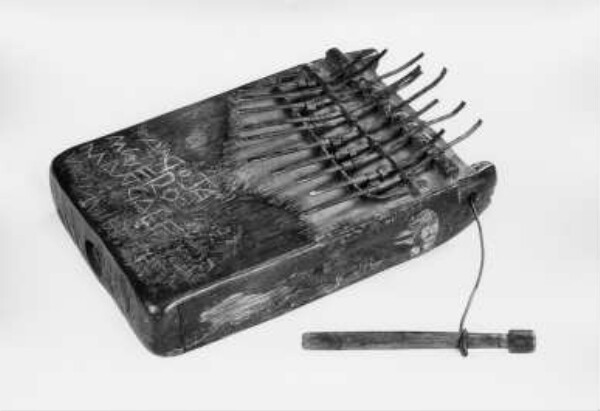
Kalimba
This collection item does not have a name in the language of origin. If you know the name or have comments, use this form to contact the data-providing institution.
Save
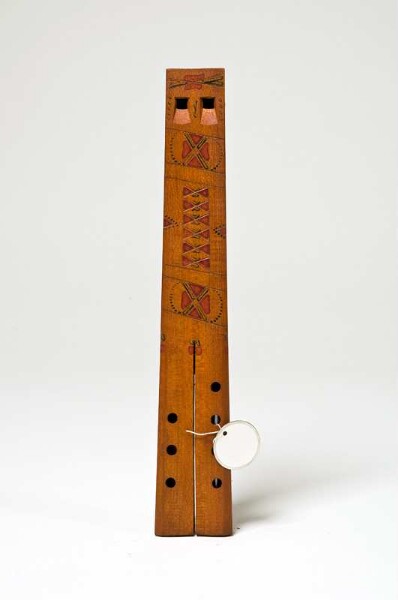
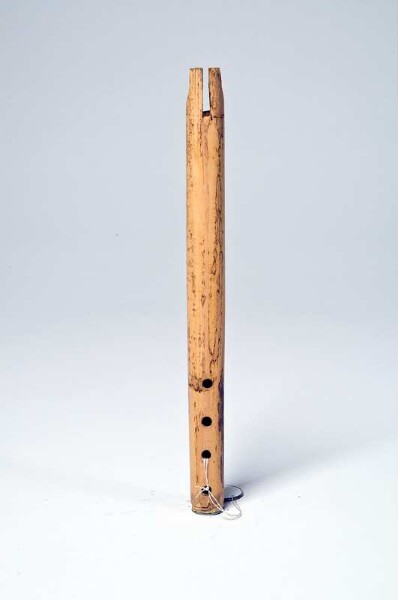
single flute with finger holes
This collection item does not have a name in the language of origin. If you know the name or have comments, use this form to contact the data-providing institution.
Save
Transverse trumpet
zari
Information about the language not available
Save
Rattle
This collection item does not have a name in the language of origin. If you know the name or have comments, use this form to contact the data-providing institution.
Save
Xirimía
guan (bili)
Information about the language not available
Save
guan (bili)
grantang
Information about the language not available
Save
grantang
hasapi (hapetan)
Information about the language not available
Save
hasapi (hapetan)
This collection item does not have a name in the language of origin. If you know the name or have comments, use this form to contact the data-providing institution.