In addition to the technically required cookies, our website also uses cookies for statistical evaluation. You can also use the website without these cookies. By clicking on "I agree" you agree that we may set cookies for analysis purposes. You can see and change your cookie settings here.
This collection item does not have a name in the language of origin. If you know the name or have comments, use this form to contact the data-providing institution.
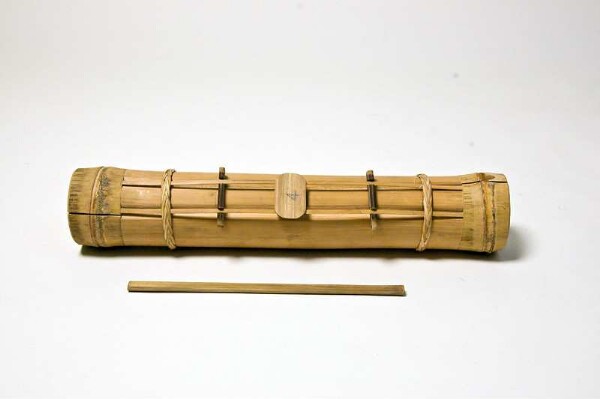
Twelve strips of string detached from the epidermis between the two pierced bamboo nodes. No bridge [is] preserved. Two strings [are] torn. Where the strings have grown together with the epidermis, the cane is wrapped four or five times with twisted bast cord. The two ends of the cord [are] tied together with all the wrapping strands enclosed. [A raffia loop is attached to one end of the knot. from Ulrich Wegner: Afrikanische Saiteninstrumente, Staatliche Museen Berlin - SPK, 1984 (Appendix Object Catalogue)
This collection item does not have a name in the language of origin. If you know the name or have comments, use this form to contact the data-providing institution.
Save
Slotted drum
This collection item does not have a name in the language of origin. If you know the name or have comments, use this form to contact the data-providing institution.
Save
Leather belt with rattles
Kamanche
Information about the language not available
Save
erhu
This collection item does not have a name in the language of origin. If you know the name or have comments, use this form to contact the data-providing institution.
Save
Vessel rattle
tuban iotta
Information about the language not available
Save
tuban iotta
This collection item does not have a name in the language of origin. If you know the name or have comments, use this form to contact the data-providing institution.
Save
Clay flute
Ra Nat
Information about the language not available
Save
Ra Nat
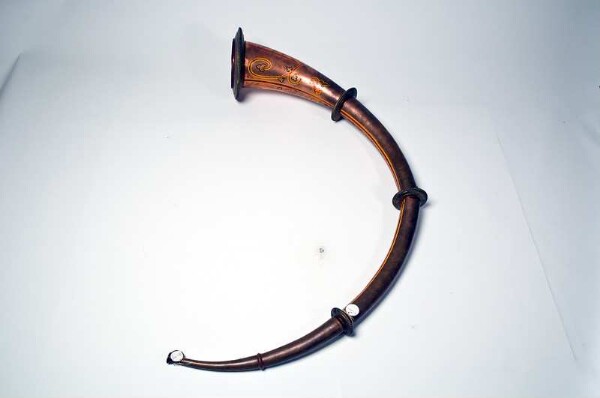
narsinga*
Information about the language not available
Save
narsinga
This collection item does not have a name in the language of origin. If you know the name or have comments, use this form to contact the data-providing institution.