In addition to the technically required cookies, our website also uses cookies for statistical evaluation. You can also use the website without these cookies. By clicking on "I agree" you agree that we may set cookies for analysis purposes. You can see and change your cookie settings here.
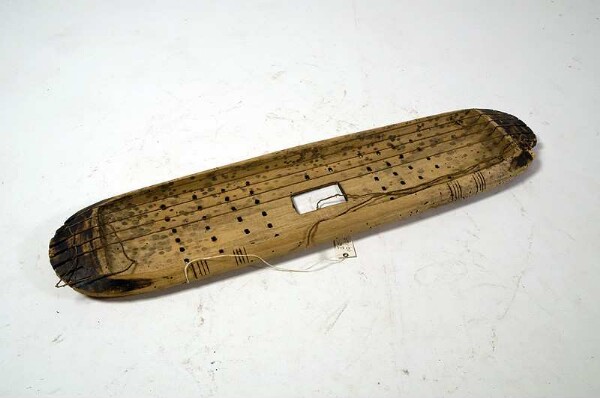
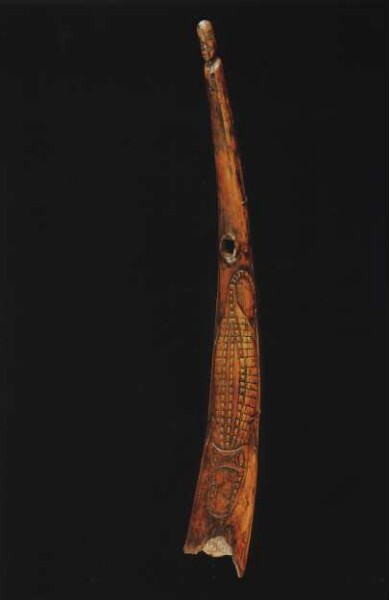
Description on the index card (ethnomusicology): A slotted tube, closed at the ends, is made from a block of wood in the shape of an alligator. In the tail are three heavy lateral wooden pegs, from which (now) three gut strings run through holes in the "back" to an iron stirrup attached to the "neck". Three further iron stirrups are attached to the "back" as bridge frets.
This collection item does not have a name in the language of origin. If you know the name or have comments, use this form to contact the data-providing institution.
Save
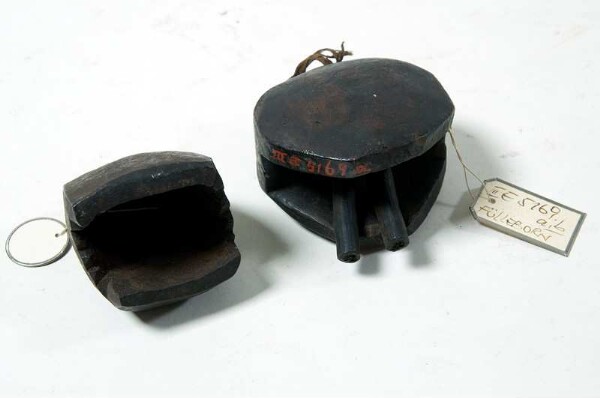
Dog bells (hunting)
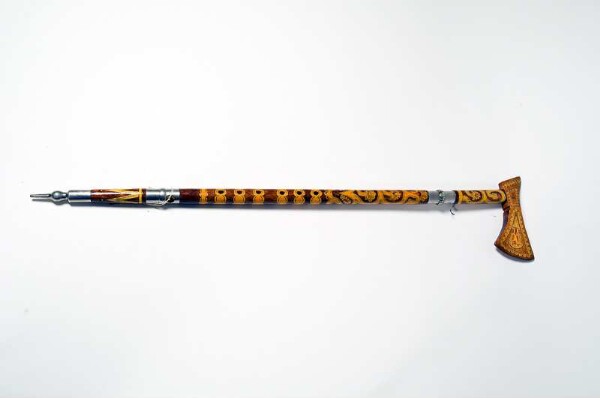
palikowá pistala*
Information about the language not available
Save
palikowá pistala
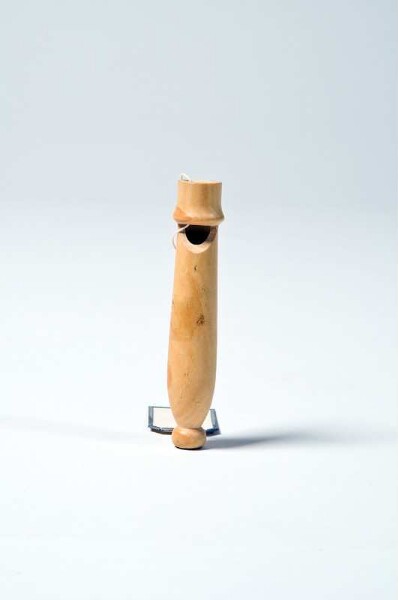
pito
Information about the language not available
Save
pito
This collection item does not have a name in the language of origin. If you know the name or have comments, use this form to contact the data-providing institution.
Save
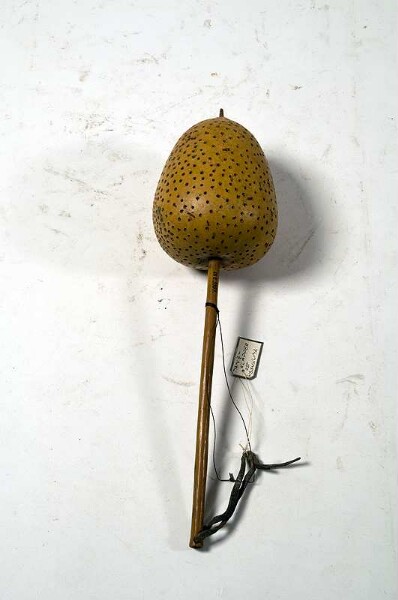
Vessel rattle
This collection item does not have a name in the language of origin. If you know the name or have comments, use this form to contact the data-providing institution.
Save
Shell zither
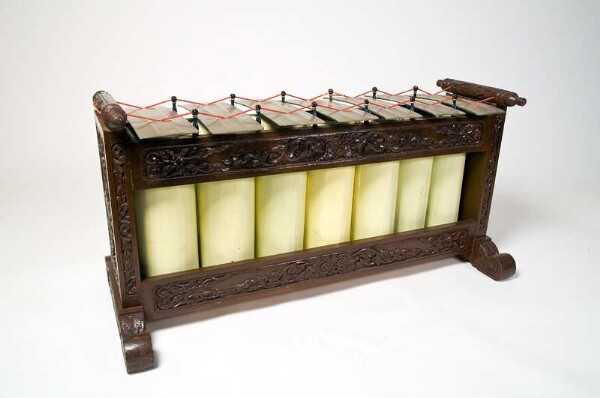
gender panembung (Gamelan)
Information about the language not available
Save
gender panembung (Gamelan) / slenthem
This collection item does not have a name in the language of origin. If you know the name or have comments, use this form to contact the data-providing institution.
Save
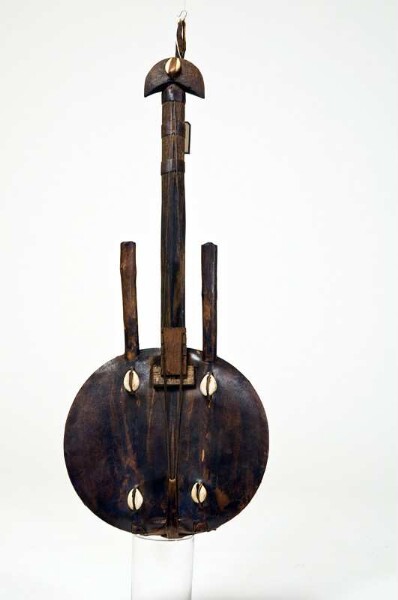
Harp sounds
This collection item does not have a name in the language of origin. If you know the name or have comments, use this form to contact the data-providing institution.
Save
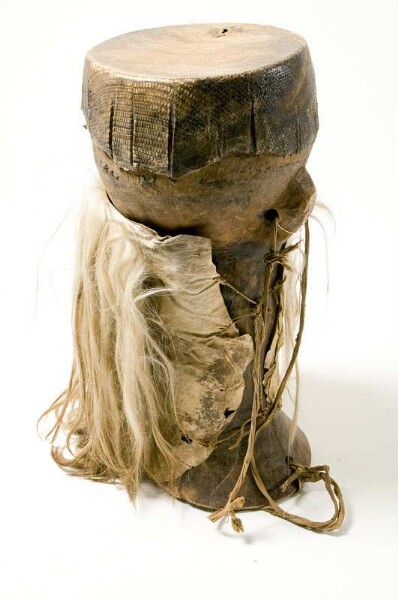
single-sided open cup drum
nambongo (?)
Information about the language not available
Save
nambongo (?)
This collection item does not have a name in the language of origin. If you know the name or have comments, use this form to contact the data-providing institution.
Save
Flutes
This collection item does not have a name in the language of origin. If you know the name or have comments, use this form to contact the data-providing institution.