In addition to the technically required cookies, our website also uses cookies for statistical evaluation. You can also use the website without these cookies. By clicking on "I agree" you agree that we may set cookies for analysis purposes. You can see and change your cookie settings here.
This collection item does not have a name in the language of origin. If you know the name or have comments, use this form to contact the data-providing institution.
Kleine, stehende, anthropomorphe Figur mit überdimensionierter Kopf- und Brustpartie. Die hohle, weibliche Skulptur besitzt zwei aufgesetzte Arme, die sie auf die Hüften legt. Am Hinterkopf des Objekts befindet sich eine ovale Öffnung. Die Skulptur wurde durch die Verwendung von Modeln hergestellt. Die Keramik ist geglättet, geschlämmt, grundiert, bemalt und poliert. Grundierung und Bemalung sind stark erodiert. Das Objekt hat mehrere, kleine Abplatzungen. Die Keramik besitzt eine weiß-gelbliche Grundfarbe, die schwarz-braun und rot-orange bemalt wurde. Die Figur trägt ein flache Kappe und eine Halskette mit Anhänger. Gesicht und Mund besitzen rote Verzierungen, die eine Gesichtsbemalung andeuten. Die Brüste der Skulptur wurden deutlich hervorgehoben und mit einem schwarz-braunen Streifendekor bemalt. Die gleiche Verzierung wiederhohlt sich auf den Armen und am Rücken der Keramik. Die Motive scheinen Textil, Flechtwerk oder eine Körperbemalung anzudeuten. Gesäß, Scham und Beine sind rot-orange bemalt. Ferrero (1975) und Healy (1980) weisen auf sitzende und stehende anthropomorphe Figuren hin, die einen offenen oder geschlossenen Kopfschmuck tragen können. Symbolische Bedeutung: das Objekt stellt nach Bonilla et al. (1987) eine schwangere Frau dar. Stevenson-Day (1997) interpretiert die weiblichen Skulpturen der Gruppe Papagayo Policromo als Schamanen. Das Objekt gehört nach Bransford (1881) zur Sta. Helena ware. Lothrop (1926) diskutiert dieselbe Gruppe unter seiner Nicoya polychrome ware. Kulturelle Bedeutung: der Typ Papagayo Policromo steht in der Region Gran-Nicoya am Anfang der polychromen Bemalung auf weiß-gelblicher Grundierung. Die Tradition dauerte bis ins Policromo Tardío (1350-1520d.C.) an. Ihre Verzierungen zeigen einen starken mesoamerikanischen Einfluß. Die Variante ist sowohl aus Bestattungen als auch aus Siedlungskontexten bekannt. Sie tritt in der Region Rivas bereits in der ersten Hälfte des Policromo Medio (1000-800d.C.) auf. In Guanacaste zeigt die Gruppe dagegen die zweite Hälfte des Policromo Medio (1350-1000d.C.) an. Ihre Keramiken dienten als überregionale Handelsware, die bis ins zentrale Mesoamerika gelangte. (Künne 2004)
This collection item does not have a name in the language of origin. If you know the name or have comments, use this form to contact the data-providing institution.
Save
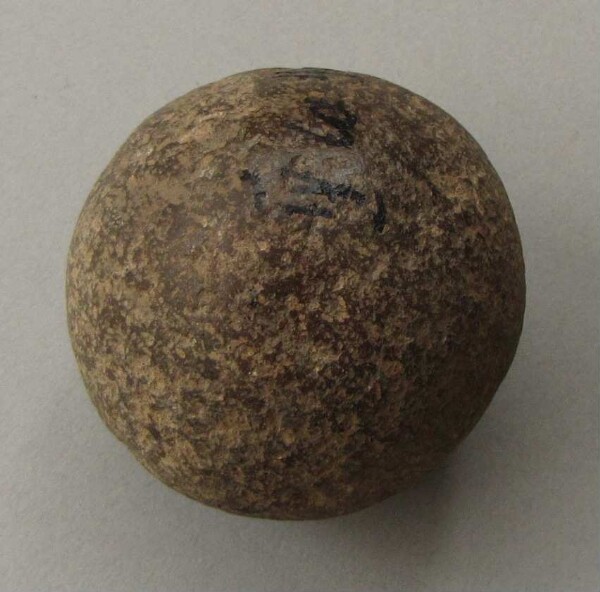
Stone ball
This collection item does not have a name in the language of origin. If you know the name or have comments, use this form to contact the data-providing institution.
Save
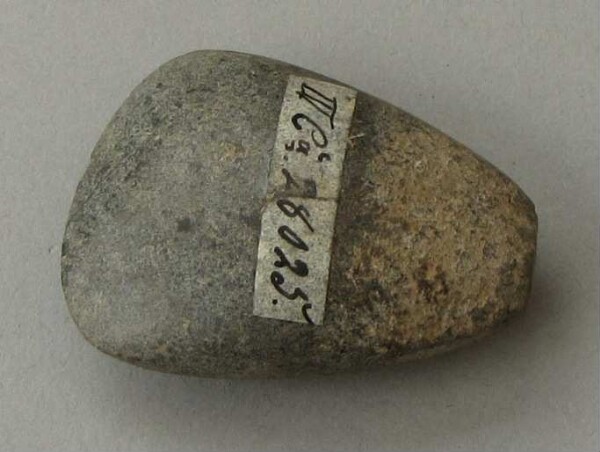
Stone axe blade
This collection item does not have a name in the language of origin. If you know the name or have comments, use this form to contact the data-providing institution.
Save
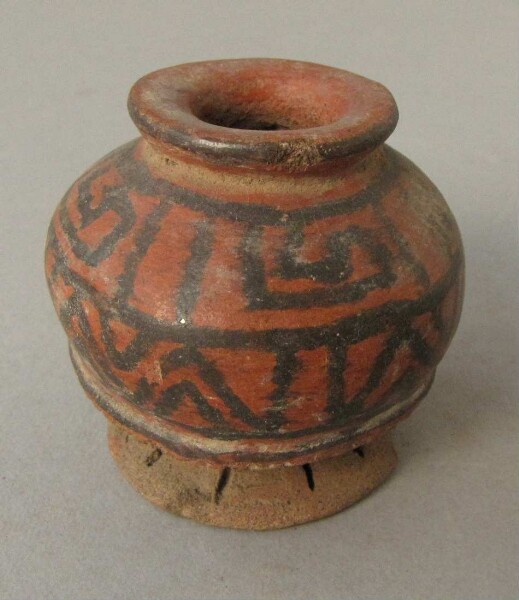
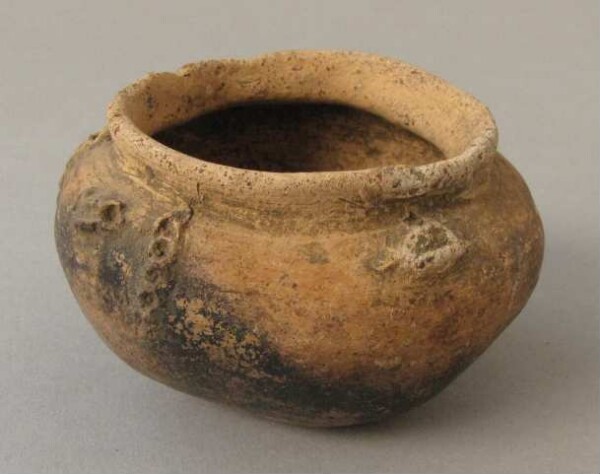
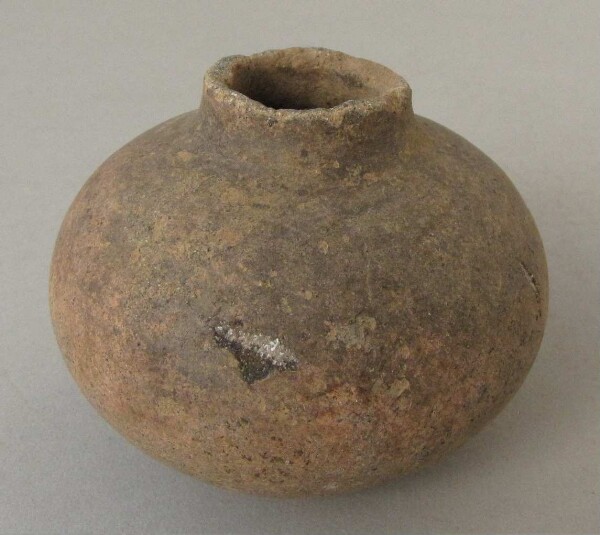
Clay vessel (miniature)
This collection item does not have a name in the language of origin. If you know the name or have comments, use this form to contact the data-providing institution.
Save
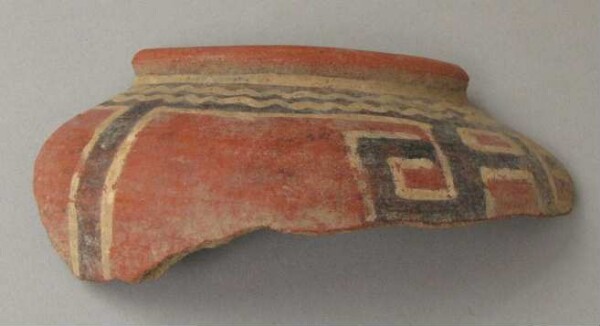
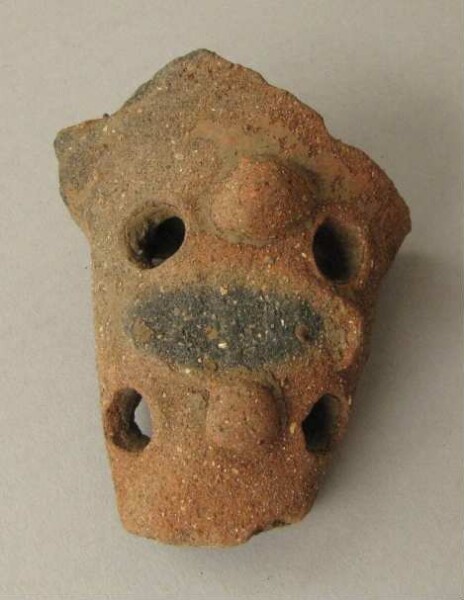
Neck shard
This collection item does not have a name in the language of origin. If you know the name or have comments, use this form to contact the data-providing institution.
Save
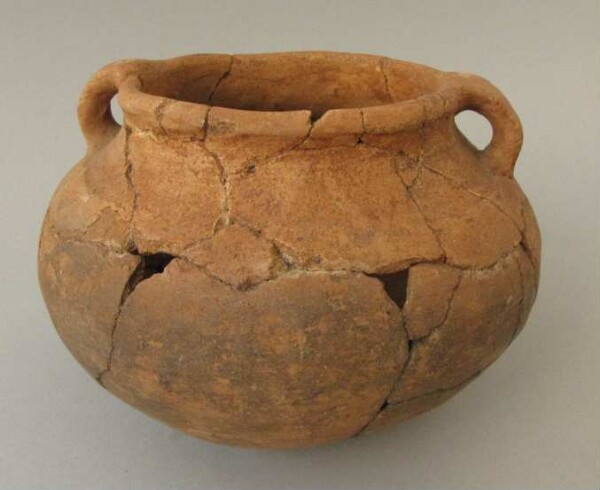
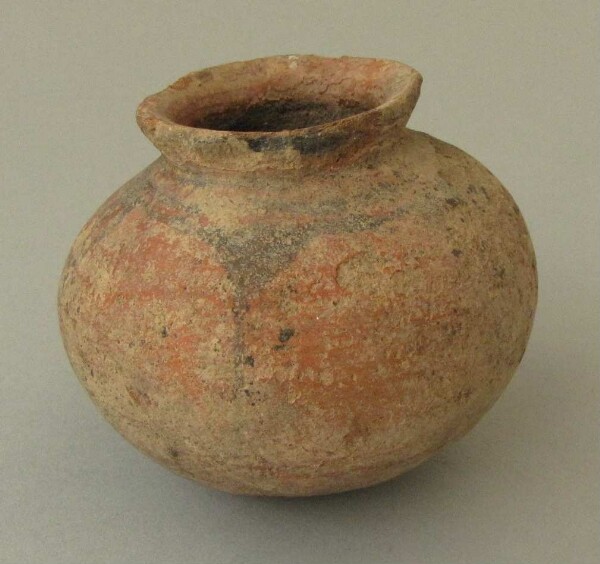
Clay vessel
This collection item does not have a name in the language of origin. If you know the name or have comments, use this form to contact the data-providing institution.
Save
Clay vessel base
This collection item does not have a name in the language of origin. If you know the name or have comments, use this form to contact the data-providing institution.
Save
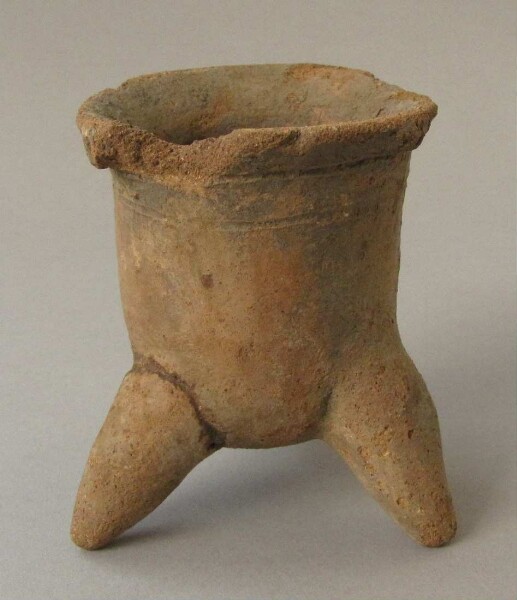
Clay vessel
This collection item does not have a name in the language of origin. If you know the name or have comments, use this form to contact the data-providing institution.
Save
Clay vessel
This collection item does not have a name in the language of origin. If you know the name or have comments, use this form to contact the data-providing institution.
Save
Clay bowls
This collection item does not have a name in the language of origin. If you know the name or have comments, use this form to contact the data-providing institution.
Save
Clay vessel
This collection item does not have a name in the language of origin. If you know the name or have comments, use this form to contact the data-providing institution.