In addition to the technically required cookies, our website also uses cookies for statistical evaluation. You can also use the website without these cookies. By clicking on "I agree" you agree that we may set cookies for analysis purposes. You can see and change your cookie settings here.
This collection item does not have a name in the language of origin. If you know the name or have comments, use this form to contact the data-providing institution.
A wide bowl with strongly upwardly rounded narrow sides, the ends of which are pulled down under the boat-like curved bowl base. Ten strings (partly made of plant fibre). On each narrow side [are] ten diagonally drilled string guide perforations. One end of the string [is] looped into a knot below an outer perforation, the other is knotted to the neighbouring section of the string. There is a pair of perforations on each of the long sides. A longitudinally carved stem extension with an unoccupied hole. Along each of the rows of perforations [is] a group of notched lines. from Ulrich Wegner: Afrikanische Saiteninstrumente, Staatliche Museen Berlin - SPK, 1984 (Appendix Object Catalogue)
This collection item does not have a name in the language of origin. If you know the name or have comments, use this form to contact the data-providing institution.
Save
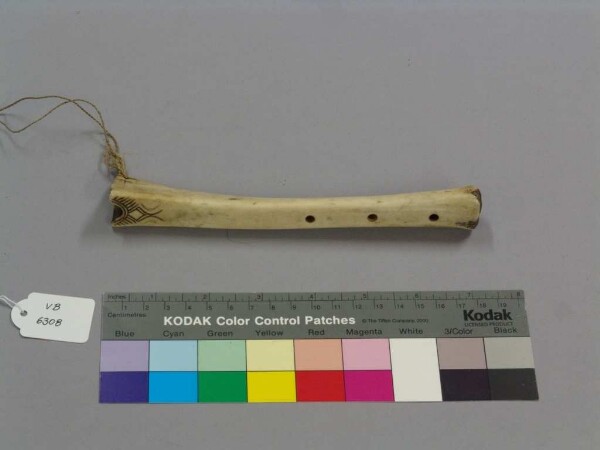
Bone flute
This collection item does not have a name in the language of origin. If you know the name or have comments, use this form to contact the data-providing institution.
Save
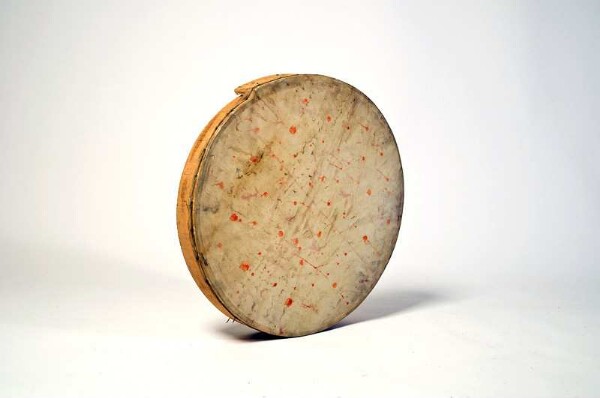
single-head frame drum
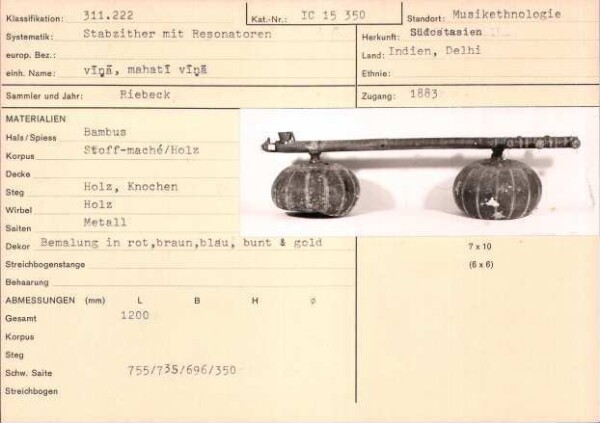
vina*, mahati* vina*
Information about the language not available
Save
vina, mahati vina
This collection item does not have a name in the language of origin. If you know the name or have comments, use this form to contact the data-providing institution.
Save
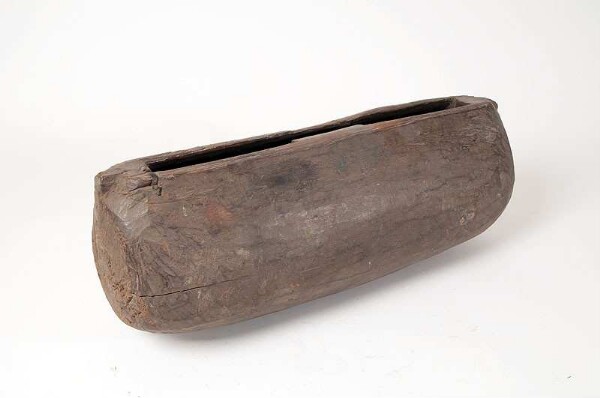
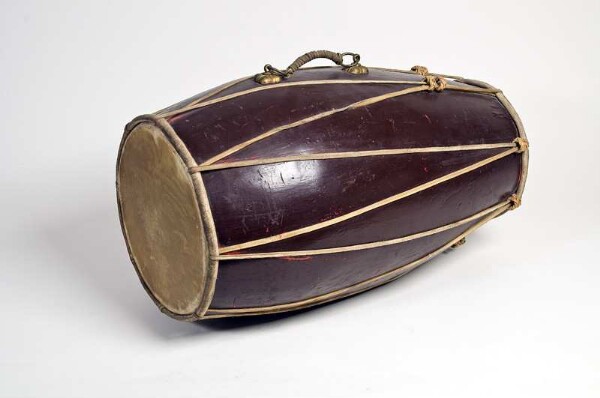
Slotted drum
kendang
Information about the language not available
Save
kendang
This collection item does not have a name in the language of origin. If you know the name or have comments, use this form to contact the data-providing institution.
Save
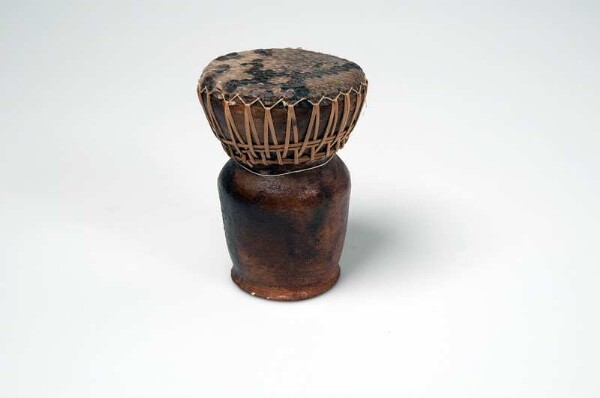
Cup drum
Image not available
This collection item does not have a name in the language of origin. If you know the name or have comments, use this form to contact the data-providing institution.
Save
Bowl-necked lute
This collection item does not have a name in the language of origin. If you know the name or have comments, use this form to contact the data-providing institution.
Save
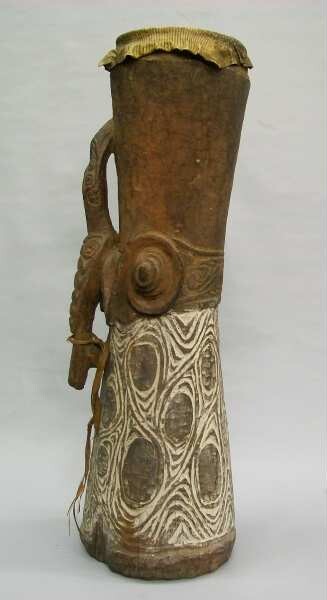
Drum
This collection item does not have a name in the language of origin. If you know the name or have comments, use this form to contact the data-providing institution.
Save
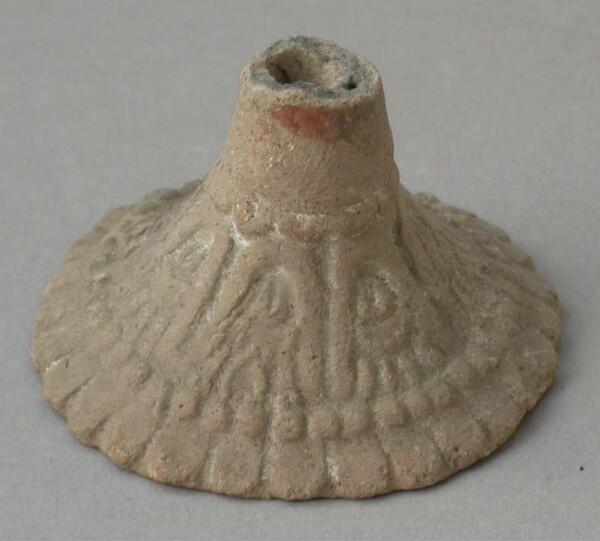
Clay flute (fragment)
This collection item does not have a name in the language of origin. If you know the name or have comments, use this form to contact the data-providing institution.