In addition to the technically required cookies, our website also uses cookies for statistical evaluation. You can also use the website without these cookies. By clicking on "I agree" you agree that we may set cookies for analysis purposes. You can see and change your cookie settings here.
This collection item does not have a name in the language of origin. If you know the name or have comments, use this form to contact the data-providing institution.
Rim sherd of an ovaloid jug. The ceramic was smoothed, slurried and primed on both sides. Its exterior is polychrome painted and polished. The painting and primer are partially eroded. Objects IV Ca 47439a-e belong to different vessels. The pottery has a white-yellowish base colour, which was painted red-orange and black-brown on the outside of the vessel. A horizontal frieze consisting of interlocking stepped elements runs below the rim. Below this is a vertical, horizontal sequence of images. The preserved motif fragment belongs to a zoomorphic motif that Lothrop (1926) classifies as plumed serpent, motifs B and C. Irregular traces of a white-yellowish primer are visible on the inside of the pottery. Symbolic meaning: the zoomorphic creature combines snake and cat attributes. According to Lothrop (1926): highland polychrome ware. Cultural significance: the objects of the Papagayo Policromo group represent the beginning of polychrome painting on a white-yellowish ground in the Gran Nicoya region. The tradition lasted until the Policromo Tardío (1350-1520d.C.). Its decoration shows a strong Mesoamerican influence. It manifests itself, among other things, in the replacement of lizard and bat themes by depictions of cats of prey and snakes. (Künne 2004)
This collection item does not have a name in the language of origin. If you know the name or have comments, use this form to contact the data-providing institution.
Save
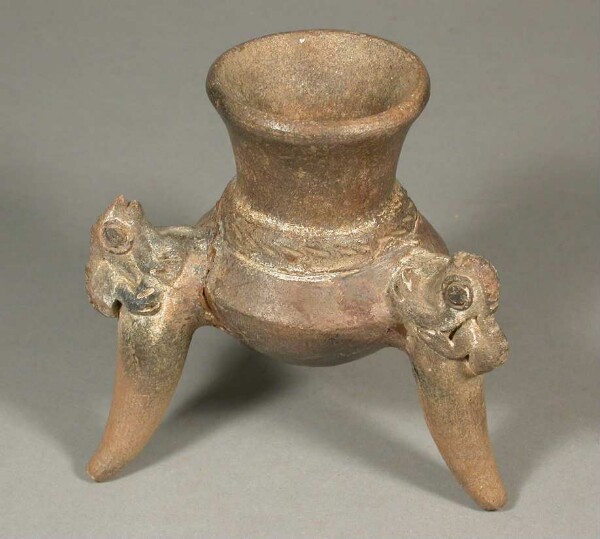
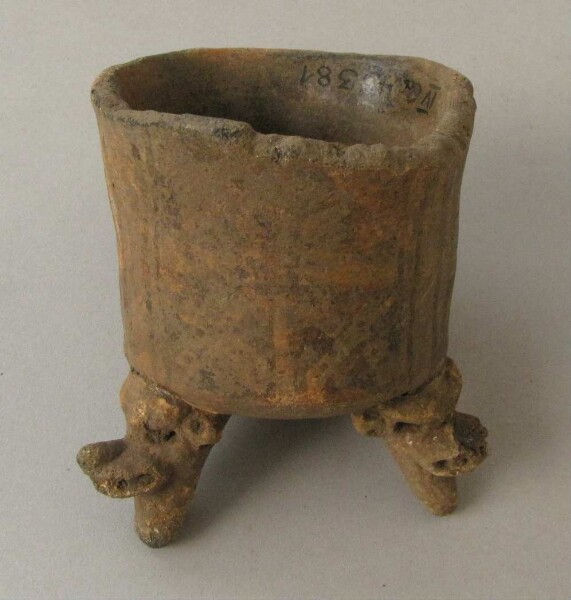
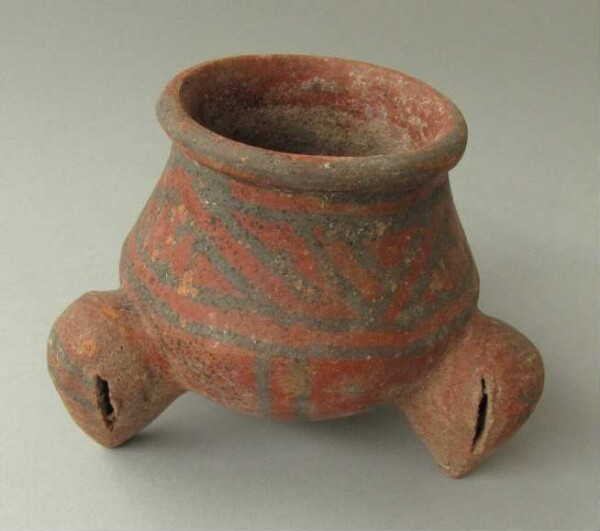
Tripod vessel
This collection item does not have a name in the language of origin. If you know the name or have comments, use this form to contact the data-providing institution.
Save
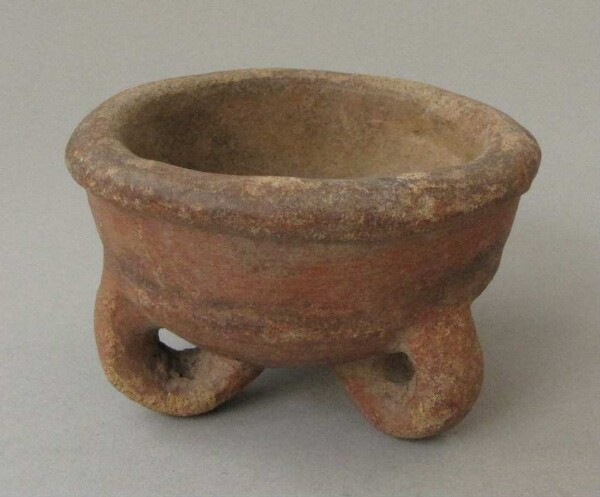
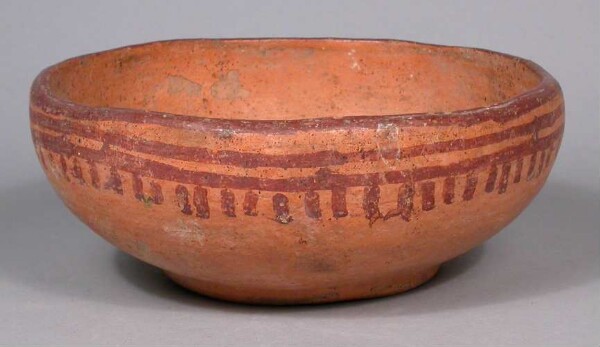
Clay bowl
This collection item does not have a name in the language of origin. If you know the name or have comments, use this form to contact the data-providing institution.
Save
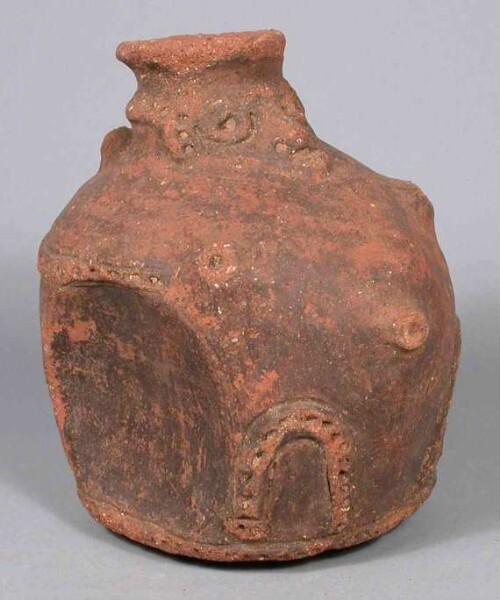
Clay bottle
This collection item does not have a name in the language of origin. If you know the name or have comments, use this form to contact the data-providing institution.
Save
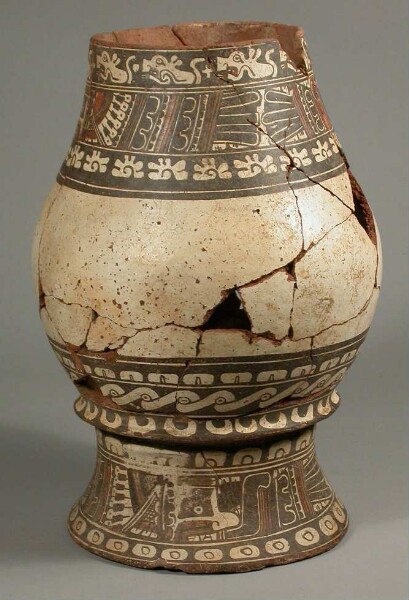
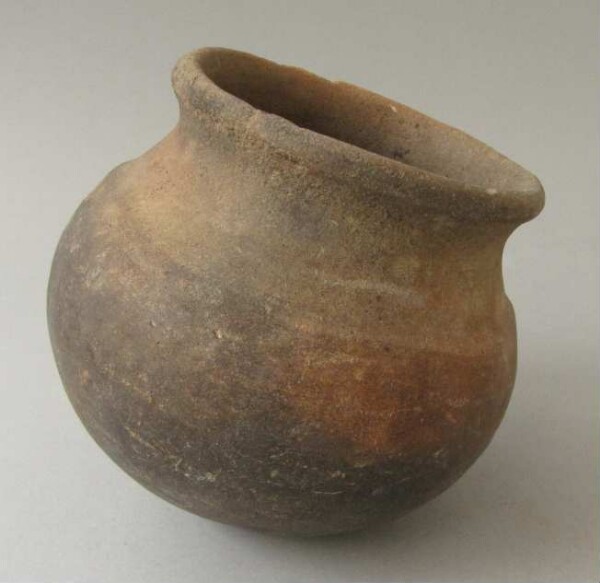
Clay vessel
This collection item does not have a name in the language of origin. If you know the name or have comments, use this form to contact the data-providing institution.
Save
Mug
This collection item does not have a name in the language of origin. If you know the name or have comments, use this form to contact the data-providing institution.
Save
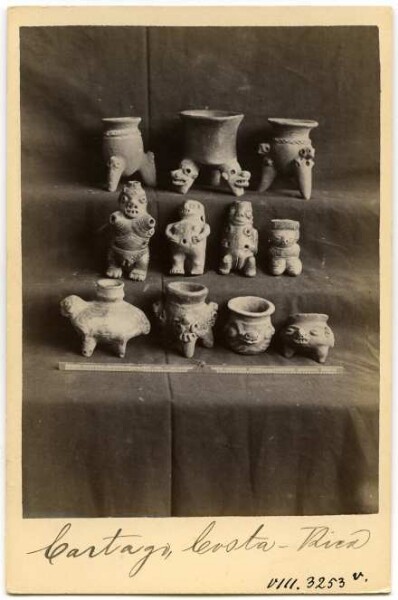
Eleven clay vessels and clay figures from the Museo Nacional, San José (Costa Rica)
This collection item does not have a name in the language of origin. If you know the name or have comments, use this form to contact the data-providing institution.
Save
Clay bowl
This collection item does not have a name in the language of origin. If you know the name or have comments, use this form to contact the data-providing institution.
Save
Clay vessel
This collection item does not have a name in the language of origin. If you know the name or have comments, use this form to contact the data-providing institution.
Save
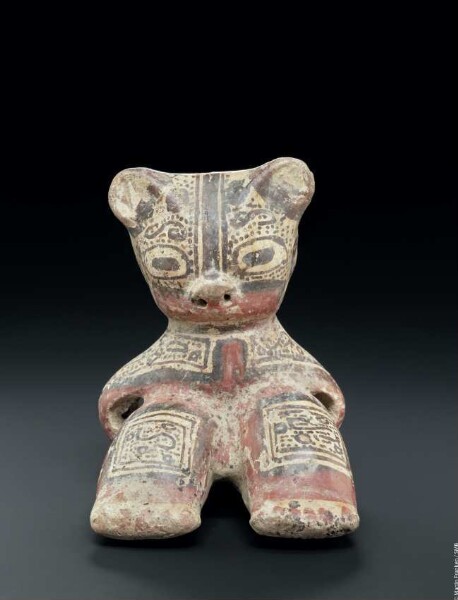
Clay figure
This collection item does not have a name in the language of origin. If you know the name or have comments, use this form to contact the data-providing institution.
Save
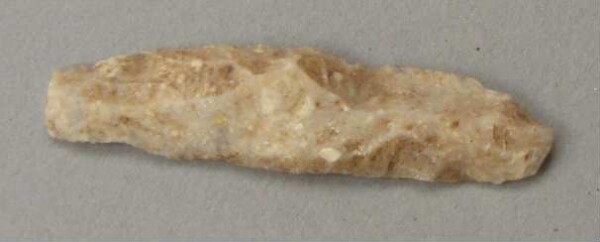
Flint knife
This collection item does not have a name in the language of origin. If you know the name or have comments, use this form to contact the data-providing institution.