In addition to the technically required cookies, our website also uses cookies for statistical evaluation. You can also use the website without these cookies. By clicking on "I agree" you agree that we may set cookies for analysis purposes. You can see and change your cookie settings here.
Eleven strips of string [are] detached from the epidermis between the two pierced bamboo nodes. Under each string [are] two bars of different heights (pieces of bark from a palm leaf stalk). Where the strings have grown together with the epidermis, the tube is wrapped four times with twisted plant material, the ends of which are knotted together. "Hovaarbeit aus Nossi Be" from Ulrich Wegner: Afrikanische Saiteninstrumente, Staatliche Museen Berlin - SPK, 1984 (Appendix Object Catalogue)
This collection item does not have a name in the language of origin. If you know the name or have comments, use this form to contact the data-providing institution.
Save
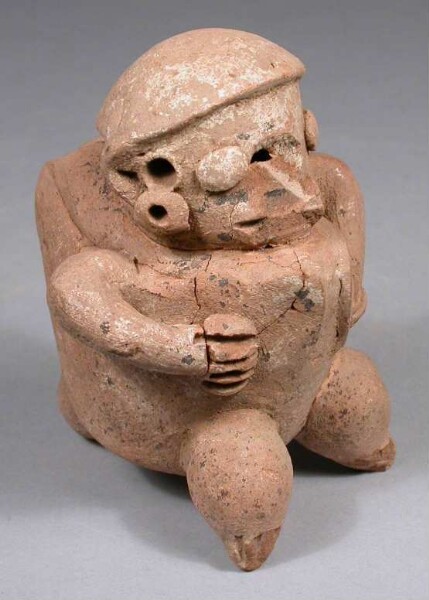
Clay whistle
gender wayang
Information about the language not available
Save
gender wayang
This collection item does not have a name in the language of origin. If you know the name or have comments, use this form to contact the data-providing institution.
Save
Cylinder drum
amayogi
Information about the language not available
Save
Vessel rattle
bonang panerus (Gamelan)
Information about the language not available
Save
bonang panerus (gamelan)
This collection item does not have a name in the language of origin. If you know the name or have comments, use this form to contact the data-providing institution.
Save
Fragment of a clay pipe
komun'go
Information about the language not available
Save
komun'go
This collection item does not have a name in the language of origin. If you know the name or have comments, use this form to contact the data-providing institution.