In addition to the technically required cookies, our website also uses cookies for statistical evaluation. You can also use the website without these cookies. By clicking on "I agree" you agree that we may set cookies for analysis purposes. You can see and change your cookie settings here.
This collection item does not have a name in the language of origin. If you know the name or have comments, use this form to contact the data-providing institution.
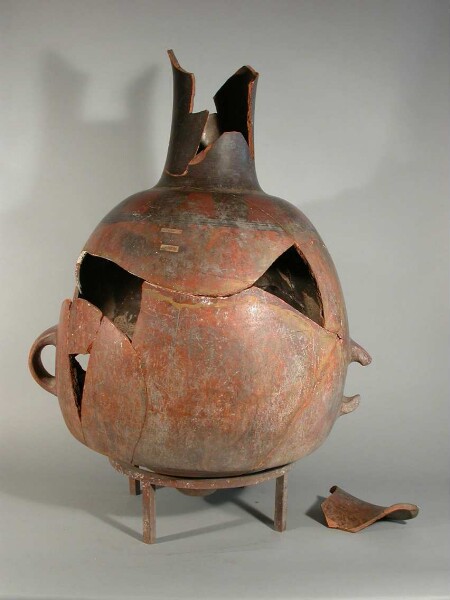
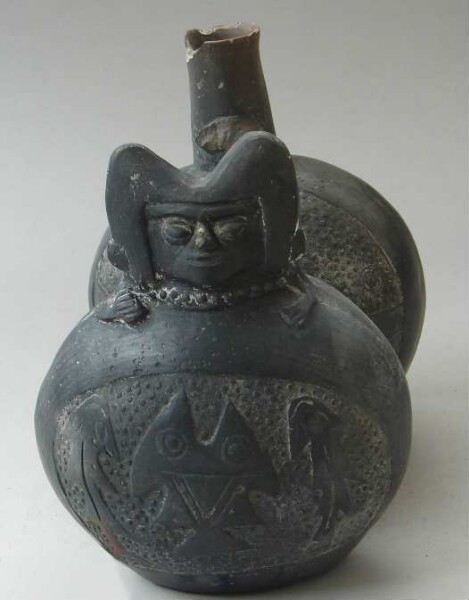
Bellied figurine vessel in the shape of an anthropomorphic head. The hollow object has an indented rim with a flattened lip. Its wall was decorated with incisions, dots, stamped indentations and sculptural applications. The ceramic has a flattened base. It is smoothed and slurried on both sides. The outside has been primed, incised and lightly polished. The object is heavily fragmented. The monochrome ceramic has a red-orange base colour. On the outside of the vessel wall are applied and pressed-out decorations depicting an anthropomorphic face. It has a small mouth and a squat nose. The sculpture was decorated with geometric incisions (curvilinear lines) that suggest a face painting. The facial area is separated from the rest of the vessel by an attached bulge. The back of the head is decorated with careless incisions that may have been added after firing. Symbolic meaning: trophy head (?). According to Lothrop 1926: orange brown ware. According to Lehmann 1913: El Viejo style. Symbolic meaning: trophy head (?). Cultural significance: the type is known both from burials and from household contexts. His ceramics show design influences from the Central Highlands and the Atlantic Slope of Costa Rica. (Künne 2004)
This collection item does not have a name in the language of origin. If you know the name or have comments, use this form to contact the data-providing institution.
Save
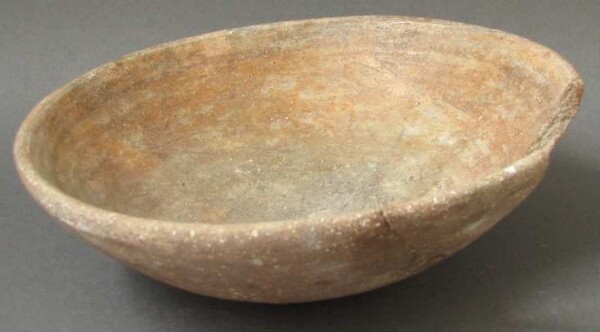
Clay vessel
This collection item does not have a name in the language of origin. If you know the name or have comments, use this form to contact the data-providing institution.
Save
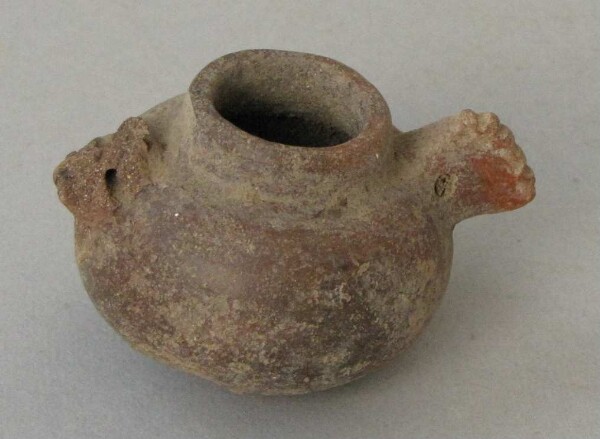
Clay vessel
This collection item does not have a name in the language of origin. If you know the name or have comments, use this form to contact the data-providing institution.
Save
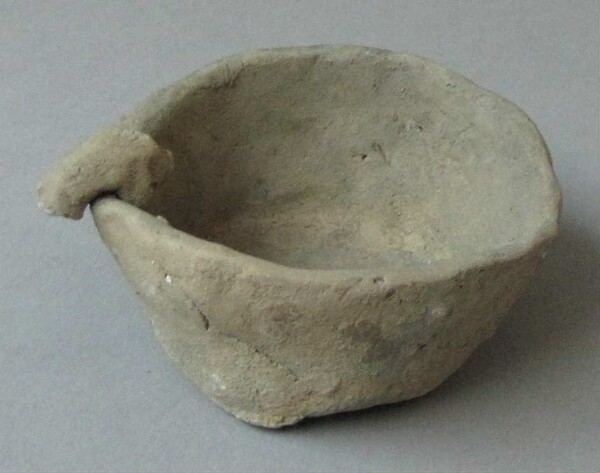
Clay vessel
This collection item does not have a name in the language of origin. If you know the name or have comments, use this form to contact the data-providing institution.
Save
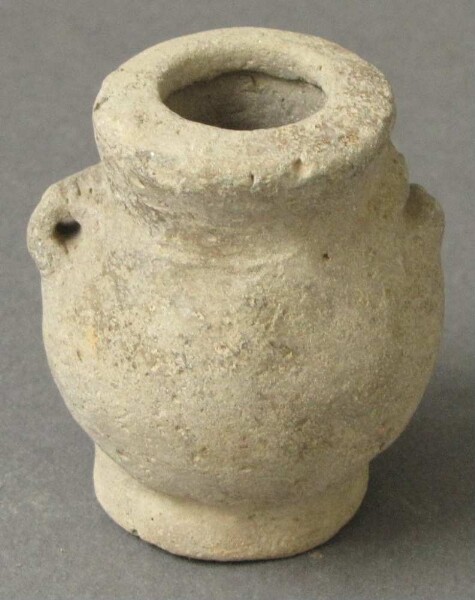
Clay vessel
This collection item does not have a name in the language of origin. If you know the name or have comments, use this form to contact the data-providing institution.
Save
Clay vessel
This collection item does not have a name in the language of origin. If you know the name or have comments, use this form to contact the data-providing institution.
Save
Clay vessel
This collection item does not have a name in the language of origin. If you know the name or have comments, use this form to contact the data-providing institution.
Save
Clay vessel
This collection item does not have a name in the language of origin. If you know the name or have comments, use this form to contact the data-providing institution.
Save
Clay vessel
This collection item does not have a name in the language of origin. If you know the name or have comments, use this form to contact the data-providing institution.
Save
Clay vessel
This collection item does not have a name in the language of origin. If you know the name or have comments, use this form to contact the data-providing institution.
Save
Clay vessel
This collection item does not have a name in the language of origin. If you know the name or have comments, use this form to contact the data-providing institution.