In addition to the technically required cookies, our website also uses cookies for statistical evaluation. You can also use the website without these cookies. By clicking on "I agree" you agree that we may set cookies for analysis purposes. You can see and change your cookie settings here.
A round wooden body shell. Skin strap tensioning of the membrane against a tensioning ring made of quadruple wire winding running close to the skin edge. Longitudinal arms diverging towards the slightly bent crossbar in the centre. Five wire strings. Tangle rings that bind the upper string ends together with strips of cloth. The lower tailpiece is a double wire loop that extends from the back tension ring to the top. A small, round perforation at the apex of the bowl arch. An angular wooden bar, rounded on the upper long sides. The two long arms are bordered by two halves of a belt strap clasped together at the ends. The outside of the bowl is blue in colour. Ten small, round membrane perforations, some of which are arranged in triangles. from Ulrich Wegner: Afrikanische Saiteninstrumente, Staatliche Museen Berlin - SPK, 1984 (Appendix Object Catalogue)
This collection item does not have a name in the language of origin. If you know the name or have comments, use this form to contact the data-providing institution.
Save
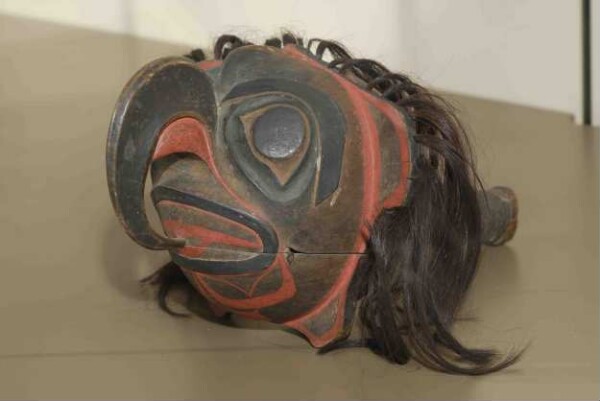
Rattle
This collection item does not have a name in the language of origin. If you know the name or have comments, use this form to contact the data-providing institution.
Save
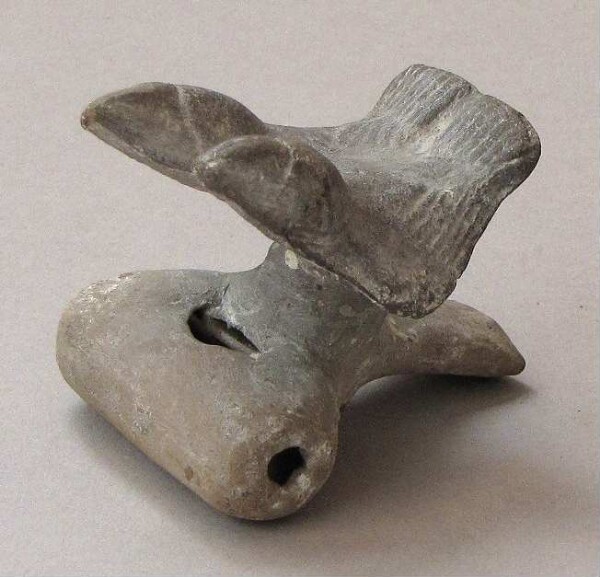
Clay whistle
This collection item does not have a name in the language of origin. If you know the name or have comments, use this form to contact the data-providing institution.
Save
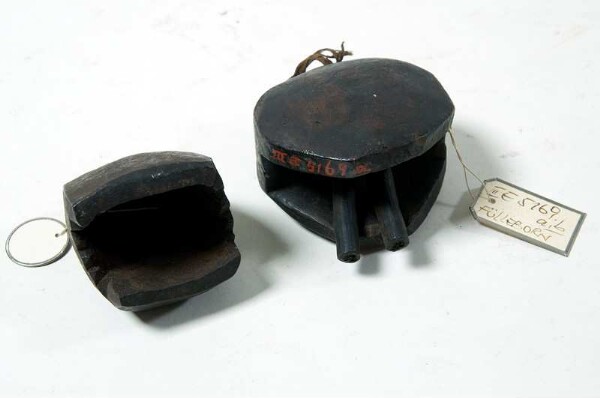
Dog bells (hunting)
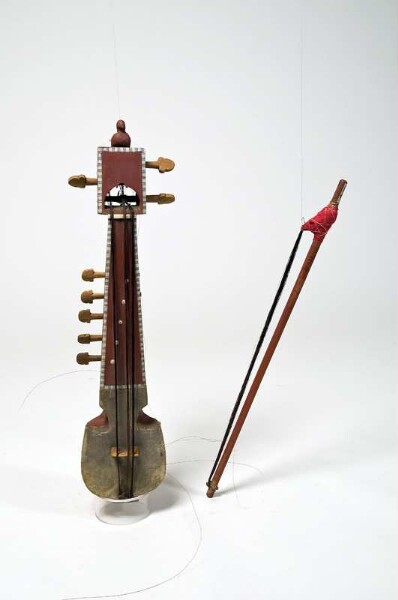
Chikara
Information about the language not available
Save
chicara
This collection item does not have a name in the language of origin. If you know the name or have comments, use this form to contact the data-providing institution.
Save
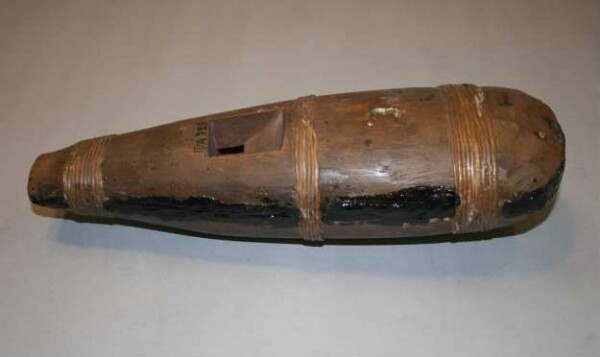
Signal whistle
This collection item does not have a name in the language of origin. If you know the name or have comments, use this form to contact the data-providing institution.
Save
Clay whistle
This collection item does not have a name in the language of origin. If you know the name or have comments, use this form to contact the data-providing institution.
Save
Gujarati
This collection item does not have a name in the language of origin. If you know the name or have comments, use this form to contact the data-providing institution.
Save
Pan flute and flute
This collection item does not have a name in the language of origin. If you know the name or have comments, use this form to contact the data-providing institution.
Save
Double flute
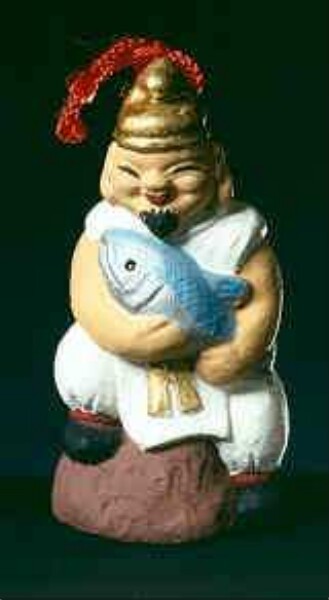
Ebisu
Information about the language not available
Save
God of luck Ebisu with Tai fish
This collection item does not have a name in the language of origin. If you know the name or have comments, use this form to contact the data-providing institution.