In addition to the technically required cookies, our website also uses cookies for statistical evaluation. You can also use the website without these cookies. By clicking on "I agree" you agree that we may set cookies for analysis purposes. You can see and change your cookie settings here.
This collection item does not have a name in the language of origin. If you know the name or have comments, use this form to contact the data-providing institution.
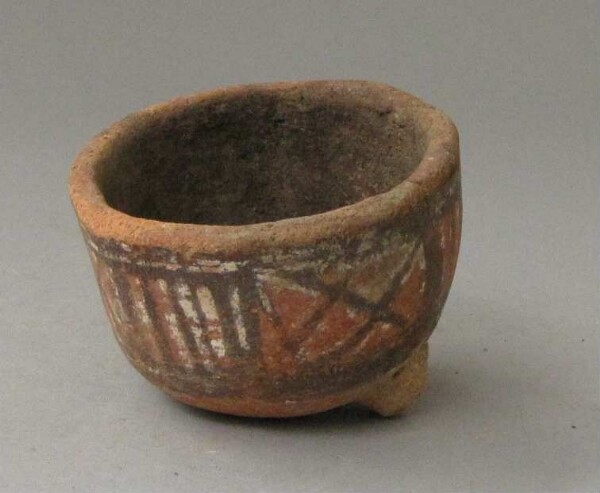
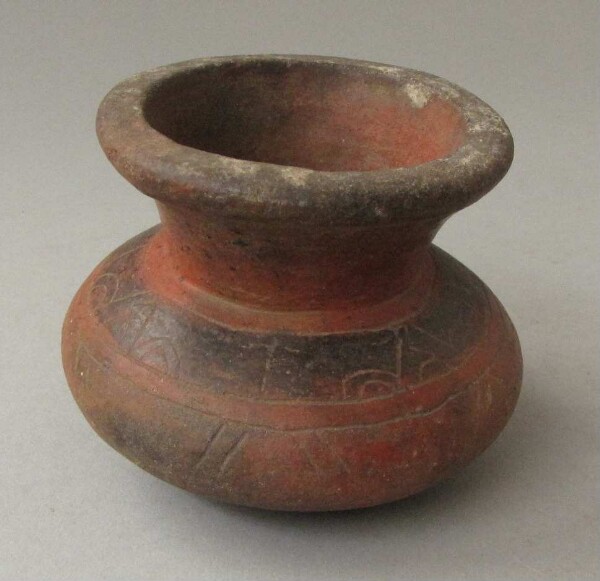
Small, round-bottomed bowl with a stepped, slightly overhanging rim. The object has been smoothed, slurried and primed on both sides. Its exterior is painted and highly polished. The primer and paint are barely eroded. The restored vessel has fractures and flaws. The ceramic has a salmon-coloured undercoat, which was painted red and black. The outer rim is decorated with a circumferential frieze consisting of diagonal black stripes. There is another surrounding frieze on the wall. It is composed of several horizontal, oval pictorial fields in which a highly stylised lizard creature appears. The various sectors are separated from each other by wide black stripes with circular indentations. There are several circumferential lines at the base. The inside was primed in salmon colour. According to Lothrop 1926: Nicoya polychrome ware, alligator motif, type A. Cultural significance: the Carrillo and Galo Policromo groups (800-500d.C.) represent the first truly polychrome ceramics produced in the Gran Nicoya region. Their design (shape, colouring, individual motifs) is strongly reminiscent of the Ulua Policromo group (950-550d.C.). (Künne 2004)
This collection item does not have a name in the language of origin. If you know the name or have comments, use this form to contact the data-providing institution.
Save
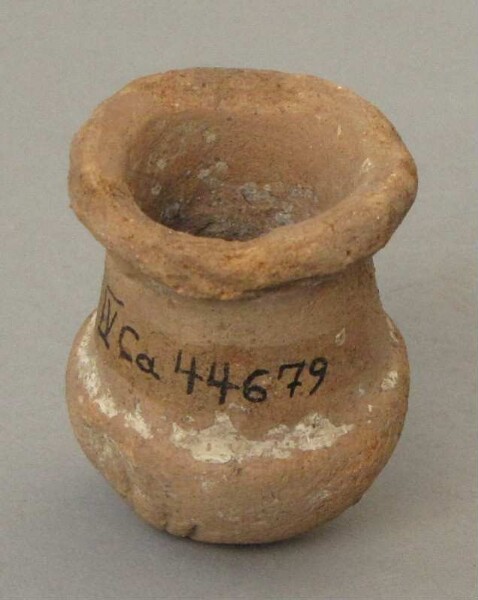
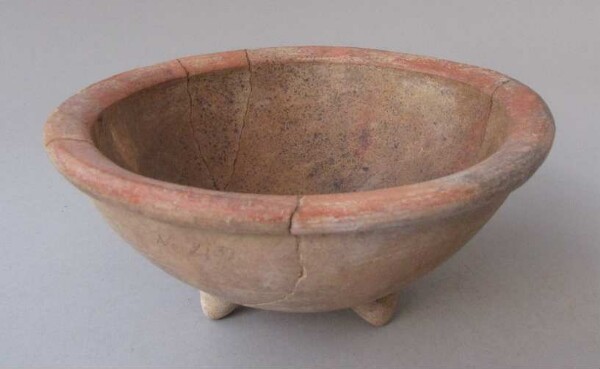
Clay vessel
This collection item does not have a name in the language of origin. If you know the name or have comments, use this form to contact the data-providing institution.
Save
Clay vessel
This collection item does not have a name in the language of origin. If you know the name or have comments, use this form to contact the data-providing institution.
Save
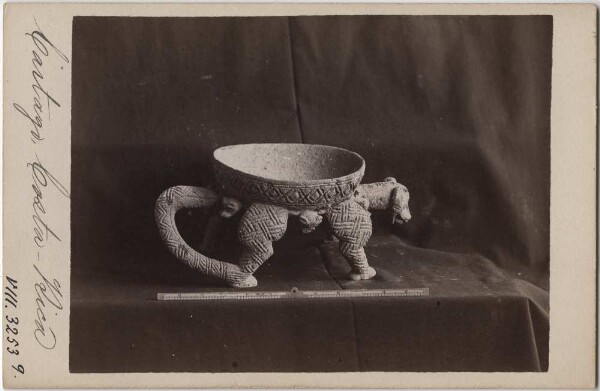
Clay vessel from the Museo Nacional, San José (Costa Rica)
This collection item does not have a name in the language of origin. If you know the name or have comments, use this form to contact the data-providing institution.
Save
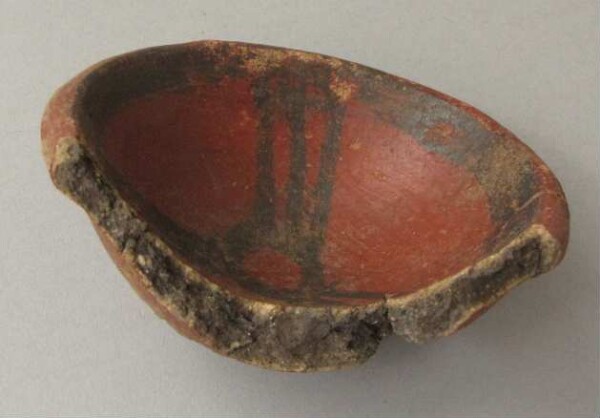
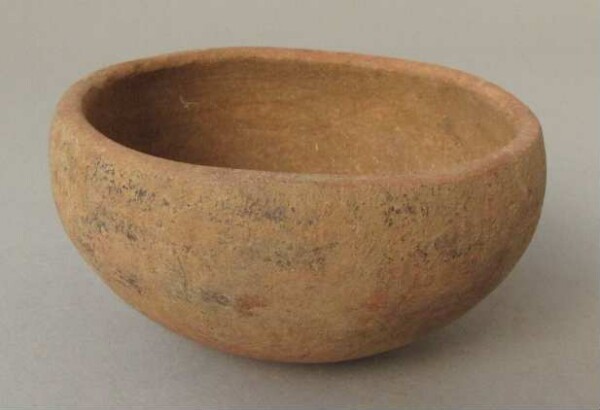
Clay bowl
This collection item does not have a name in the language of origin. If you know the name or have comments, use this form to contact the data-providing institution.
Save
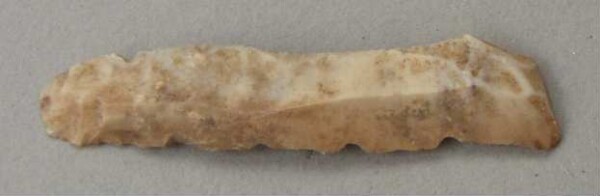
Flint knife
This collection item does not have a name in the language of origin. If you know the name or have comments, use this form to contact the data-providing institution.
Save
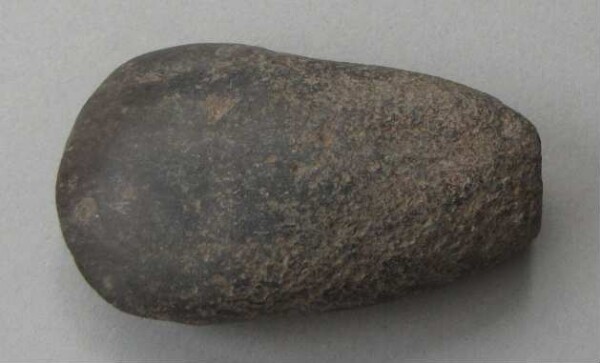
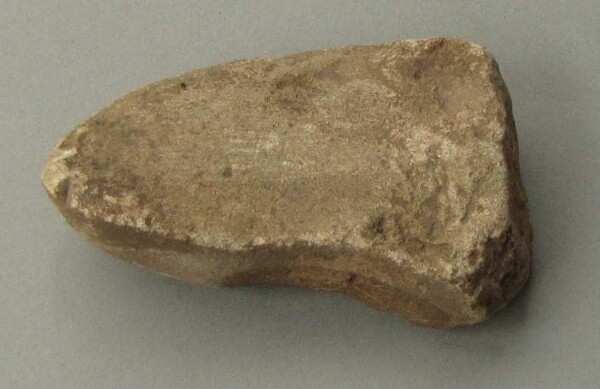
Stone axe blade
This collection item does not have a name in the language of origin. If you know the name or have comments, use this form to contact the data-providing institution.
Save
Clay vessel
This collection item does not have a name in the language of origin. If you know the name or have comments, use this form to contact the data-providing institution.
Save
Clay bowl
This collection item does not have a name in the language of origin. If you know the name or have comments, use this form to contact the data-providing institution.
Save
Clay vessel
molejón
Information about the language not available
Save
Grinding stone
This collection item does not have a name in the language of origin. If you know the name or have comments, use this form to contact the data-providing institution.