In addition to the technically required cookies, our website also uses cookies for statistical evaluation. You can also use the website without these cookies. By clicking on "I agree" you agree that we may set cookies for analysis purposes. You can see and change your cookie settings here.
This collection item does not have a name in the language of origin. If you know the name or have comments, use this form to contact the data-providing institution.
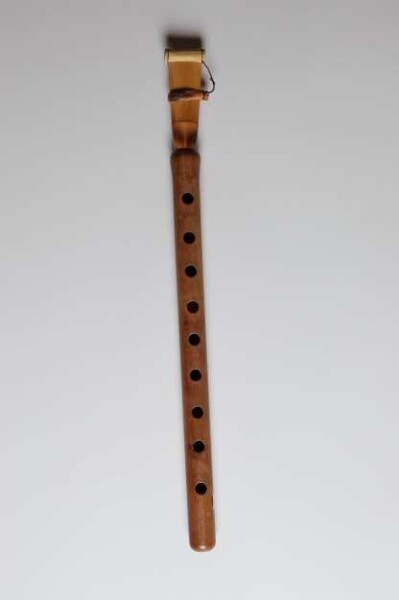
The karamouza is very similar to the pipiza. It is also played in the same regions and corresponds to the Turkish Orta Zurnā. The body of this instrument has a slender appearance and the elegant funnel has three decorative grooves on the lower edge. The boxwood fork insert is also decorated with ornamental grooves. There are two small resonance holes in the front and on both sides of the funnel;
This collection item does not have a name in the language of origin. If you know the name or have comments, use this form to contact the data-providing institution.
Save
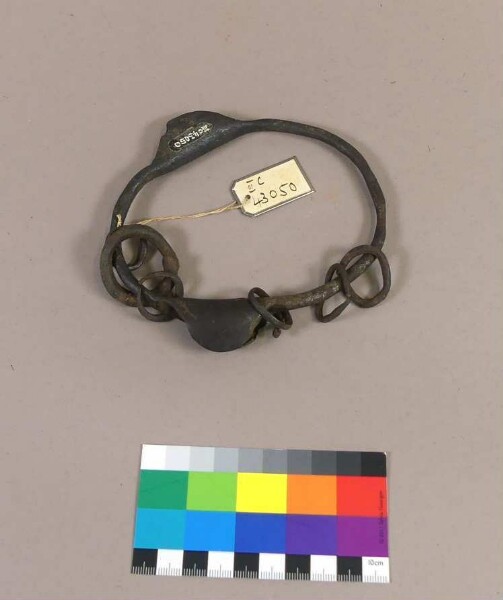
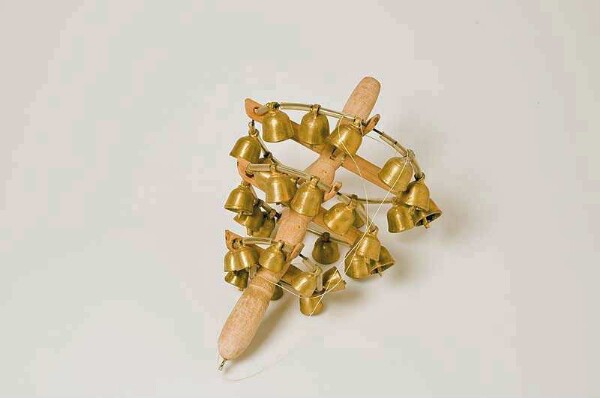
Foot rattle
This collection item does not have a name in the language of origin. If you know the name or have comments, use this form to contact the data-providing institution.
Save
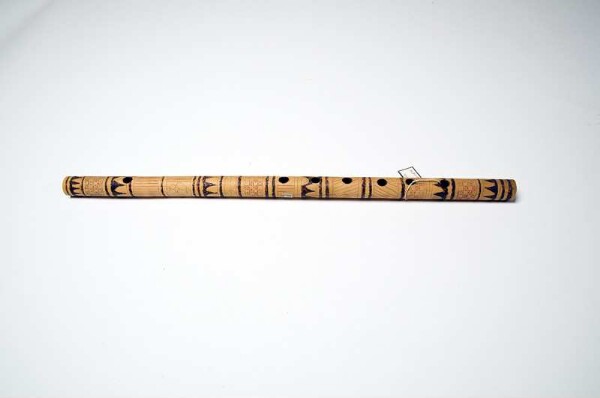
open transverse flute with finger holes
This collection item does not have a name in the language of origin. If you know the name or have comments, use this form to contact the data-providing institution.
Save
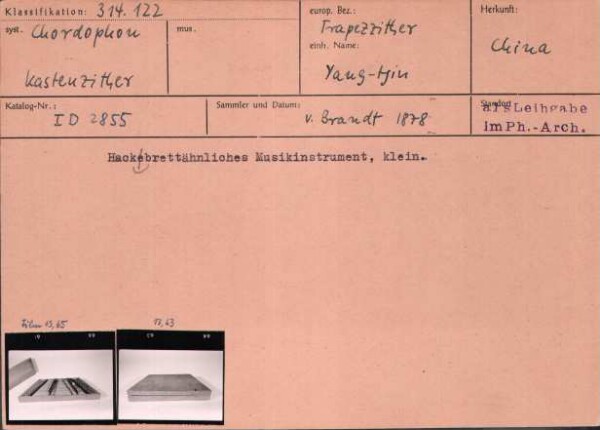
Trapeze zither (model)
This collection item does not have a name in the language of origin. If you know the name or have comments, use this form to contact the data-providing institution.
Save
Clay flute
haián
Information about the language not available
Save
haián
This collection item does not have a name in the language of origin. If you know the name or have comments, use this form to contact the data-providing institution.
Save
Mammal
This collection item does not have a name in the language of origin. If you know the name or have comments, use this form to contact the data-providing institution.
Save
Dance ornament
gentorak
Information about the language not available
Save
gentorak
This collection item does not have a name in the language of origin. If you know the name or have comments, use this form to contact the data-providing institution.
Save
Balamán
This collection item does not have a name in the language of origin. If you know the name or have comments, use this form to contact the data-providing institution.