In addition to the technically required cookies, our website also uses cookies for statistical evaluation. You can also use the website without these cookies. By clicking on "I agree" you agree that we may set cookies for analysis purposes. You can see and change your cookie settings here.
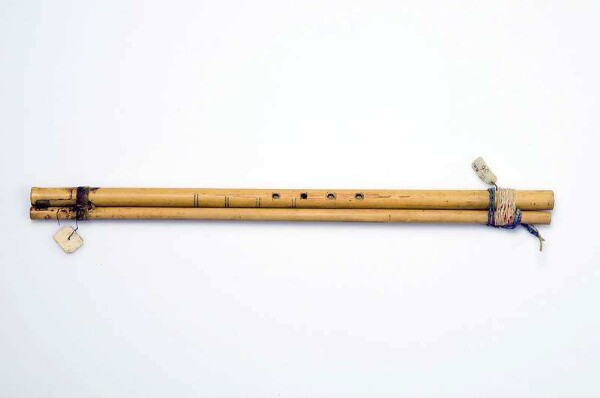
Index card: Made from a bamboo cane which has been cut through above a bamboo intermediate base so that the lower end is closed while the other end is blown into. There the bamboo is cut diagonally towards the centre of the hole. About 2/3 of the cane is split. When blown into the tube, the split bamboo is compressed in such a way that the air can only escape through the very narrow gap. Used as a children's toy. Condition at the time of purchase: good, but the instrument can no longer be blown due to dryness.
This collection item does not have a name in the language of origin. If you know the name or have comments, use this form to contact the data-providing institution.
Save
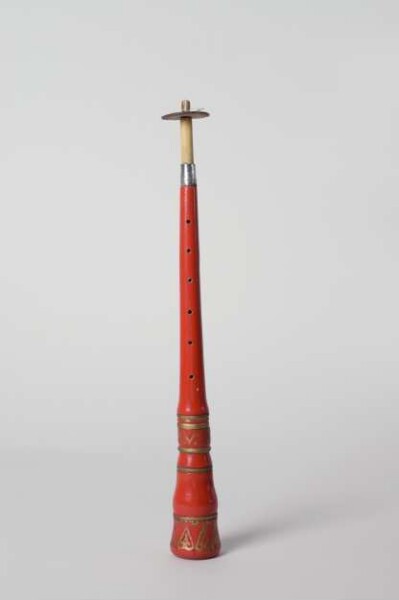
Piercing tongue shawm
khaijari
Information about the language not available
Save
khaijari
This collection item does not have a name in the language of origin. If you know the name or have comments, use this form to contact the data-providing institution.
Save
Selompret
This collection item does not have a name in the language of origin. If you know the name or have comments, use this form to contact the data-providing institution.
Save
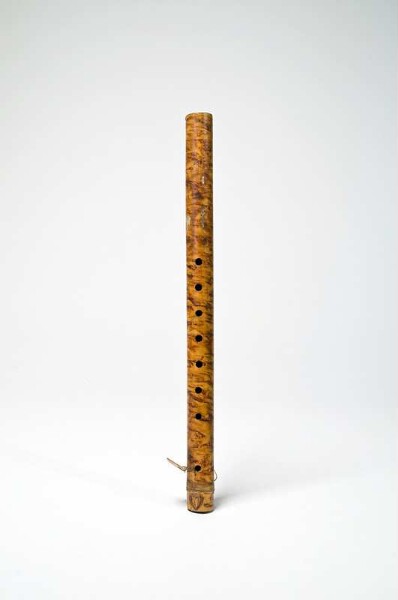
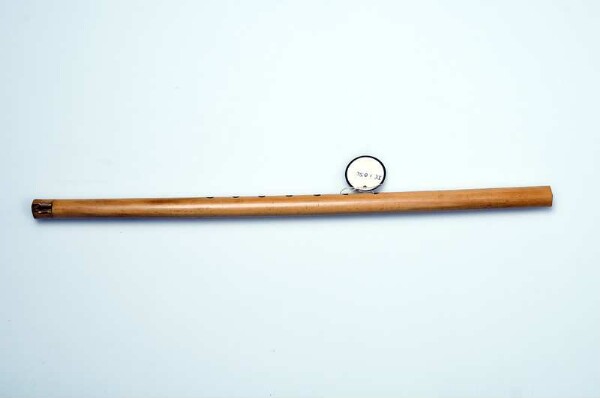
Semi-dovetailed inner flute with finger holes
This collection item does not have a name in the language of origin. If you know the name or have comments, use this form to contact the data-providing institution.
Save
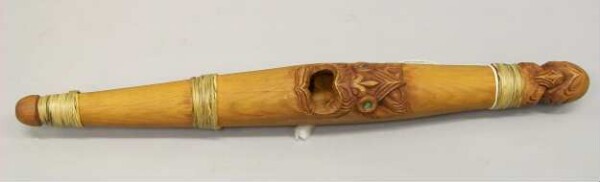
putorino
This collection item does not have a name in the language of origin. If you know the name or have comments, use this form to contact the data-providing institution.
Save
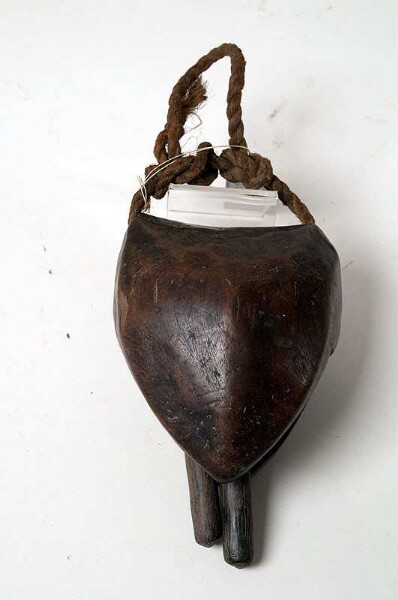
Wooden bell
This collection item does not have a name in the language of origin. If you know the name or have comments, use this form to contact the data-providing institution.
Save
Piercing tongue shawm
This collection item does not have a name in the language of origin. If you know the name or have comments, use this form to contact the data-providing institution.
Save
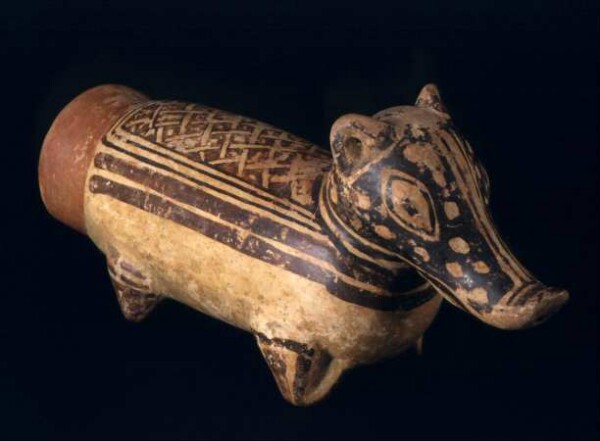
Clay drum
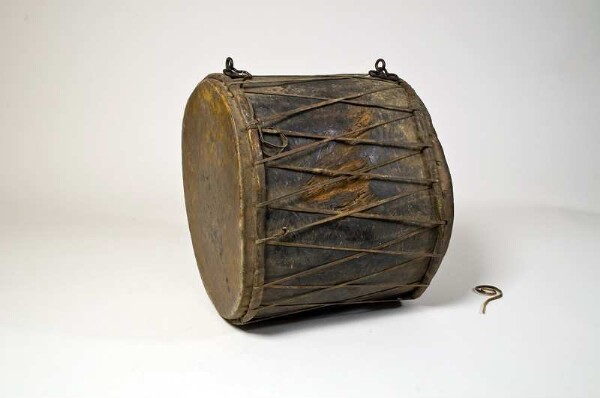
dhimay
Information about the language not available
Save
dhimay
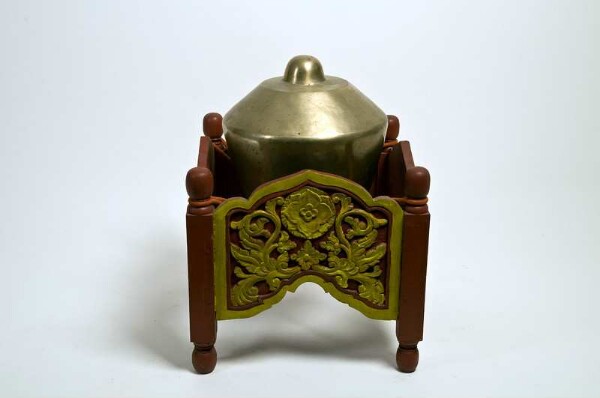
kenong
Information about the language not available
Save
kenong
This collection item does not have a name in the language of origin. If you know the name or have comments, use this form to contact the data-providing institution.