In addition to the technically required cookies, our website also uses cookies for statistical evaluation. You can also use the website without these cookies. By clicking on "I agree" you agree that we may set cookies for analysis purposes. You can see and change your cookie settings here.
Ein halbtrapezförmiger Holzkasten. Die 74 Saiten aus Nylon, verlaufen von Perforationen in einer am Rande überstehenden Deckenbrettleiste aus, zu einem durchgehenden Steg, dessen fünf Füße auf fünf rechteckigen Hautmembranen ruhen, [und] von dort nach Überqueren des zentralen, schallochdurchbrochenen Brettabschnitts zu einer erhöhten, der Schräge des Kastenrandes folgenden Leiste, auf der bis zu sechs umklappbare Plättchen aus Kupfer in Reihe unter jedem Saitenchor angeordnet sind (teilweise ergänzt), und abschließend nach Überqueren einer erhöhten Sattelleiste zu den oberständigen Wirbeln. Die Mehrzahl der Saiten [ist] in Dreiergruppen chorisch zusammengefaßt. Pyramidenförmige Wirbelköpfe. Stimmschlüssel und Fingerplektren fehlen. Etwa die Hälfte der Saiten [sind] ergänzt. Entspricht ihre Anzahl der der Originalbespannung? Auf der zentralen Brettfläche [befindet sich] ein, der Umrißlinie des Instrumentes folgendes, mit Holz- und Perlmutteinlagen abgegrenztes, halbtrapezförmiges Feld. Die drei runden und ein geschweiftes Schalloch [sind mit] mit durchbrochenen Rosetten und anderen floralen Mustern aus perlmuttbeschichtetem Holz ausgefüllt. Auch an den Längsrändern des Kastens [sind] Holzeinlagen. „Bizerta. Die beiden Instrumentenbauer Bel Kädja und Ziffaoui haben dieses Instrument von ihrem Vater ererbt, der es etwa 1904/1905 gebaut hat.“ aus Ulrich Wegner: Afrikanische Saiteninstrumente, Staatliche Museen Berlin – SPK, 1984 (Anhang Objektkatalog) Trapezförmiger Resonanzkasten über dem 87 Saiten gespannt sind. Die beiden Instrumentenbauer Bel Kädja und Ziffaoui haben dieses Instrument von ihrem Vater ererbt, der es etwa 1904/05 gebaut hat. Nach Angaben der beiden umfassen diese 87 Saiten alle Töne der arab. Musik (zumindest der tunes.) 87 = 3x29 (Primzahl!)
This collection item does not have a name in the language of origin. If you know the name or have comments, use this form to contact the data-providing institution.
Save
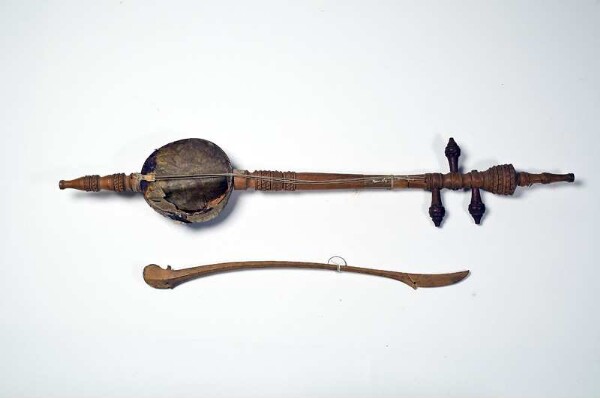
Bowl spear lute with bow
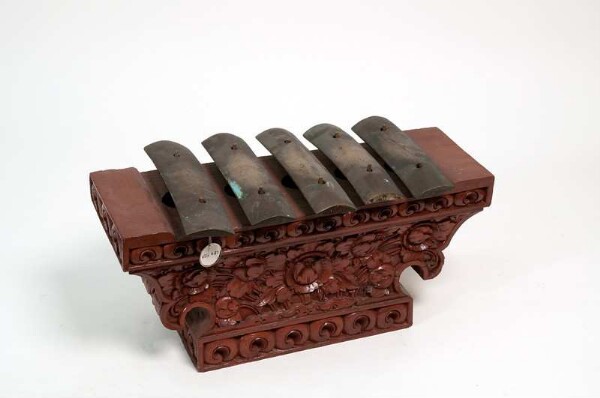
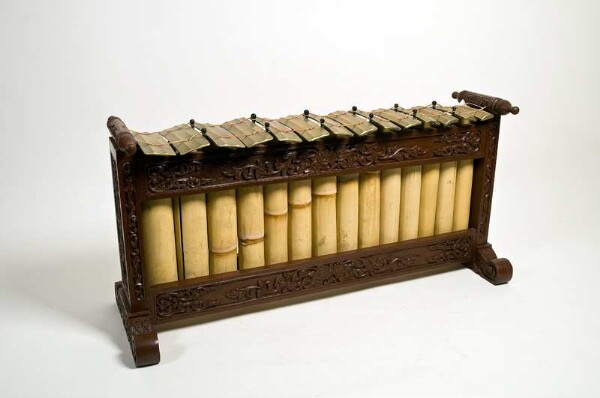
penyacah jongkok (semar pagulingan)
Information about the language not available
Save
penyacah jongkok
This collection item does not have a name in the language of origin. If you know the name or have comments, use this form to contact the data-providing institution.
Save
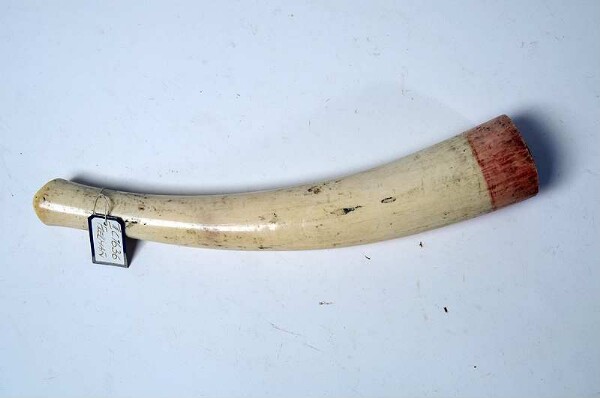
Horn
This collection item does not have a name in the language of origin. If you know the name or have comments, use this form to contact the data-providing institution.
Save
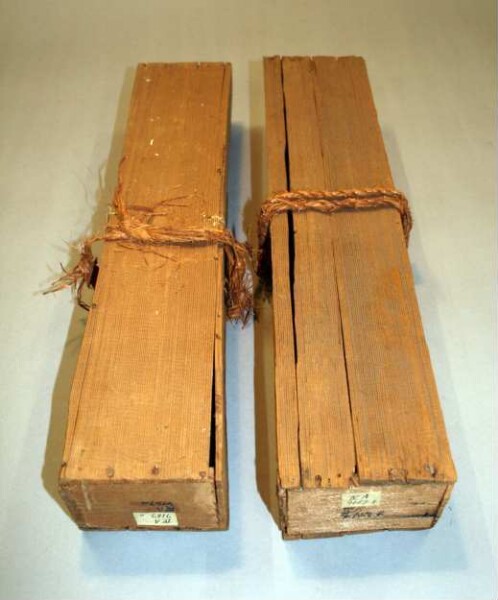
Rattle boxes
This collection item does not have a name in the language of origin. If you know the name or have comments, use this form to contact the data-providing institution.
Save
Clay flute
This collection item does not have a name in the language of origin. If you know the name or have comments, use this form to contact the data-providing institution.
Save
Flute
This collection item does not have a name in the language of origin. If you know the name or have comments, use this form to contact the data-providing institution.
Save
open longitudinal flute without finger holes
This collection item does not have a name in the language of origin. If you know the name or have comments, use this form to contact the data-providing institution.
Save
Flute
This collection item does not have a name in the language of origin. If you know the name or have comments, use this form to contact the data-providing institution.