In addition to the technically required cookies, our website also uses cookies for statistical evaluation. You can also use the website without these cookies. By clicking on "I agree" you agree that we may set cookies for analysis purposes. You can see and change your cookie settings here.
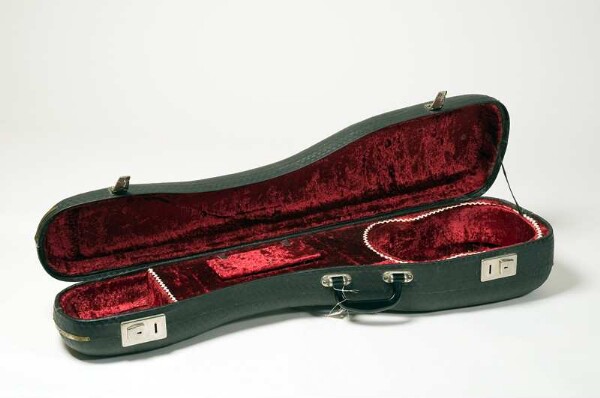
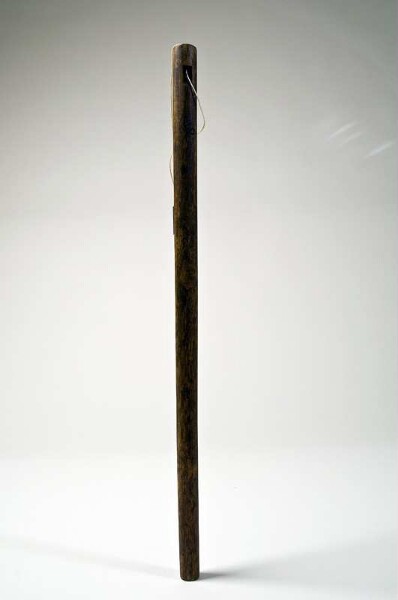
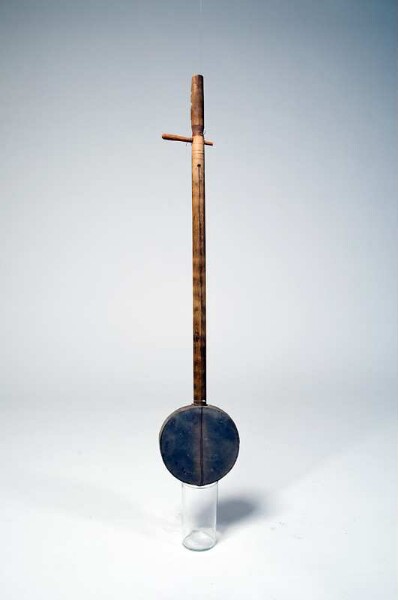
A flat, broad board of soft, light-coloured wood, slightly curved upwards in the centre line towards the string. [It is] strongly curved. There is a perforation at the tapered, round end. At the broad, rectangular cut end [is] a long, carved tenon around which the string of twisted animal tissue is wound in tight coils. Behind the carrier perforation [is the] knot fixing of the string. Branding patterns [are present]. from Ulrich Wegner: Afrikanische Saiteninstrumente, Staatliche Museen Berlin - SPK, 1984 (Appendix Object Catalogue)
This collection item does not have a name in the language of origin. If you know the name or have comments, use this form to contact the data-providing institution.
Save
Pipes
konkovka
Information about the language not available
Save
konkovka
This collection item does not have a name in the language of origin. If you know the name or have comments, use this form to contact the data-providing institution.
Save
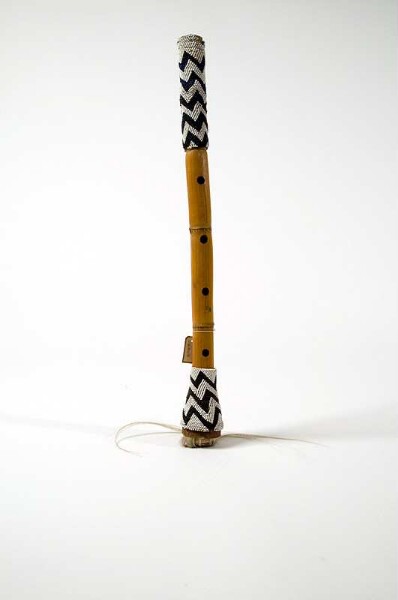
Flute
This collection item does not have a name in the language of origin. If you know the name or have comments, use this form to contact the data-providing institution.
Save
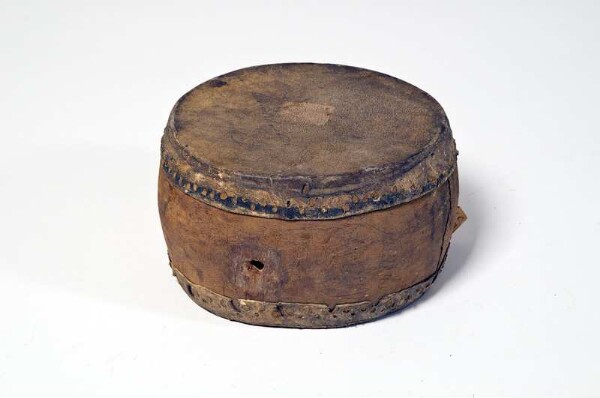
dodgy cylinder drum
This collection item does not have a name in the language of origin. If you know the name or have comments, use this form to contact the data-providing institution.
Save
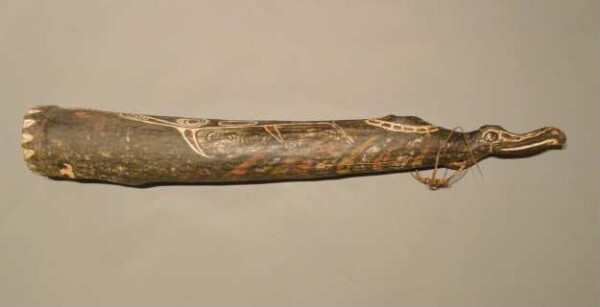
Blowing horn
This collection item does not have a name in the language of origin. If you know the name or have comments, use this form to contact the data-providing institution.
Save
Pipe
This collection item does not have a name in the language of origin. If you know the name or have comments, use this form to contact the data-providing institution.
Save
Stamping rattle
This collection item does not have a name in the language of origin. If you know the name or have comments, use this form to contact the data-providing institution.