In addition to the technically required cookies, our website also uses cookies for statistical evaluation. You can also use the website without these cookies. By clicking on "I agree" you agree that we may set cookies for analysis purposes. You can see and change your cookie settings here.
This collection item does not have a name in the language of origin. If you know the name or have comments, use this form to contact the data-providing institution.
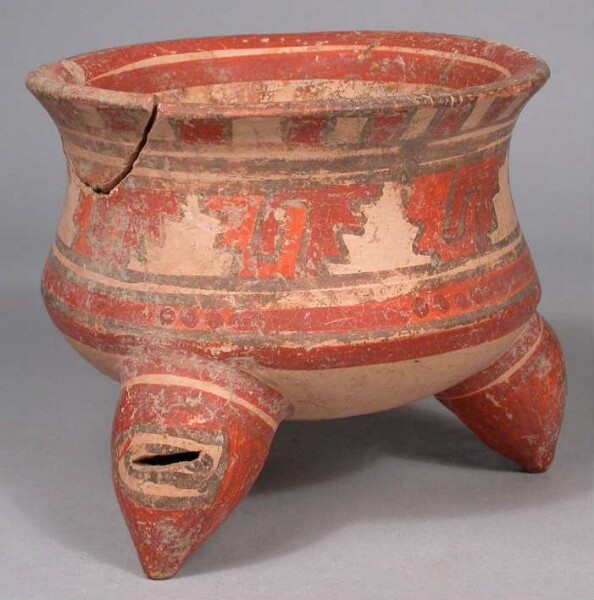
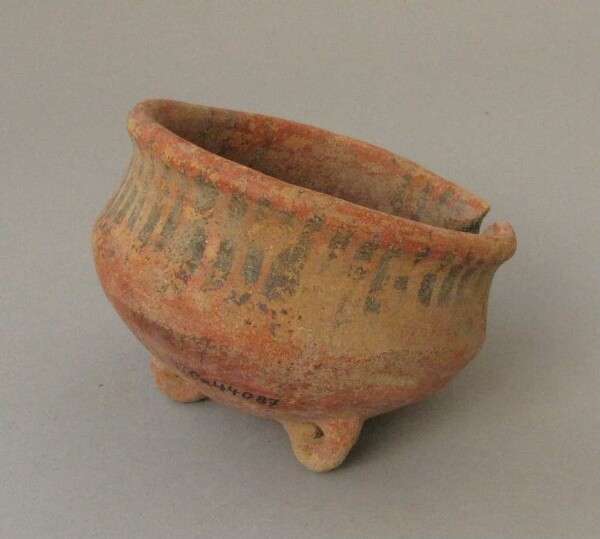
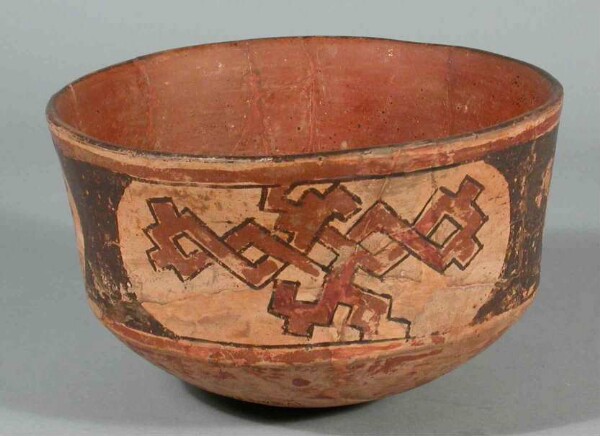
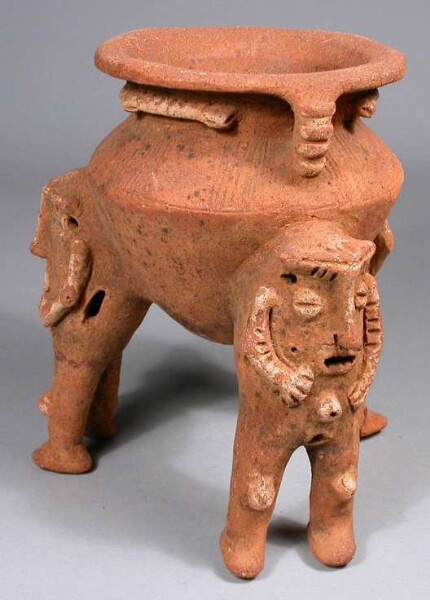
Tiefe, dreibeinige Schale mit gewölbtem Boden. Die hohlen Gefäßbeine wurden als stehende, anthropomorphe Figuren gestaltet, die eine schmale, vertikale Öffnung und Rasselkugeln besitzen. Das Objekt ist beidseitig geglättet, geschlämmt, grundiert, bemalt und hoch poliert. Bemalung und Grundierung sind partiell erodiert. Das restaurierte Gefäß wurde aus mehreren Scherben zusammengesetzt. Die Keramik besitzt eine zimtfarbene Grundfarbe, die schwarz und rot bemalt wurde. Das Objekt wird beidseitig durch ein randständiges, rotes Band verziert. Auf der Außenseite der Gefäßwand befindet sich ein umlaufender Fries, der vertikale Linienbündel und Dreiecke zeigt. Der Boden wird durch zwei breite, umlaufende, rote Linien dekoriert. Auf der Innenseite des Objekts befindet sich eine unterrandständige schwarze Linie, die ein Strich-Punkt-Dekor besitzt. Die Wand ist in vier trapezförmige Sektoren gegliedert. Die gegenständigen Bildfelder zeigen die gleichen Motive. Eine Darstellung stellt ein anthropomorphes Wesen, das einen Kopfschmuck trägt und seine Arme erhebt. Das zweite Motiv besitzt eine omegaähnliche Form. Es zeigt einen bandförmigen Körper, der schwarze Punkte (Raubkatzenqualität?) besitzt. In den Leerfeldern erscheinen Kreuzgitterstrukturen, die möglicherweise eine Schlangenqualität des dargestellten Wesens andeuten. Der Fond der Schale wird durch ein konzentrisches Quadrat verziert. Lothrop (1926) interpretiert die vier Bildfelder als "two headed monster, type A (highland polychrome ware)." Kulturelle Bedeutung: die Keramik der Mora Gruppe wurde im Nordwesten von Costa Rica hergestellt und nach dem Zentralen Hochland und der Atlantikregion des Landes gehandelt. Sie verwendet gestalterische Elemente (sitzende anthropomorphe Figuren mit Kopfschmuck, Matten-Motiv, Kan-Kreuz), die auch aus der Maya-Keramik (Copador-Gruppe) des Clásico Tardío (900-600d.C.) bekannt sind. Die Variante wurde sowohl in Bestattungen als auch in Siedlungskontexten dokumentiert. Sie tritt nicht in Nicaragua auf. Das Konvolut Velasco umfaßte ursprünglich 896 Objekte. (Künne 2004)
This collection item does not have a name in the language of origin. If you know the name or have comments, use this form to contact the data-providing institution.
Save
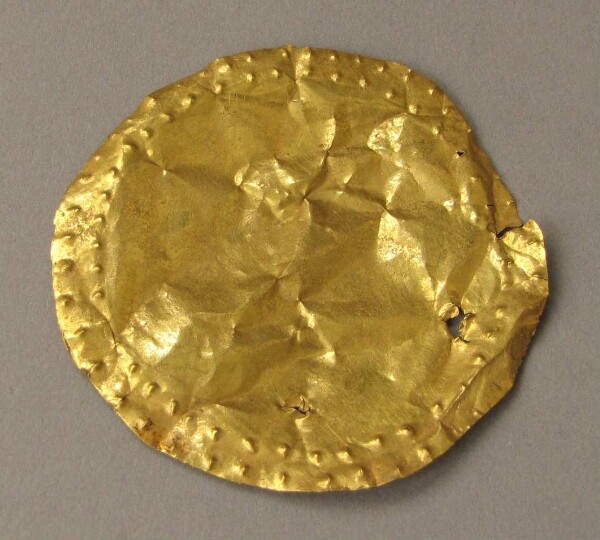
Pendant (decorative gold plate)
This collection item does not have a name in the language of origin. If you know the name or have comments, use this form to contact the data-providing institution.
Save
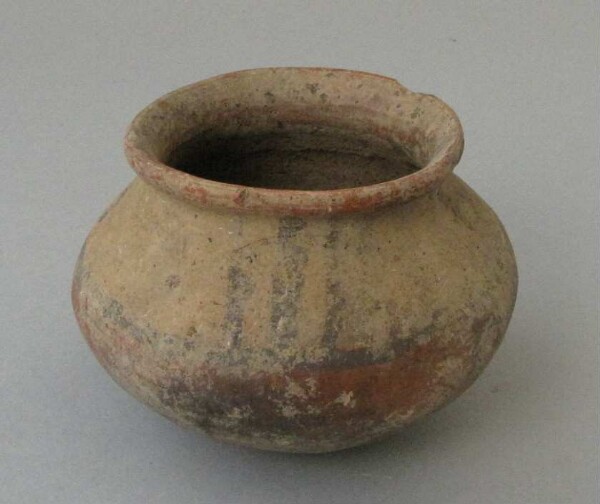
Clay vessel
This collection item does not have a name in the language of origin. If you know the name or have comments, use this form to contact the data-providing institution.
Save
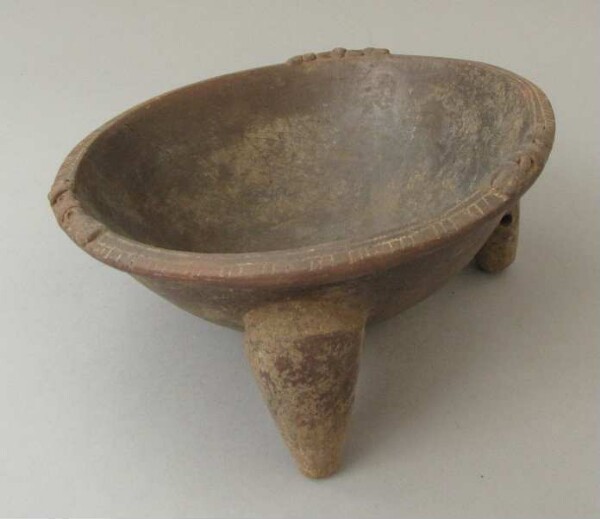
Clay vessel
This collection item does not have a name in the language of origin. If you know the name or have comments, use this form to contact the data-providing institution.
Save
Clay vessel
This collection item does not have a name in the language of origin. If you know the name or have comments, use this form to contact the data-providing institution.
Save
Clay vessel
This collection item does not have a name in the language of origin. If you know the name or have comments, use this form to contact the data-providing institution.
Save
Clay vessel
This collection item does not have a name in the language of origin. If you know the name or have comments, use this form to contact the data-providing institution.
Save
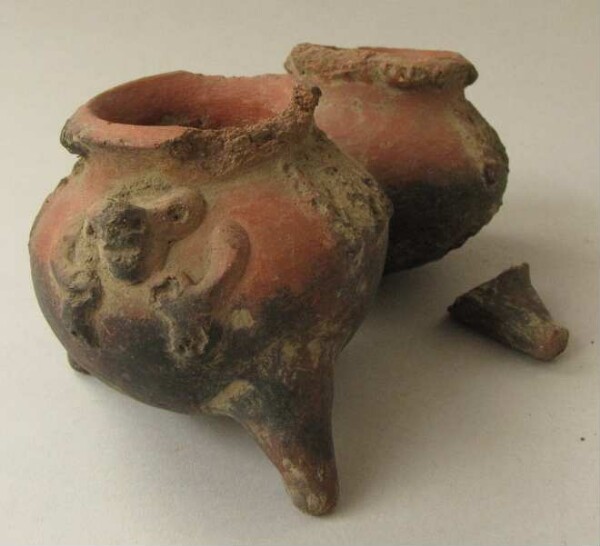
Double clay vessel
This collection item does not have a name in the language of origin. If you know the name or have comments, use this form to contact the data-providing institution.
Save
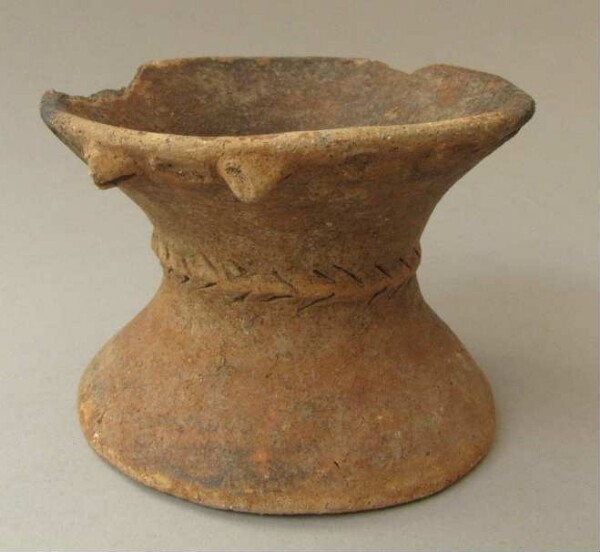
Vessel base made of clay
This collection item does not have a name in the language of origin. If you know the name or have comments, use this form to contact the data-providing institution.
Save
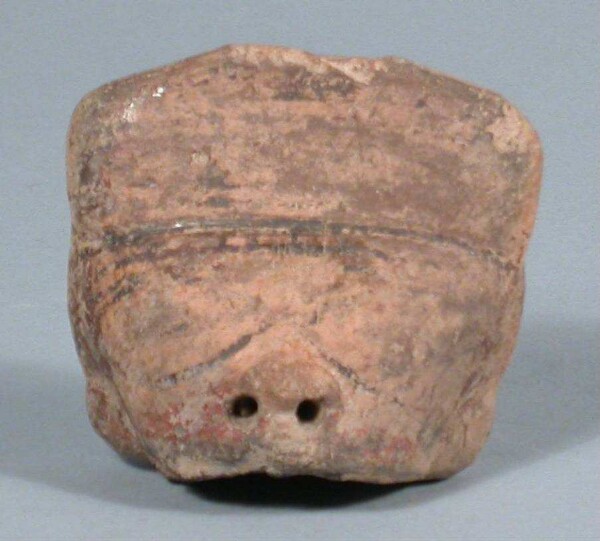
Sound head
This collection item does not have a name in the language of origin. If you know the name or have comments, use this form to contact the data-providing institution.
Save
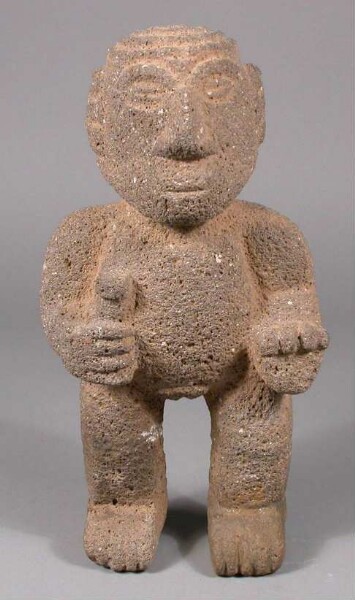
Stone figure
This collection item does not have a name in the language of origin. If you know the name or have comments, use this form to contact the data-providing institution.