In addition to the technically required cookies, our website also uses cookies for statistical evaluation. You can also use the website without these cookies. By clicking on "I agree" you agree that we may set cookies for analysis purposes. You can see and change your cookie settings here.
This collection item does not have a name in the language of origin. If you know the name or have comments, use this form to contact the data-providing institution.
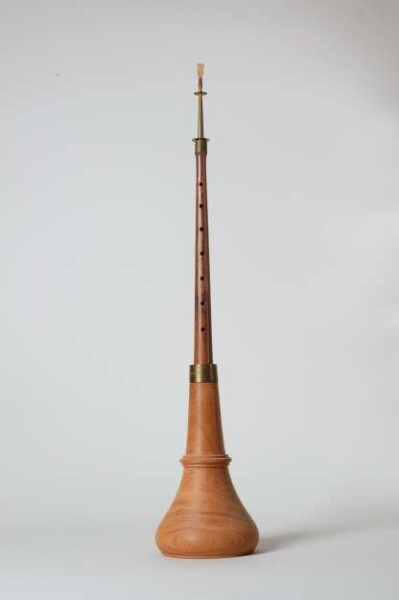
This Sūrnāj is characterised by a thick-walled body made of brown oiled wood and a tubular support with an oiled thick-walled lip support made of Bakelite. The first finger hole and the thumb hole are echoed in the tubular fork insert. The double-reed instrument is usually played in Uzbekistan accompanied by the frame drum doira.
This collection item does not have a name in the language of origin. If you know the name or have comments, use this form to contact the data-providing institution.
Save
Independent boiler drum
Hera
Information about the language not available
Save
Pipe
inzululu
Information about the language not available
Save
Vessel rattles
kroboto
Information about the language not available
Save
kroboto
This collection item does not have a name in the language of origin. If you know the name or have comments, use this form to contact the data-providing institution.
Save
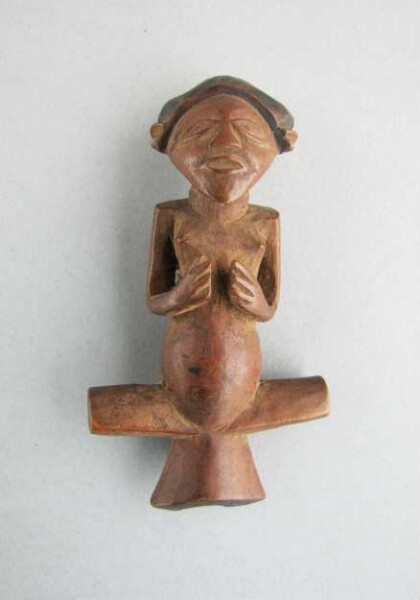
Female figure
tambi (?)
Information about the language not available
Save
tambi (?)
This collection item does not have a name in the language of origin. If you know the name or have comments, use this form to contact the data-providing institution.
Save
Vessel rattle
This collection item does not have a name in the language of origin. If you know the name or have comments, use this form to contact the data-providing institution.
Save
Fragment of a clay pipe
This collection item does not have a name in the language of origin. If you know the name or have comments, use this form to contact the data-providing institution.
Save
Clay whistle
This collection item does not have a name in the language of origin. If you know the name or have comments, use this form to contact the data-providing institution.