In addition to the technically required cookies, our website also uses cookies for statistical evaluation. You can also use the website without these cookies. By clicking on "I agree" you agree that we may set cookies for analysis purposes. You can see and change your cookie settings here.
As no. 187 [III E 2308], but partly strung with nylon strings. Paper and bark strips bound into the ball rings. No colour contrasting of the tension cords. The strings are tied to string extensions before passing through the membrane. The string attachment to the yoke is not centred, but tends towards a longitudinal bar. The yoke is wrapped with strips of fur near the yoke angles, the hairs of which fall down long. Attached by nails or metal clamps. from Ulrich Wegner: Afrikanische Saiteninstrumente, Staatliche Museen Berlin - SPK, 1984 (Appendix Object Catalogue)
This collection item does not have a name in the language of origin. If you know the name or have comments, use this form to contact the data-providing institution.
Save
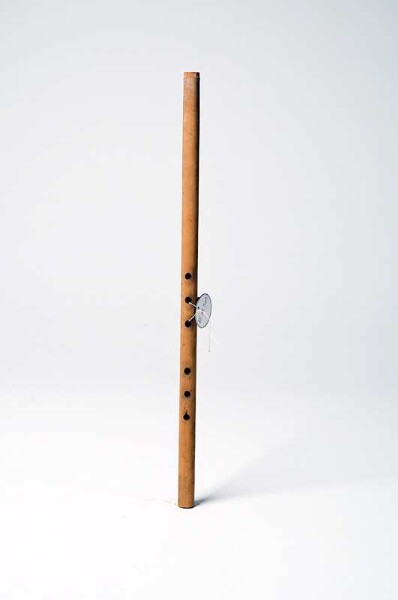
Open outer flute with finger holes
nabal
Information about the language not available
Save
nabal
This collection item does not have a name in the language of origin. If you know the name or have comments, use this form to contact the data-providing institution.
Save
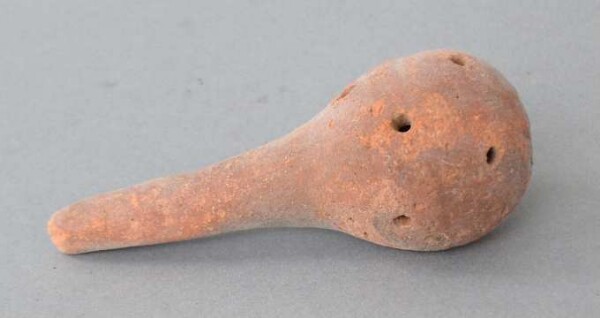
Clay rattle
bambaro
Information about the language not available
Save
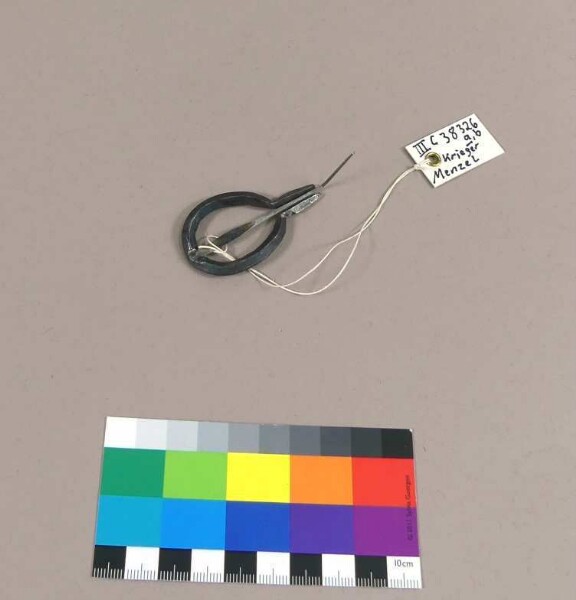
Heteroglotte Jew's harp
lusombo
Information about the language not available
Save
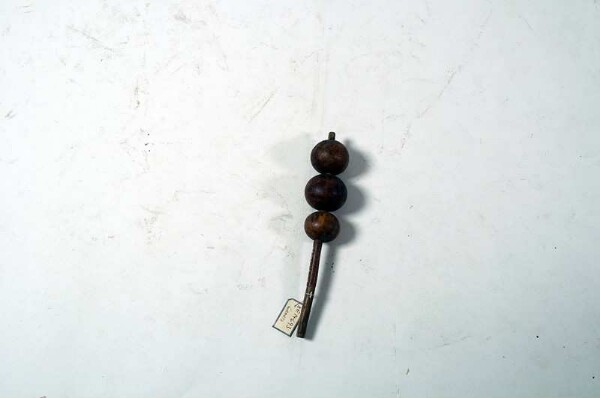
Vessel rattles
This collection item does not have a name in the language of origin. If you know the name or have comments, use this form to contact the data-providing institution.
Save
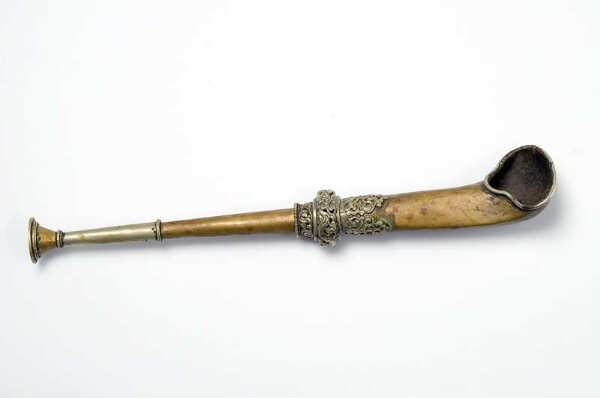
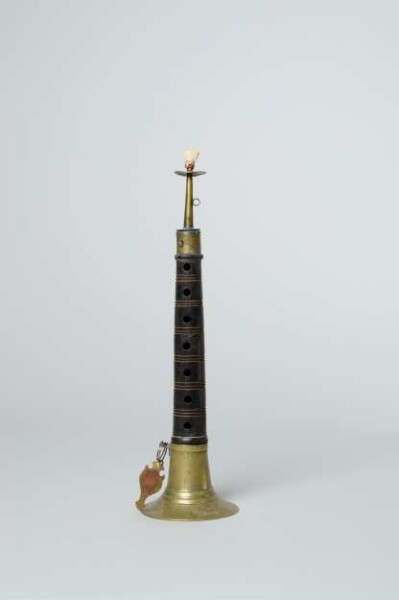
Horanāva
This collection item does not have a name in the language of origin. If you know the name or have comments, use this form to contact the data-providing institution.
Save
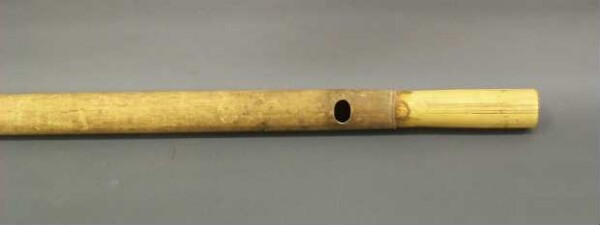
Flute
This collection item does not have a name in the language of origin. If you know the name or have comments, use this form to contact the data-providing institution.