In addition to the technically required cookies, our website also uses cookies for statistical evaluation. You can also use the website without these cookies. By clicking on "I agree" you agree that we may set cookies for analysis purposes. You can see and change your cookie settings here.
This collection item does not have a name in the language of origin. If you know the name or have comments, use this form to contact the data-providing institution.
is part of :
Eines der Geschenke-Konvolute Höpfners aus dem Jahre 1884 oder 1885
Provenance and sources
Production
when
before 1884
Change of legal title: Unknown type of acquisition
where
Africa, southern Africa, Namibia, according to the report of the Hildesheim Museum Association Angra Pequena (Lüderitzbucht) (if belonging to the donation of 1884), "Herero- and Damaraland" (if belonging to the donation of 1885)
who
Falls zu Schenkung 1885 von Dyes gehörig, ist Höpfner der Vorbesitzer/Sammler - Former Possessors
Description
Alternative spelling of the name: Carl Hoepfner. Höpfner did not stay exclusively in Angra Pequena on his first journey in 1882/83. He spent the first eight months in Mossamedes (Moçâmedes) on the Atlantic coast of Angola, near the present-day border between Angola and Namibia. He then travelled on to Kunene via the Boer colony of Humpata and "through the land of the Ovambo and Damara" (Globus 44, 1883, p. 254). On this journey, too, he apparently already had contact with Herero (cf. Globus vol. 44, 1883, p. 383). Therefore, despite the statement in the report of the Hildesheim Museum Association that the ethnographica donated in 1884 were "all from Angra Pequena", he may have already acquired objects from the Damara and Ovambo, but also from Herero, on his journey there.
Change of legal title: Access
when
1884 or 1885
where
Roemer and Pelizaeus Museum Hildesheim
who
Dr. Carl Höpfner oder Ludwig Gottfried Dyes
Secondary literature
Bericht "Verein für Kunde der Natur und der Kunst im Fürstenthume Hildesheim und in der Stadt Goslar", Zeitraum 01.01.1883-01.01.1886, Hildesheim: Gerstenberg, 1886, S. 10, S. 36, dort unter Geschenken 1884: Höpfner, Dr., Afrikareisender, „Bogen und Pfeile mit eisernen Spitzen und Federn, eiserne Armspangen, Lanzenspitze, Dolch, Wurfkeule, Perlenstickereien, ein Gefäß von Holz, Kürbisflasche, Beutel und Tuch von buntem baumwollenen Stoff, sämmtlich von Angra Pequena“; 1885, unter Geschenken, S. 37: Dyes, Generalkonsul in Bremen, „eine große Sammlung höchst interessanter ethnographischer Gegenstände, welche der Afrikareisende Dr. Höpfner östlich von Angra Pequena im Herrero (jetzt auch deutsches Gebiet) und Damaralande gesammelt hat."„Deutsche Kolonial-Unternehmungen in Afrika: Angra Pequena. Dr. Höpfner im Damara-Land. Die Sibango-Farm in Gabun“, in: Globus. Illustrierte Zeitschrift für Länder- und Völkerkunde, Bd. 44, 1883, S. 254.Bundesarchiv Berlin, R 1001/1470, „Reisebericht von Dr. Höpfner über die Verhältnisse in Südwestafrika“.Höpfner, Carl, „Die Erfolge der Mission bei den Ovaherero“, in: Globus: Illustrierte Zeitschrift für Länder- und Völkerkunde, Bd. 44, 1883, S. 383.
This collection item does not have a name in the language of origin. If you know the name or have comments, use this form to contact the data-providing institution.
Save
Aepyceros melampus, Gurui, Mount; Kondoa District, Tanzania
This collection item does not have a name in the language of origin. If you know the name or have comments, use this form to contact the data-providing institution.
Save
Javelin
This collection item does not have a name in the language of origin. If you know the name or have comments, use this form to contact the data-providing institution.
Save
Arrow
This collection item does not have a name in the language of origin. If you know the name or have comments, use this form to contact the data-providing institution.
Save
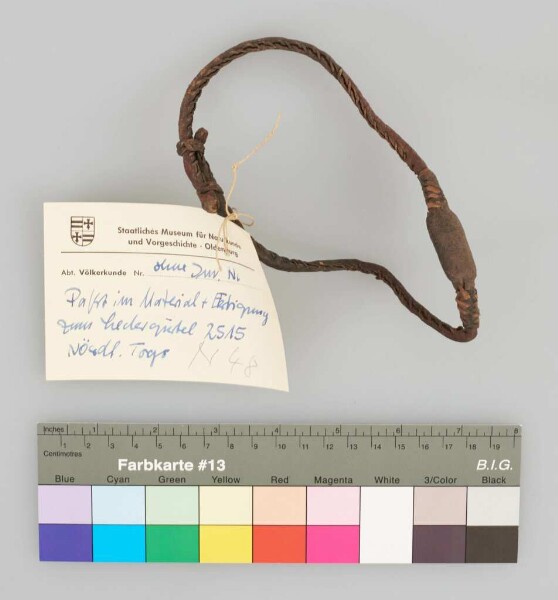
Leather straps; belt
This collection item does not have a name in the language of origin. If you know the name or have comments, use this form to contact the data-providing institution.
Save
Javelin
This collection item does not have a name in the language of origin. If you know the name or have comments, use this form to contact the data-providing institution.
Save
Tamper
This collection item does not have a name in the language of origin. If you know the name or have comments, use this form to contact the data-providing institution.
Save
Addax nasomaculatus, Sennar, Sudan
This collection item does not have a name in the language of origin. If you know the name or have comments, use this form to contact the data-providing institution.
Save
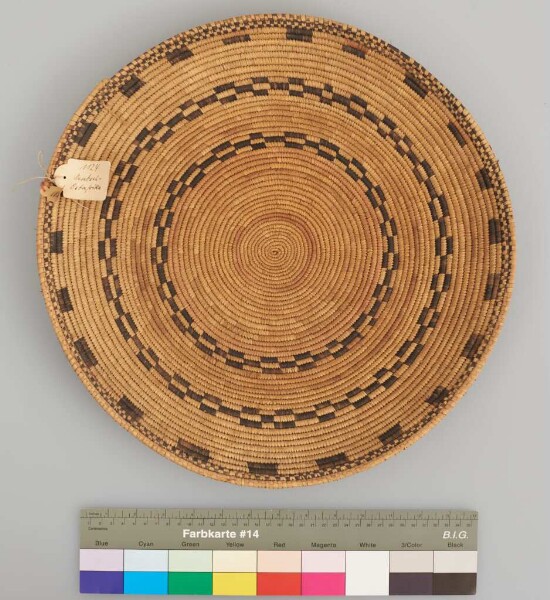
Bowl
This collection item does not have a name in the language of origin. If you know the name or have comments, use this form to contact the data-providing institution.
Save
Alcelaphus lichtensteinii, Chifumbasi, near Monte Chifumbazi; Zambezi, Mozambique
This collection item does not have a name in the language of origin. If you know the name or have comments, use this form to contact the data-providing institution.
Save
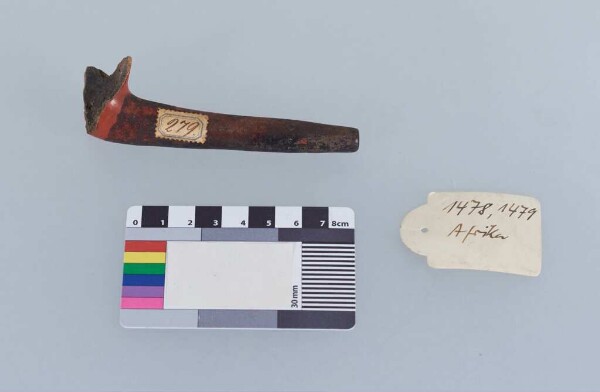
Pipe
This collection item does not have a name in the language of origin. If you know the name or have comments, use this form to contact the data-providing institution.