In addition to the technically required cookies, our website also uses cookies for statistical evaluation. You can also use the website without these cookies. By clicking on "I agree" you agree that we may set cookies for analysis purposes. You can see and change your cookie settings here.
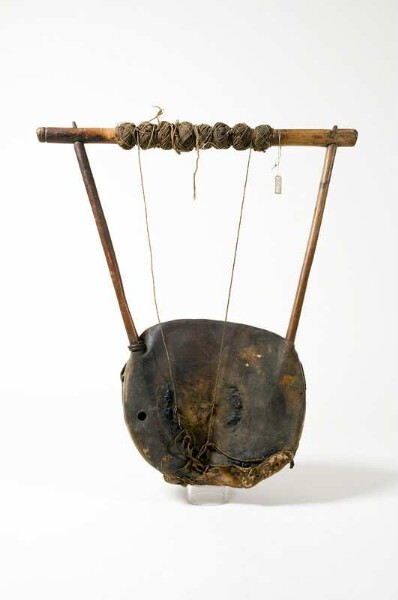
A smooth, only slightly curved round wooden stick with tapered, perforated tips, once for the purpose of tying the strings. [Consists of two knotted string sections made of twisted leather or twisted animal sinew fibre. [Also] A calabash resonator open at the bottom and tied to the stick. Cross-wood binding inside the calabash [are present]. [As well as] a padded ring wrapped in cloth. Probably no tuning loop [present]. A small mallet [given] and a piece of a thin calabash spout [used] as a finger cover. The latter [functions] to strike a rhythmic accompaniment on the resonator (Balfour 1899: 31-32). from Ulrich Wegner: Afrikanische Saiteninstrumente, Staatliche Museen Berlin - SPK, 1984 (Appendix Object Catalogue)
This collection item does not have a name in the language of origin. If you know the name or have comments, use this form to contact the data-providing institution.
Save
Shell lyre
Image not available
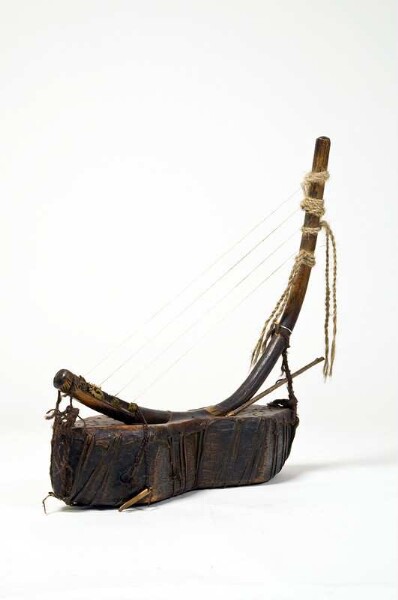
rebab
Information about the language not available
Save
rebab
This collection item does not have a name in the language of origin. If you know the name or have comments, use this form to contact the data-providing institution.
Save
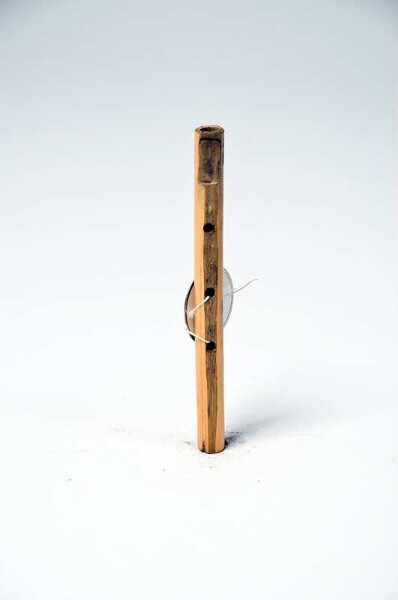
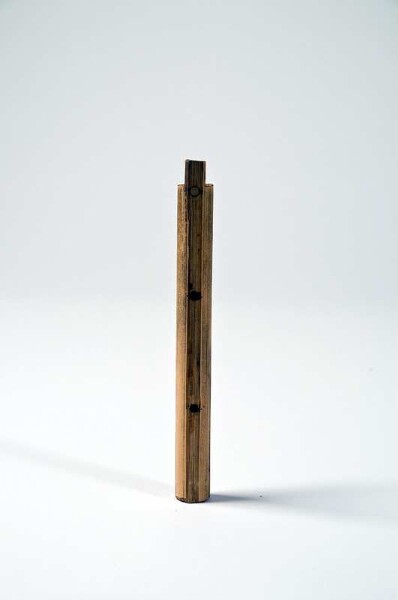
Clarinet with cylindrical tube with finger holes
This collection item does not have a name in the language of origin. If you know the name or have comments, use this form to contact the data-providing institution.
Save
Twisted wood
waji wadzh
Information about the language not available
Save
waji
This collection item does not have a name in the language of origin. If you know the name or have comments, use this form to contact the data-providing institution.
Save
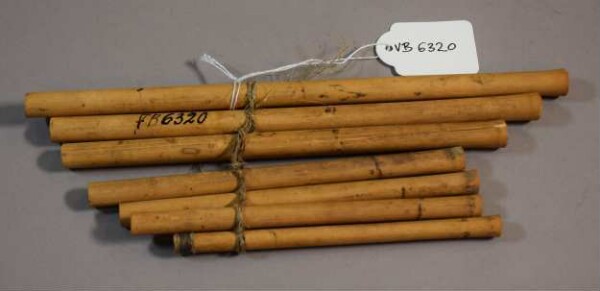
Pan flute
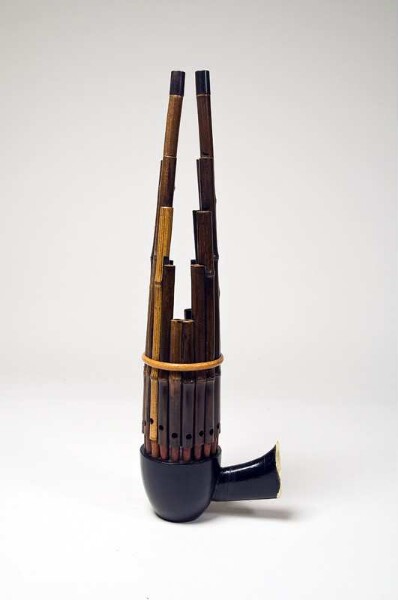
sheng
Information about the language not available
Save
sheng
This collection item does not have a name in the language of origin. If you know the name or have comments, use this form to contact the data-providing institution.
Save
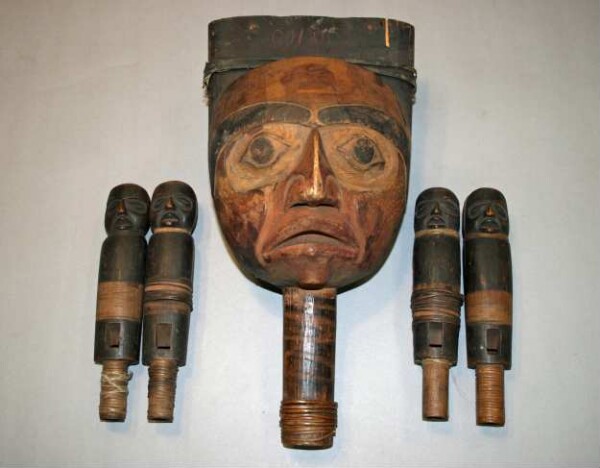
Representation: Human face
This collection item does not have a name in the language of origin. If you know the name or have comments, use this form to contact the data-providing institution.
Save
Inner flute
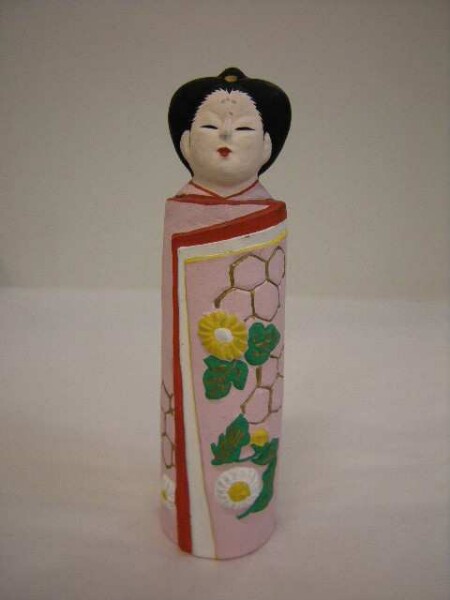
Hinabina suzu
Information about the language not available
Save
Woman / Tachibana bell
This collection item does not have a name in the language of origin. If you know the name or have comments, use this form to contact the data-providing institution.