In addition to the technically required cookies, our website also uses cookies for statistical evaluation. You can also use the website without these cookies. By clicking on "I agree" you agree that we may set cookies for analysis purposes. You can see and change your cookie settings here.
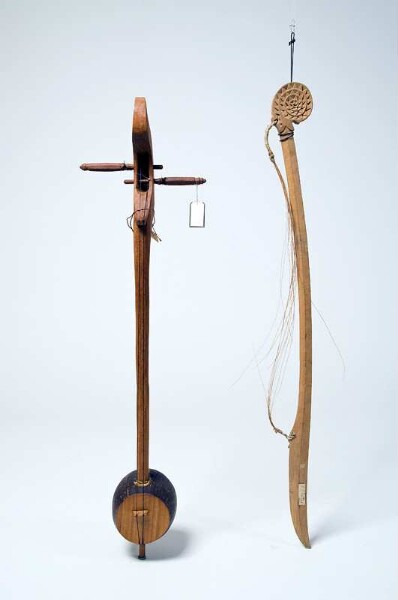
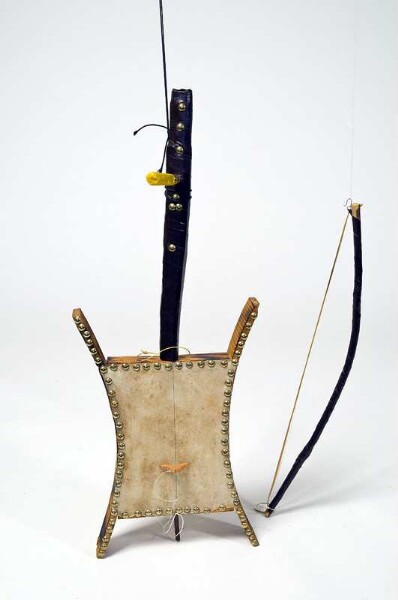
The body of the instrument is a longitudinally oval wooden shell. The membrane is stretched against a square piece of skin resting on the outside of the shell with tension cords made of twisted strips of skin which are wound back and forth in tight coils covering the entire surface and coloured dark in groups at intervals. The neck is a round wooden stick. 'Spoon-in-a-cup' shape. Eight right flank vertebrae made of wood with offset vertebra heads (partially replaced). Strings made of twisted animal tissue, partly replaced with original material. The ends of the tailpiece resting on the edge of the shell or on the base of the neck are visible above the top of the body after the membrane has been drilled through once. The front end of the tailpiece is tapered. A thin ring sewn into lizard skin encircles the neck below each peg. The base of the neck is wrapped in a bark fibre cloth. A round membrane opening on the side. from Ulrich Wegner: Afrikanische Saiteninstrumente, Staatliche Museen Berlin - SPK, 1984 (Appendix to the object catalogue)
This collection item does not have a name in the language of origin. If you know the name or have comments, use this form to contact the data-providing institution.
Save
Bowl spear lute with bow
sarinda*
Information about the language not available
Save
sarinda
This collection item does not have a name in the language of origin. If you know the name or have comments, use this form to contact the data-providing institution.
Save
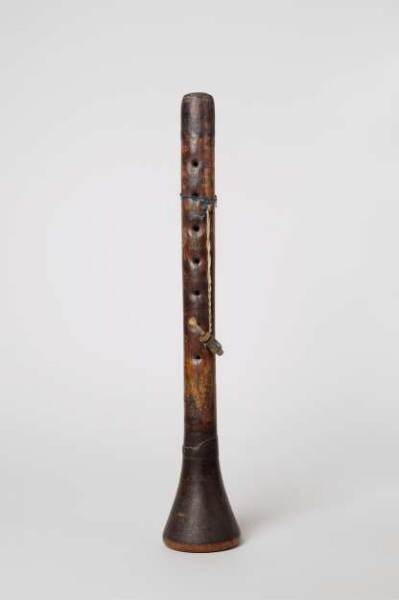
Surnā(y)
This collection item does not have a name in the language of origin. If you know the name or have comments, use this form to contact the data-providing institution.
Save
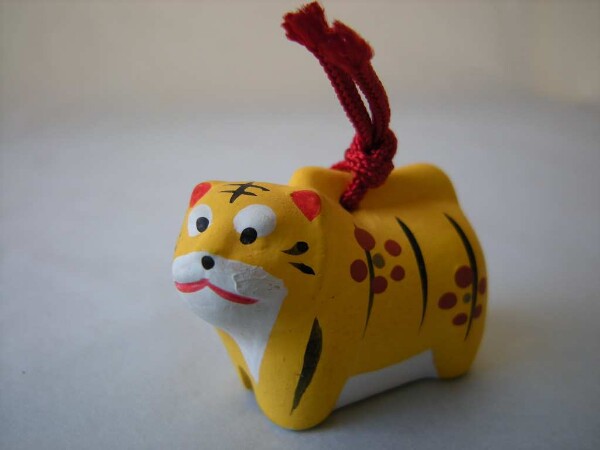
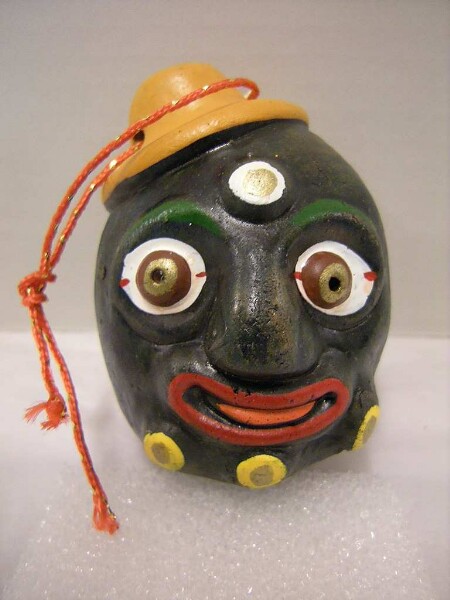
Tiger
This collection item does not have a name in the language of origin. If you know the name or have comments, use this form to contact the data-providing institution.
Save
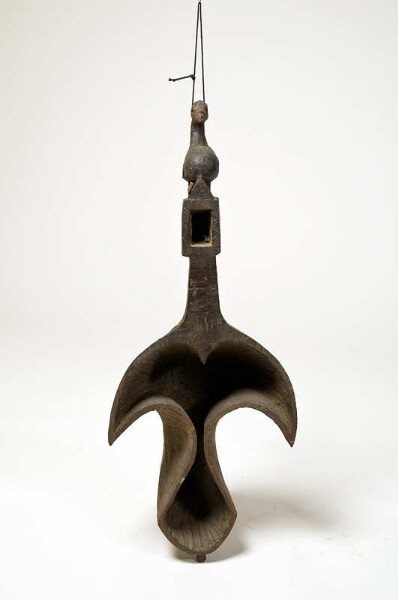
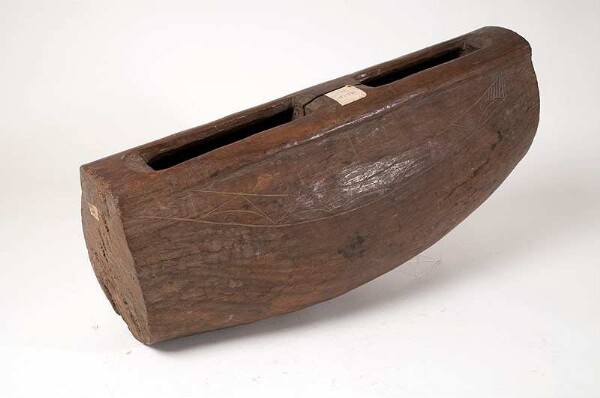
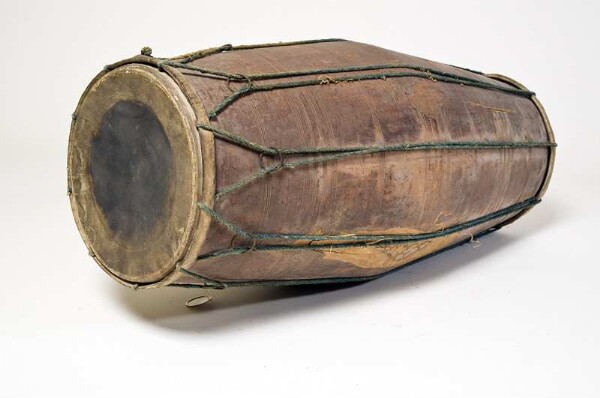
Wooden drum
This collection item does not have a name in the language of origin. If you know the name or have comments, use this form to contact the data-providing institution.
Save
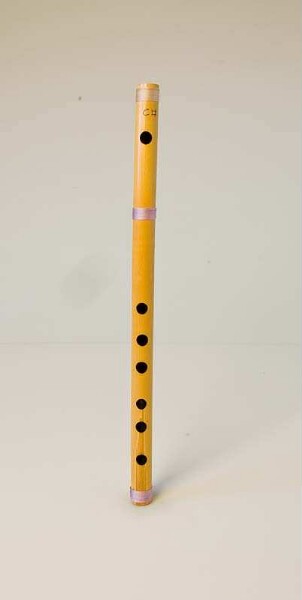
open transverse flute with finger holes
This collection item does not have a name in the language of origin. If you know the name or have comments, use this form to contact the data-providing institution.
Save
Jew's harp
rababa*
Information about the language not available
Save
rababa
dholak
Information about the language not available
Save
dholak
This collection item does not have a name in the language of origin. If you know the name or have comments, use this form to contact the data-providing institution.
Save
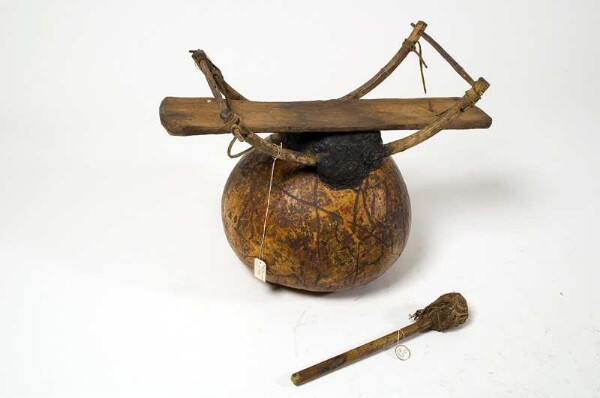
Xylophone with mallet
This collection item does not have a name in the language of origin. If you know the name or have comments, use this form to contact the data-providing institution.