In addition to the technically required cookies, our website also uses cookies for statistical evaluation. You can also use the website without these cookies. By clicking on "I agree" you agree that we may set cookies for analysis purposes. You can see and change your cookie settings here.
This collection item does not have a name in the language of origin. If you know the name or have comments, use this form to contact the data-providing institution.
Catalogue: This group of figures also impresses with its realistic and simplified depiction. After the death of a karaja, the corpse is smeared with resin to which white down feathers are glued. After further preparatory measures and painting, the body is wrapped in a sleeping mat (straw mat) and taken to a place outside the village. The two figures growing out of a rectangular base plate carry a tied straw mat with their raised left arms, in which a small clay doll (i.e. the corpse) presumably rests. The right arm of both figures is hanging down, not far from the body, and is pierced where the palm should be. They probably held a long pole to which the body of the deceased, together with the mat, was tied at the burial site. Both figures wear a sculpturally graduated helmet hairstyle, which is cut straight across the forehead and extends to the sides and back of the neck. The nose is raised; eyes, mouth and tribal insignia are incised. Both bodies, which are very similar in morphological structure, differ in their painting. One is decorated with predominantly linear colouring, the other with predominantly planar colouring. There is a drawing, possibly depicting a crocodile, on the base between the two men standing one behind the other. Index card: Two men standing on a rectangular base. In the left raised straw tube VB 14740 Standing area: 21 x 7.5 cm Figures: 16.5 x 8.5 cm
This collection item does not have a name in the language of origin. If you know the name or have comments, use this form to contact the data-providing institution.
Save
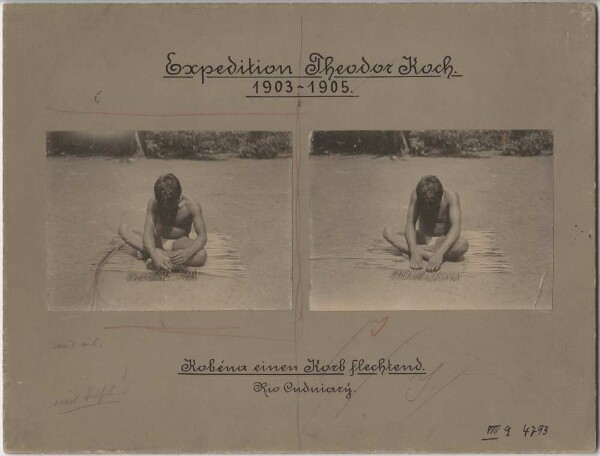
Kobéua weaving baskets
This collection item does not have a name in the language of origin. If you know the name or have comments, use this form to contact the data-providing institution.
Save
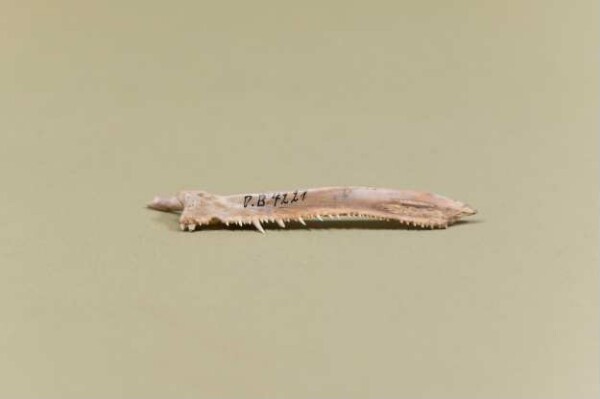
Fish pine
This collection item does not have a name in the language of origin. If you know the name or have comments, use this form to contact the data-providing institution.
Save
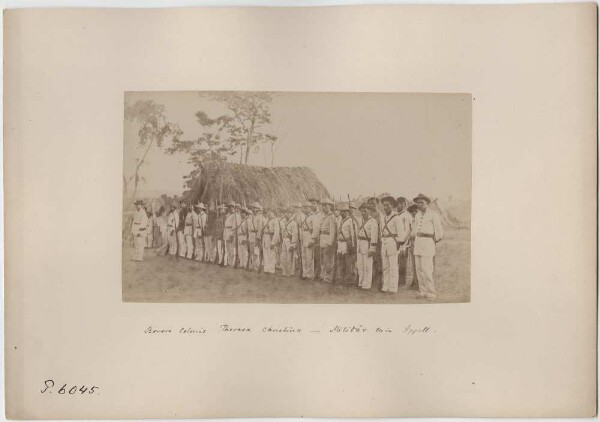
Soldiers in the Bororo colony
This collection item does not have a name in the language of origin. If you know the name or have comments, use this form to contact the data-providing institution.
Save
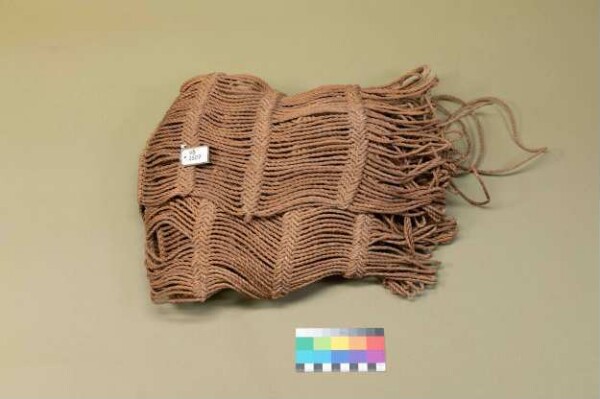
Hammock
This collection item does not have a name in the language of origin. If you know the name or have comments, use this form to contact the data-providing institution.
Save
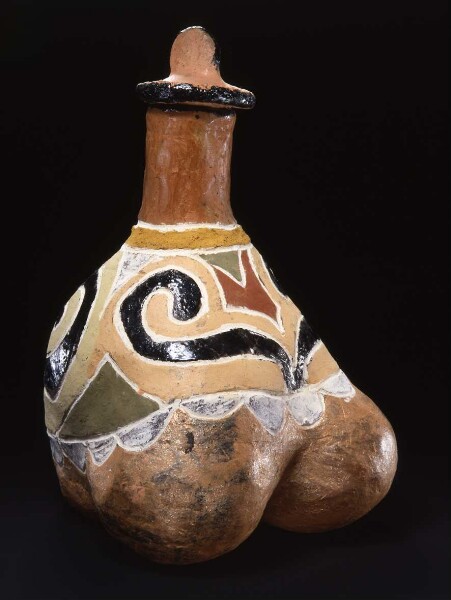
Clay vessel
This collection item does not have a name in the language of origin. If you know the name or have comments, use this form to contact the data-providing institution.
Save
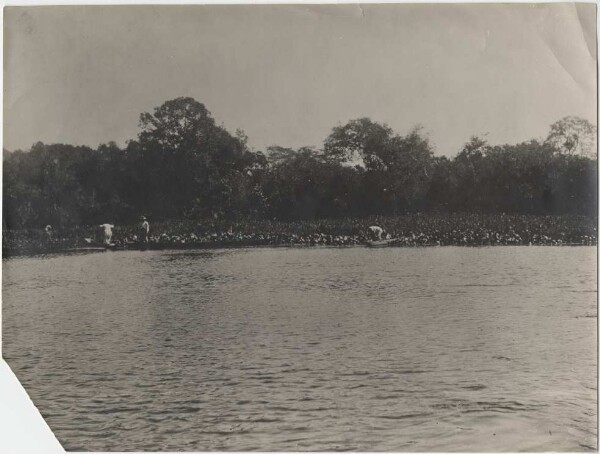
Fishing Guató on the banks of the Caracara River
This collection item does not have a name in the language of origin. If you know the name or have comments, use this form to contact the data-providing institution.
Save
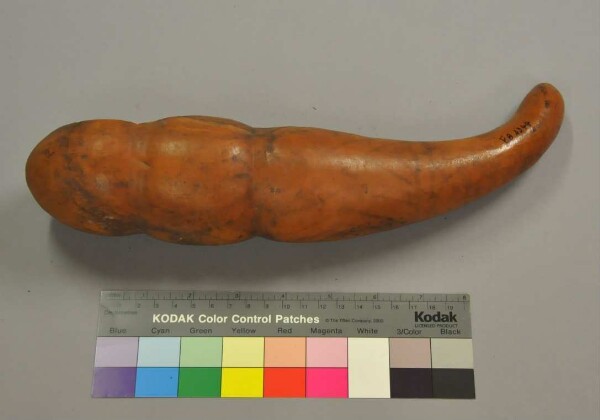
Rattle made from calabash tree fruit
This collection item does not have a name in the language of origin. If you know the name or have comments, use this form to contact the data-providing institution.
Save
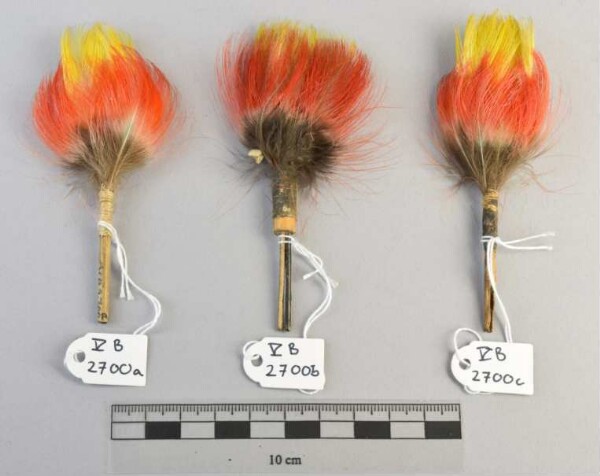
Ear feather tufts
This collection item does not have a name in the language of origin. If you know the name or have comments, use this form to contact the data-providing institution.
Save
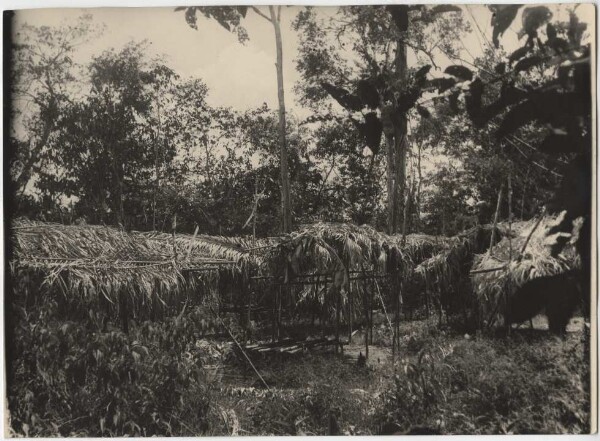
Abandoned Katukina camp
This collection item does not have a name in the language of origin. If you know the name or have comments, use this form to contact the data-providing institution.
Save
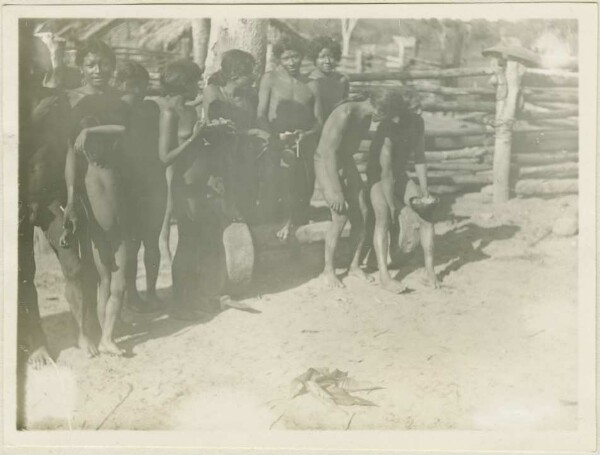
Kajabi in Pedro Dantas
This collection item does not have a name in the language of origin. If you know the name or have comments, use this form to contact the data-providing institution.
Save
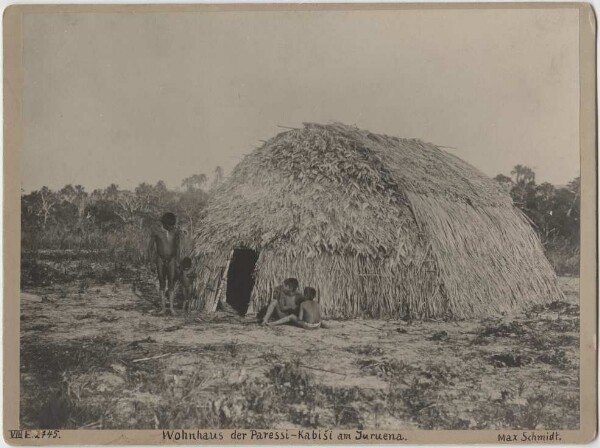
Paressi-Kabiši in front of her hut in Hanauinahirtigo on the Rio Juruena