In addition to the technically required cookies, our website also uses cookies for statistical evaluation. You can also use the website without these cookies. By clicking on "I agree" you agree that we may set cookies for analysis purposes. You can see and change your cookie settings here.
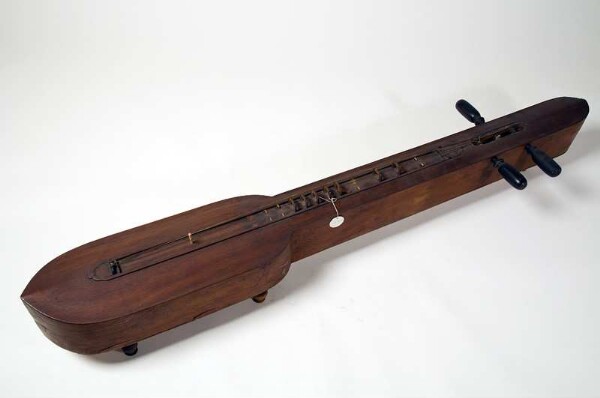
Around the edge of the calabash opening [are] six sewn-on round shell discs (originally probably eleven or twelve). Opposite the opening of the spherical resonator [is] a perforation. "6 reed shanks and 5 gut strings in one piece ... acquired at Kanda near Langenberg." from Ulrich Wegner: Afrikanische Saiteninstrumente, Staatliche Museen Berlin - SPK, 1984 (appendix object catalogue)
This collection item does not have a name in the language of origin. If you know the name or have comments, use this form to contact the data-providing institution.
Save
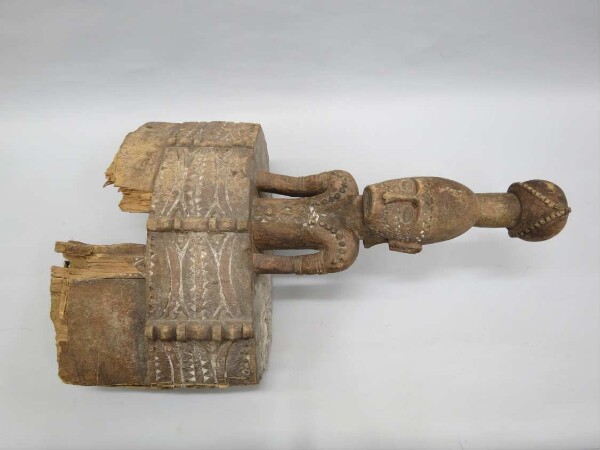
End piece of a drum
chakhe
Information about the language not available
Save
chakhe
This collection item does not have a name in the language of origin. If you know the name or have comments, use this form to contact the data-providing institution.
Save
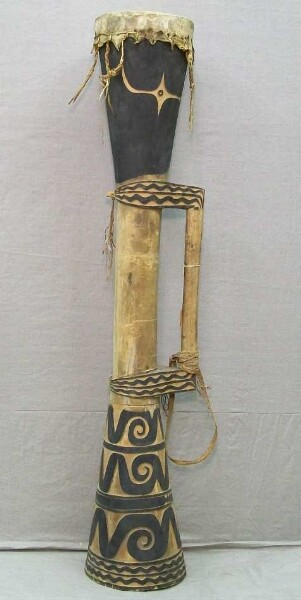
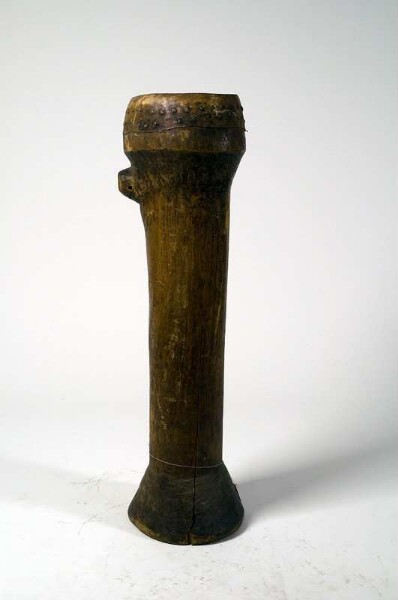
Drum
This collection item does not have a name in the language of origin. If you know the name or have comments, use this form to contact the data-providing institution.
Save
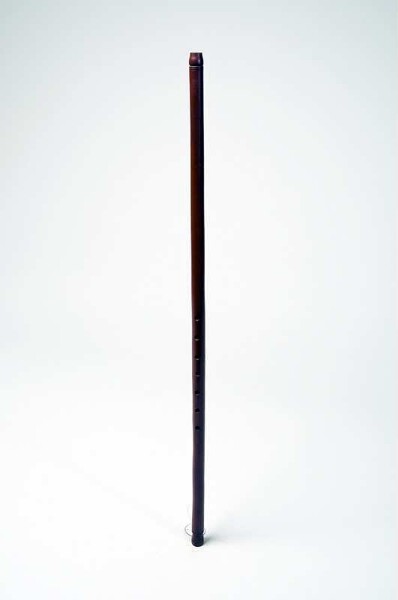
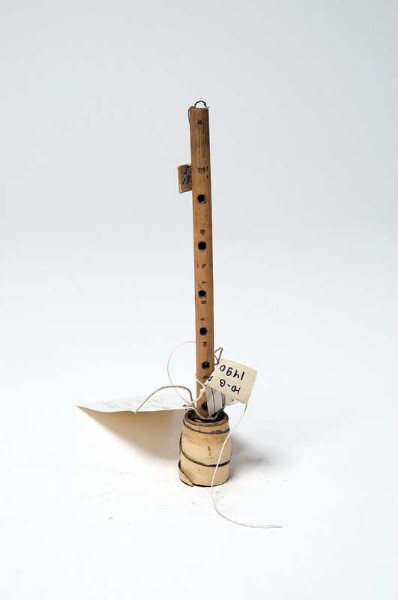
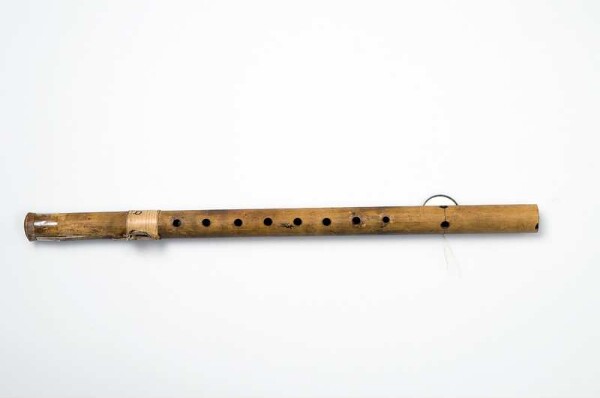
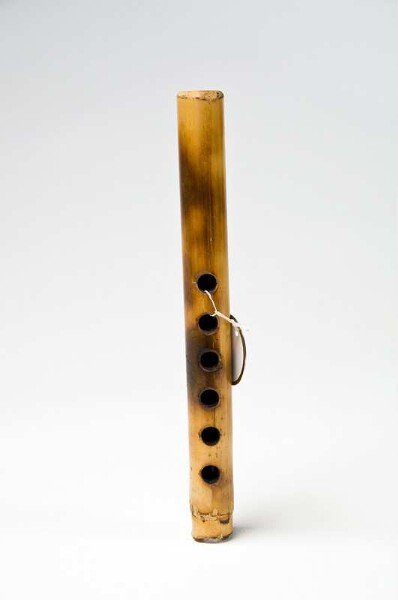
Clarinet with cylindrical tube with finger holes
This collection item does not have a name in the language of origin. If you know the name or have comments, use this form to contact the data-providing institution.
Save
Piercing tongue shawm
This collection item does not have a name in the language of origin. If you know the name or have comments, use this form to contact the data-providing institution.
Save
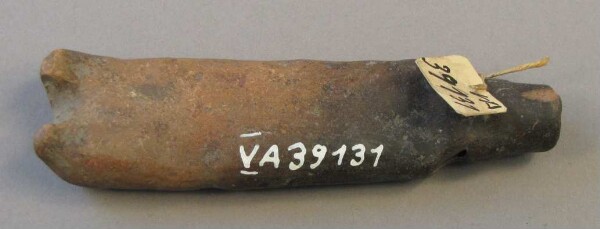
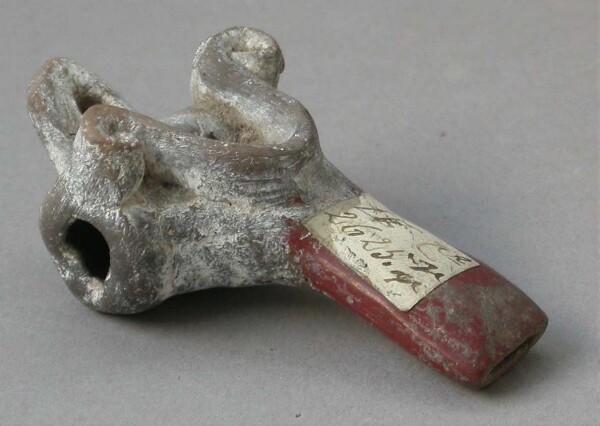
Clay flute
amajebe
Information about the language not available
Save
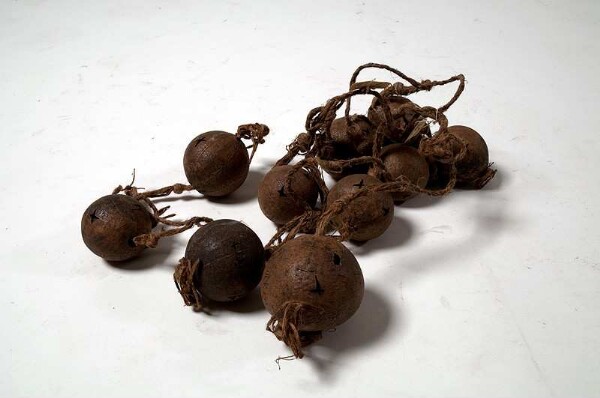
Vessel rattles
salamiya*
Information about the language not available
Save
salamiya
This collection item does not have a name in the language of origin. If you know the name or have comments, use this form to contact the data-providing institution.
Save
Drum
This collection item does not have a name in the language of origin. If you know the name or have comments, use this form to contact the data-providing institution.