patu pounamu / mer | Rights management: Linden-Museum Stuttgart
Attribution - NonCommercial - NoDerivs 4.0 International
Full screen
Initial display
Zoom in
Zoom out
Previous image
Next image
Downloads the object
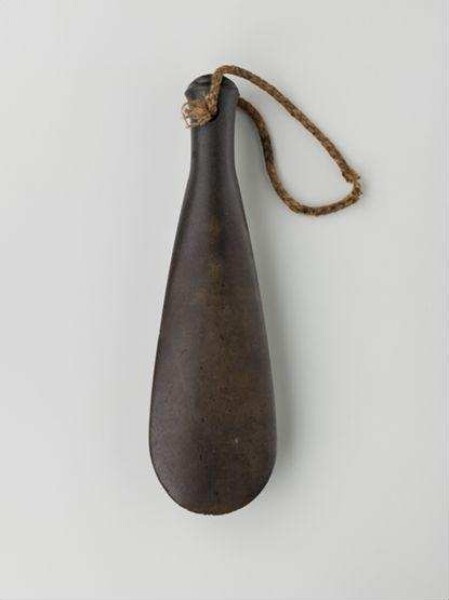
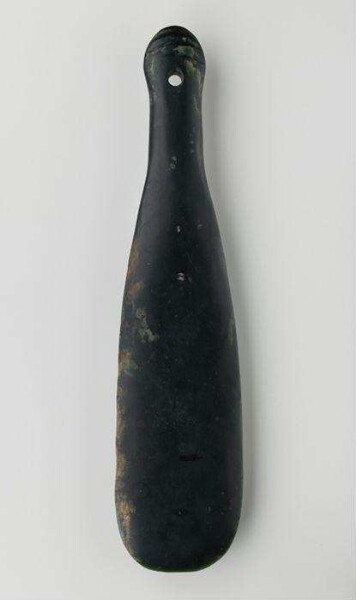
patu pounamu / mer

Information about the language not available
Slash and thrust weapon


The mere or patu, made of different materials, were regarded by Māori as important status symbols and were also effective weapons. Used as cutting and thrusting weapons against head and body, they could inflict dangerous wounds on the opponent with their sharp edges. Text: Ulrich Menter
- Data Provider
- Linden-Museum Stuttgart Staatliches Museum für Völkerkunde Show original at data provider
Cataloguing data
- Cultural attribution
- Māori
- Object type
- Hieb- und Stoßwaffe
- Dimensions
-
Length: 36.8 cm
Width: 10.8 cm
Depth: 1.8 cm - Material/Technique
-
Nephrite, Textile
sawn, cut, chiselled, drilled
- Current location
- Linden-Museum Stuttgart
- Inventory number
- 004467
Provenance and sources
-
Assignment to a curated holding:
-
Production
-
when
-
18th/19th century.
-
-
Change of physical control or legal title
-
where
-
New Zealand
-
-
Change of physical control
-
when
-
1899
-
- Provenance
-
Albert Hahl
(1868-1945) was Vice-Governor of the Eastern Caroline Islands
(Micronesia) from 1899 to 1901 and held the office of Governor of German
New Guinea from 1902 to 1914. Even before this time, he was imperial
judge for the Bismarck Archipelago from 1896 to 1898, based in what was
then Herbertshöhe, now Rabaul in New Britain. The weapon was presumably
acquired during that period – in the historical inventory book its
origin is incorrectly listed as "Weberhafen [Kambeira Bay], Gazelle
Peninsula" in the north of the island of New Britain. Whether this was a
false attribution by the museum or whether the object was actually
acquired in New Britain is unclear, as is the history of the object
before its acquisition by A. Hahl. Text: Ulrich
Menter
Information about the record
- Legal status metadata
- CC BY-NC-ND 4.0 DEED

This content was machine-translated