In addition to the technically required cookies, our website also uses cookies for statistical evaluation. You can also use the website without these cookies. By clicking on "I agree" you agree that we may set cookies for analysis purposes. You can see and change your cookie settings here.
This collection item does not have a name in the language of origin. If you know the name or have comments, use this form to contact the data-providing institution.
Catalogue: Drum w. 1 head (tuba) single-headed open cup drum (cylinder drum?). Closely related to beaker drums I C 22804, 22853, almost cylindrical in shape. The wooden body is extensively notched in the lower third and has a carved double bead in which a twisted rotan band runs. The edge of the leather membrane, which covers the upper edge, is attached with a vegetable ligature to a rotan ring about 3 cm below, which is held in place by numerous wooden wedges and another rotan ring.
This collection item does not have a name in the language of origin. If you know the name or have comments, use this form to contact the data-providing institution.
Save
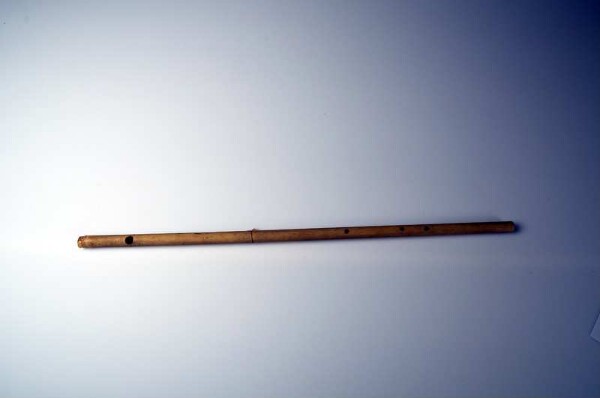
Transverse flute
This collection item does not have a name in the language of origin. If you know the name or have comments, use this form to contact the data-providing institution.
Save
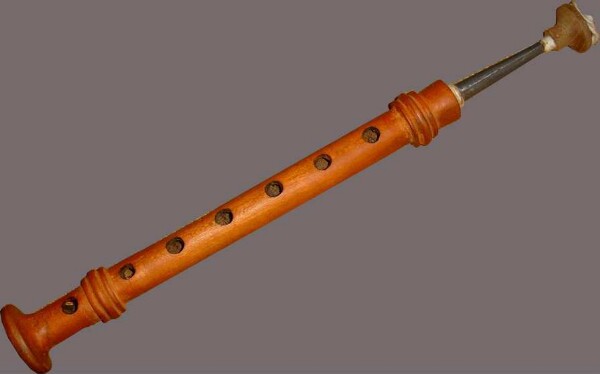
Flute
This collection item does not have a name in the language of origin. If you know the name or have comments, use this form to contact the data-providing institution.
Save
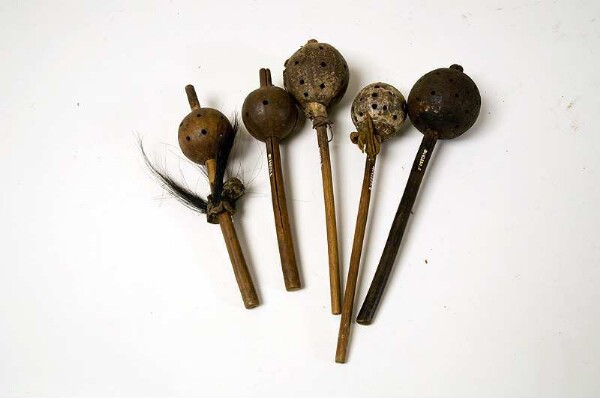
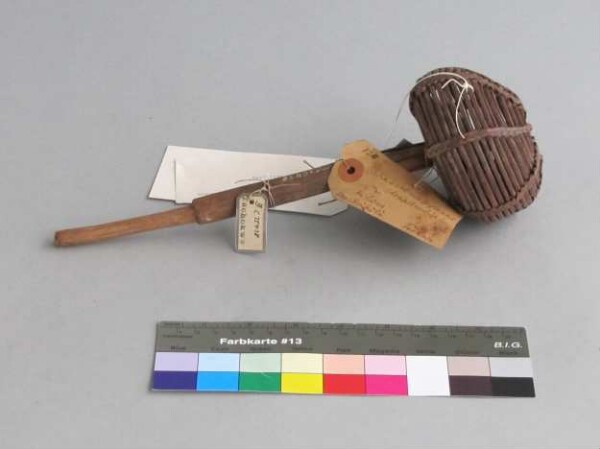
Rod rattles
This collection item does not have a name in the language of origin. If you know the name or have comments, use this form to contact the data-providing institution.
Save
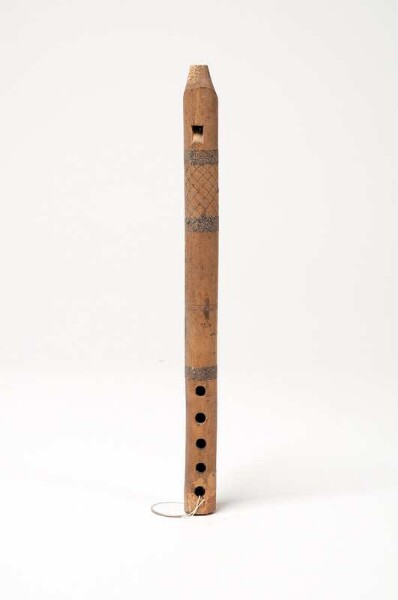
Semi-dovetailed inner flute with finger holes
This collection item does not have a name in the language of origin. If you know the name or have comments, use this form to contact the data-providing institution.
Save
Double rattle
This collection item does not have a name in the language of origin. If you know the name or have comments, use this form to contact the data-providing institution.
Save
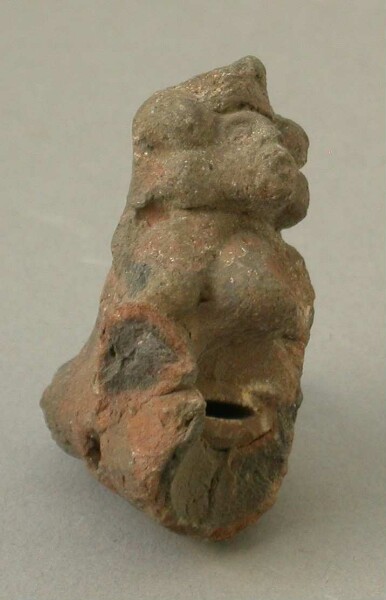
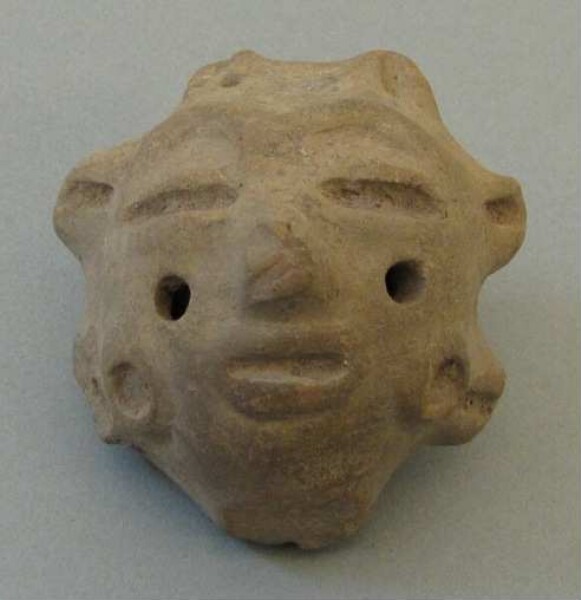
Clay whistle
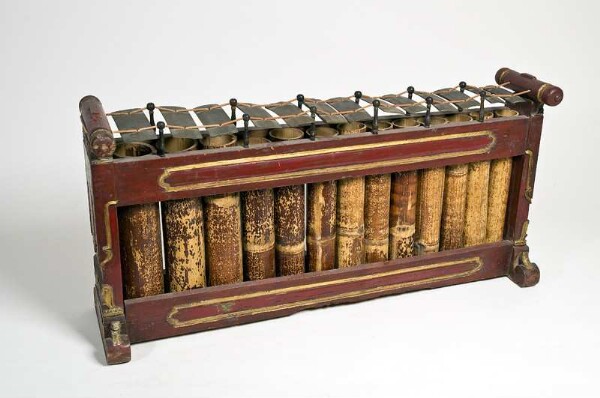
gender panerus (Gamelan, pélog)
Information about the language not available
Save
gender panerus (gamelan, pélog)
This collection item does not have a name in the language of origin. If you know the name or have comments, use this form to contact the data-providing institution.
Save
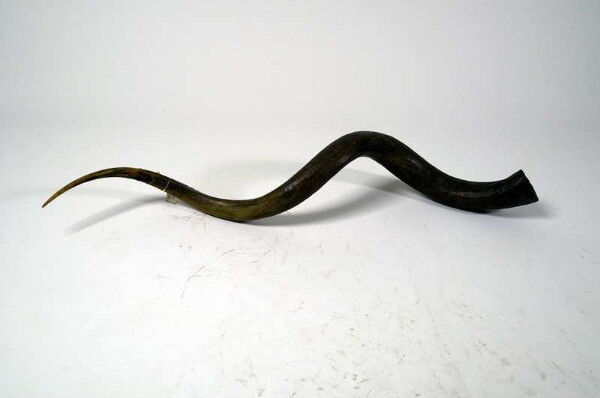
Blowing horn
This collection item does not have a name in the language of origin. If you know the name or have comments, use this form to contact the data-providing institution.
Save
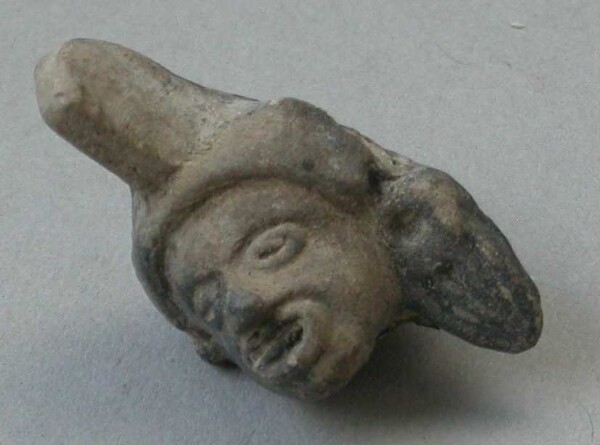
Clay whistle
This collection item does not have a name in the language of origin. If you know the name or have comments, use this form to contact the data-providing institution.