In addition to the technically required cookies, our website also uses cookies for statistical evaluation. You can also use the website without these cookies. By clicking on "I agree" you agree that we may set cookies for analysis purposes. You can see and change your cookie settings here.
This collection item does not have a name in the language of origin. If you know the name or have comments, use this form to contact the data-providing institution.
The creature appears to combine the attributes of different species. The head and torso suggest a lizard or beetle-like shape. The limbs, on the other hand, suggest anthropomorphic characteristics. The body of the figure was moulded. The limbs, tongue and tail, however, are flat. The entire creature appears from above. The wide mouth of the object corresponds to the zoomorphic stone sculptures of the Palmar group (1550-1000d.C.). Despite their size, the tongue and tail have no applied decoration. Their bipartite form can be understood as duplication, transformation or movement (Helms 1993). A two-tailed reptile associated with a cat of prey appears on a partially reliefed stone found at the Costa Rican site of Guayabo de Turrialba (1300-700d.C.). Although the pendant belongs to the Veraguas-Chiriquí group, it has special design features. These include the chosen perspective (top view), the shape of the feet and the lack of separation between head and torso. (Künne 2005)
This collection item does not have a name in the language of origin. If you know the name or have comments, use this form to contact the data-providing institution.
Save
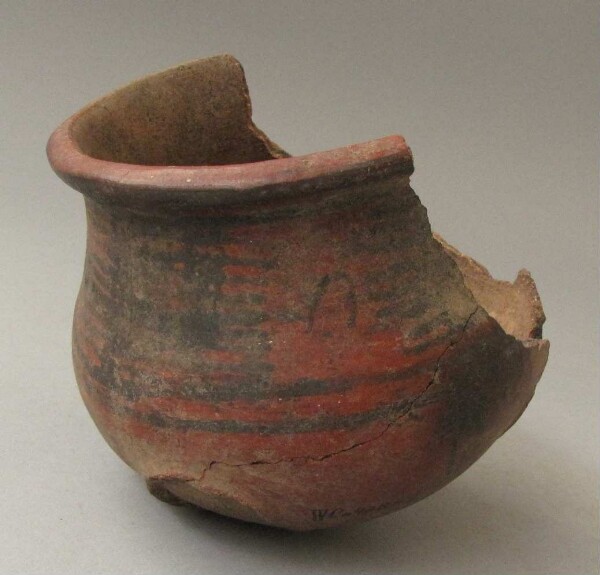
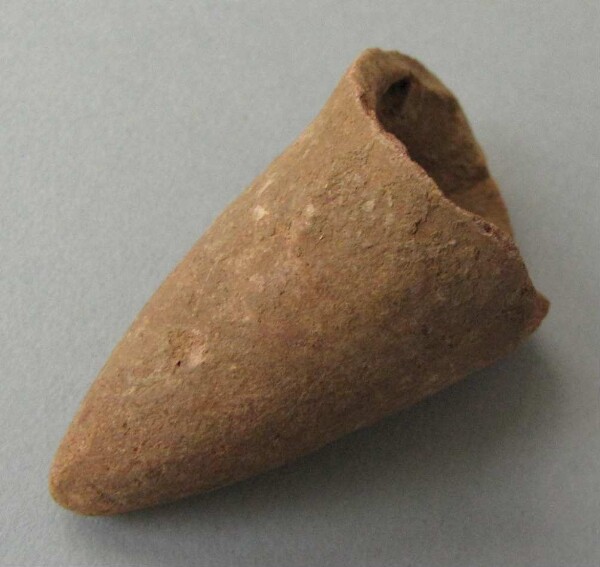
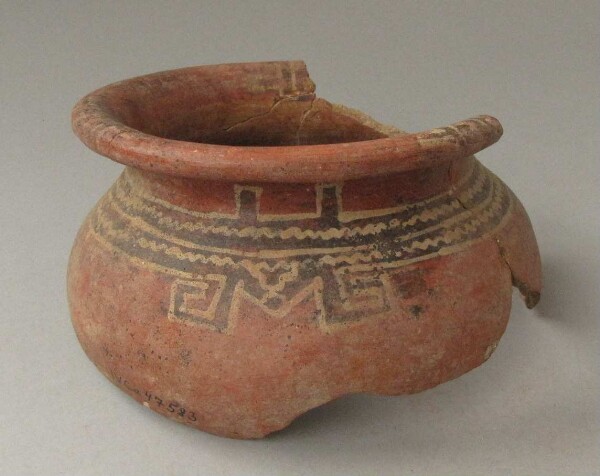
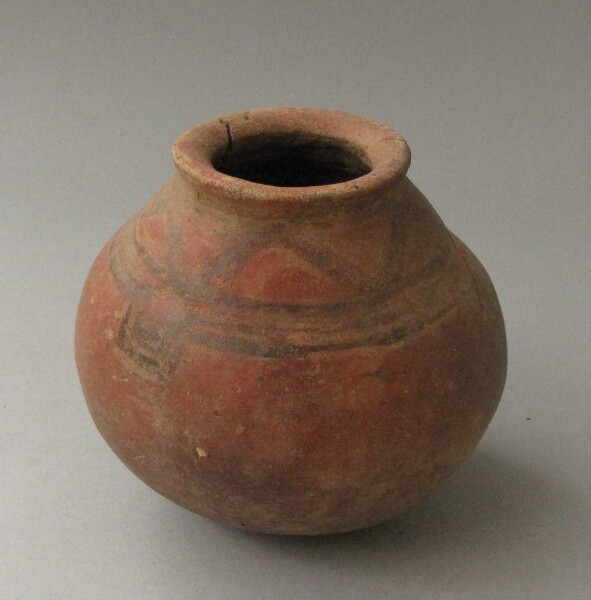
Clay vessel
This collection item does not have a name in the language of origin. If you know the name or have comments, use this form to contact the data-providing institution.
Save
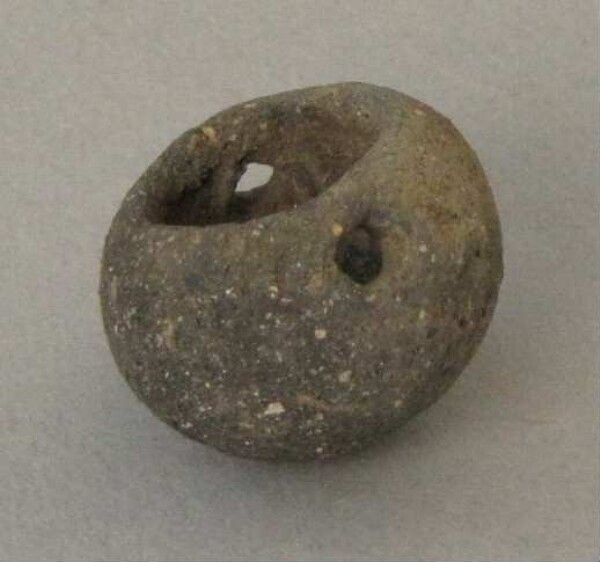
Clay vessel
This collection item does not have a name in the language of origin. If you know the name or have comments, use this form to contact the data-providing institution.
Save
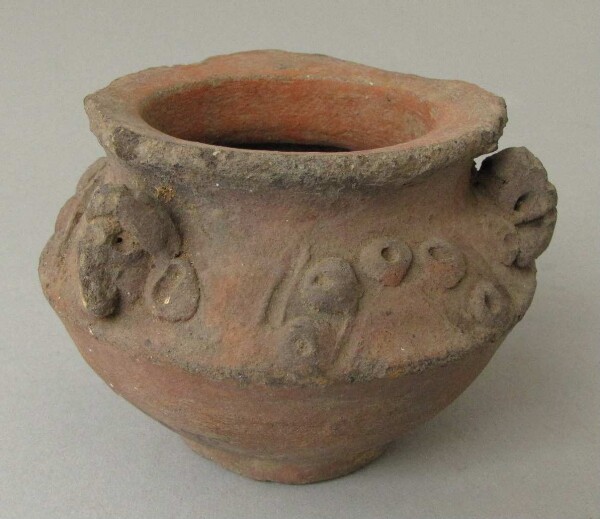
Clay vessel
This collection item does not have a name in the language of origin. If you know the name or have comments, use this form to contact the data-providing institution.
Save
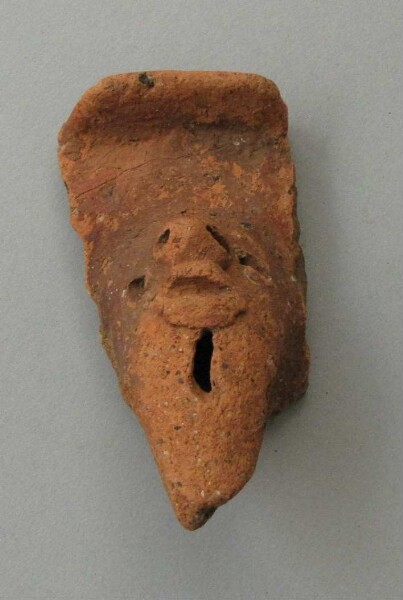
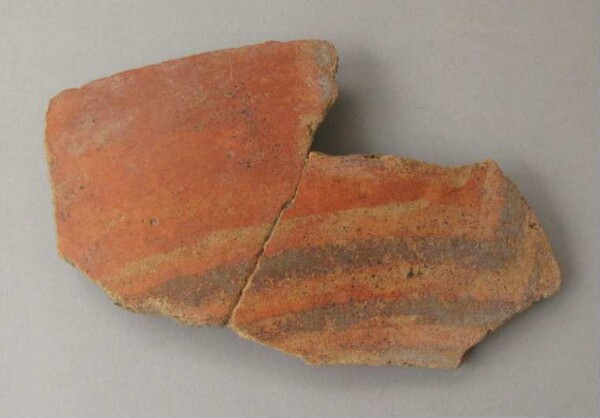
Rim sherd of a clay vessel
This collection item does not have a name in the language of origin. If you know the name or have comments, use this form to contact the data-providing institution.
Save
Clay shard of a vessel
This collection item does not have a name in the language of origin. If you know the name or have comments, use this form to contact the data-providing institution.
Save
Clay vessel base
This collection item does not have a name in the language of origin. If you know the name or have comments, use this form to contact the data-providing institution.
Save
Upper part of a clay vessel
This collection item does not have a name in the language of origin. If you know the name or have comments, use this form to contact the data-providing institution.
Save
Clay vessel
This collection item does not have a name in the language of origin. If you know the name or have comments, use this form to contact the data-providing institution.
Save
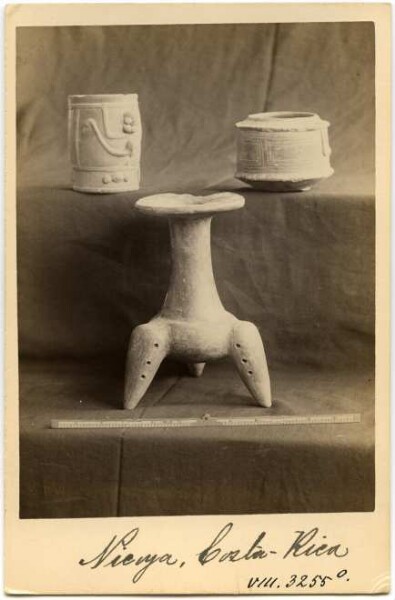
Three ceramic vessels from the Museo Nacional, San José (Costa Rica)
This collection item does not have a name in the language of origin. If you know the name or have comments, use this form to contact the data-providing institution.
Save
Clay figure / Female clay figure
This collection item does not have a name in the language of origin. If you know the name or have comments, use this form to contact the data-providing institution.