In addition to the technically required cookies, our website also uses cookies for statistical evaluation. You can also use the website without these cookies. By clicking on "I agree" you agree that we may set cookies for analysis purposes. You can see and change your cookie settings here.
This collection item does not have a name in the language of origin. If you know the name or have comments, use this form to contact the data-providing institution.
The small, conically drilled body of this taepyong-so is made of dark red stained softwood, the short, protruding bell is made of tinplate. The instrument has seven frontal tone holes and a protruding thumb hole. The upper end of the body is reinforced with a tinplate spout. An attachment decorated with two spheres and bordered by two small plates is inserted into this spout and serves as a pipe support. This attachment, which corresponds to that of the Chinese So-na, was made of brass, as was the attached lip disc.
This collection item does not have a name in the language of origin. If you know the name or have comments, use this form to contact the data-providing institution.
Save
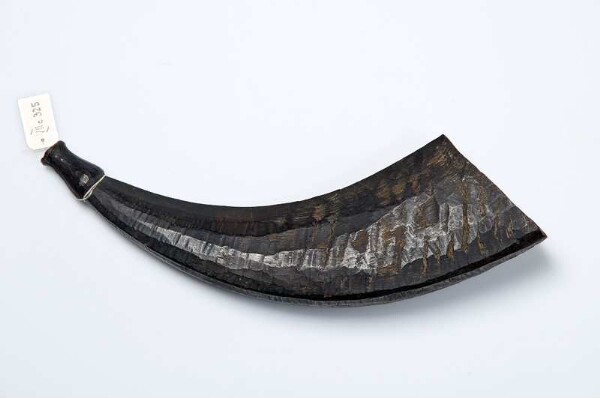
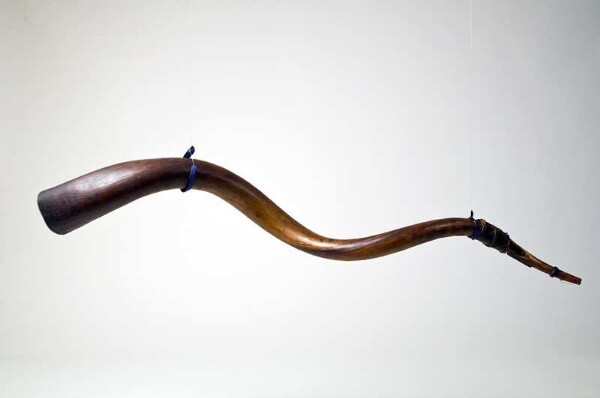
Long horn with mouthpiece
This collection item does not have a name in the language of origin. If you know the name or have comments, use this form to contact the data-providing institution.
Save
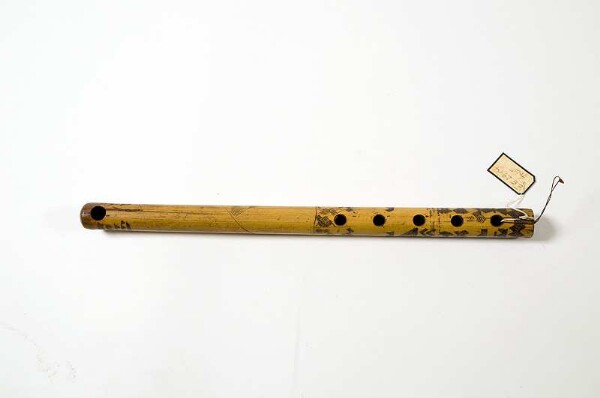
Flute
chap yai
Information about the language not available
Save
chap yai
This collection item does not have a name in the language of origin. If you know the name or have comments, use this form to contact the data-providing institution.
Save
angun (according to Krämer), anin (according to Finsch)
Kudu
Information about the language not available
Save
Transverse horn
bhuchyah*
Information about the language not available
Save
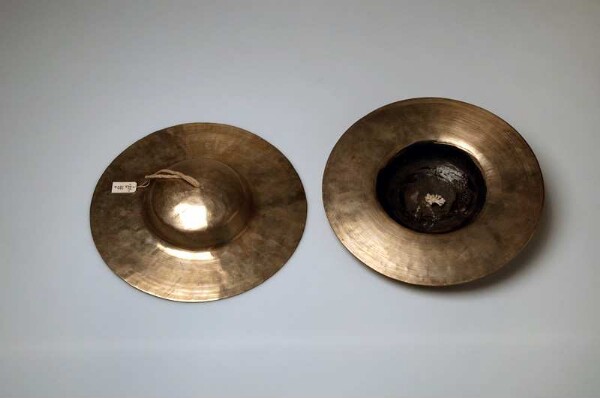
bhuchyah
This collection item does not have a name in the language of origin. If you know the name or have comments, use this form to contact the data-providing institution.
Save
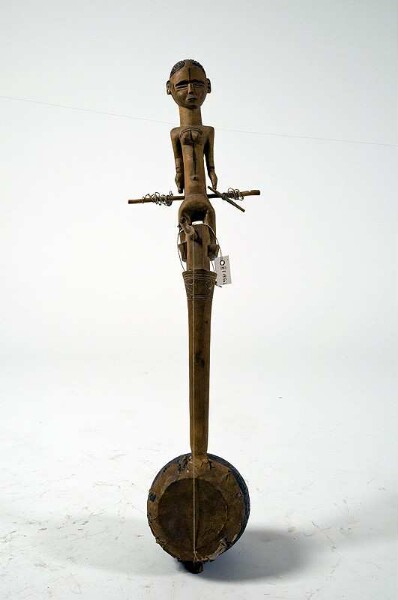
bowed shell spit sounds
This collection item does not have a name in the language of origin. If you know the name or have comments, use this form to contact the data-providing institution.
Save
"Man with a vessel on his back"
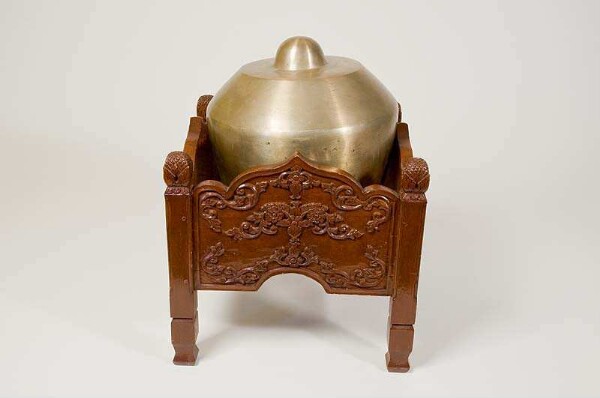
kenong (Gamelan)
Information about the language not available
Save
kenong (Gamelan)
This collection item does not have a name in the language of origin. If you know the name or have comments, use this form to contact the data-providing institution.
Save
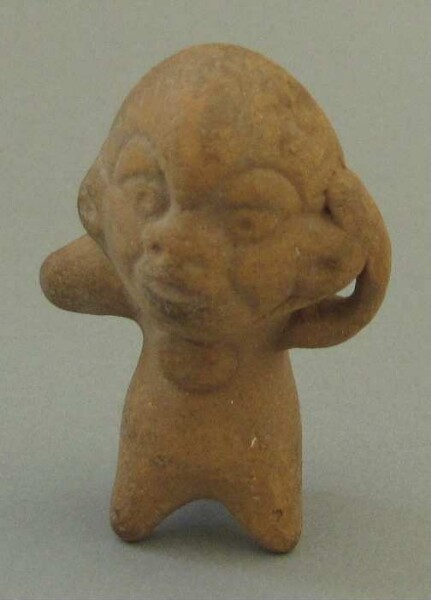
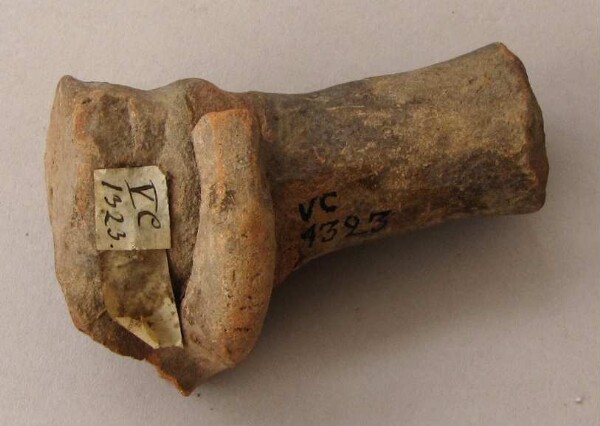
Fragment of a clay pipe
This collection item does not have a name in the language of origin. If you know the name or have comments, use this form to contact the data-providing institution.